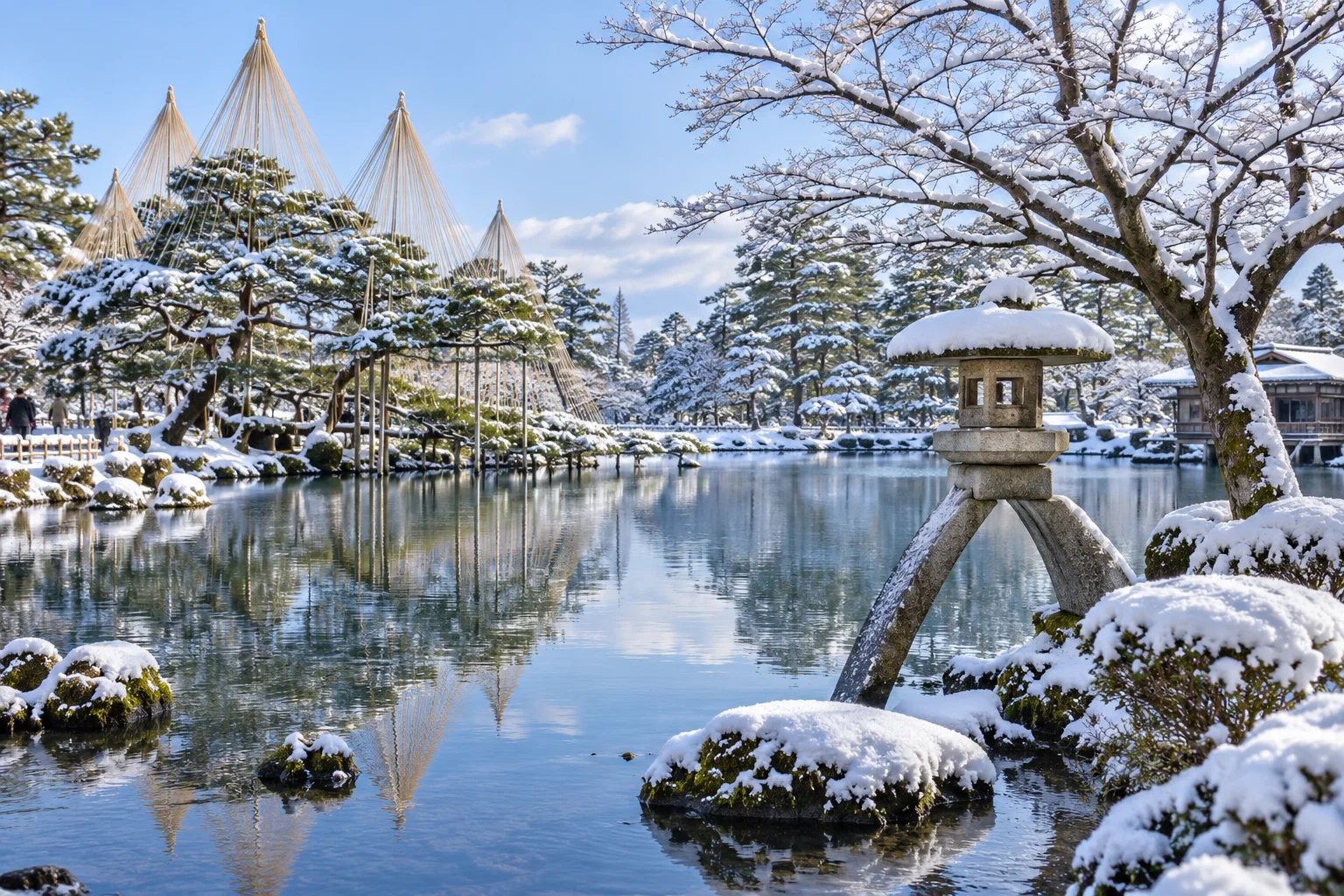
Nagano in Winter and Beyond: Zenko-ji, Snow Monkeys and Safe Planning
A practical Nagano guide that combines Zenko-ji with responsible snow-monkey viewing and treats mountain weather as a planning decision.
Cover: AI-generated illustration. © ANUSHKA DAHANAYAKE (PVT) LTD.
Nagano is more than a transfer between Tokyo and ski resorts. Zenko-ji gives the city a long pilgrimage history, while nearby mountains connect visitors with onsen towns, winter sport and the Japanese macaques of Jigokudani. These experiences fit together only when weather, walking conditions and transport are treated seriously. One overnight is a better first plan than a rushed return from Tokyo.
Base in Nagano City for a flexible start
The Hokuriku Shinkansen links Nagano with the capital, covered in the Tokyo first-time neighbourhood guide, while other rail and bus routes connect the region. Journey times and covered services depend on the train and ticket. Reserve when demand is high and understand luggage rules. A rail pass is valuable only if the included journeys exceed its cost.
Staying near Nagano Station simplifies early buses and onward travel. Staying closer to Zenko-ji gives a quieter morning but may require a bus or longer walk with luggage. Check snow clearance, hills and the exact property entrance, since the central district is not guaranteed to be flat.
Winter delays are possible. Do not book the final return train immediately after a mountain bus. Keep tickets and accommodation details offline, and carry medicine in your day bag.
Give Zenko-ji a complete visit
Walk or take a local bus toward Zenko-ji, allowing time for the approach street. The temple dates back to the seventh century and enshrines what tradition holds to be one of the first Buddhist images brought to Japan; the present main hall, rebuilt after a series of fires and completed in 1707, is a National Treasure. It remains an active place of pilgrimage. Keep voices low in halls, remove shoes when instructed and obey photography restrictions. An inner ritual or dark passage should be entered only after understanding the procedure and accessibility.
The approach includes food, religious goods and small shops. Ask before photographing interiors or craftspeople. Oyaki dumplings and local sweets can be useful regional tastes, but ingredients vary; explain allergies and ask about fillings and shared preparation.
Visit early or late enough to avoid compressing the temple between train times. Winter cold inside wooden buildings can be significant. Wear removable layers and warm socks, because the interior may not be heated.
Plan Jigokudani as a mountain outing
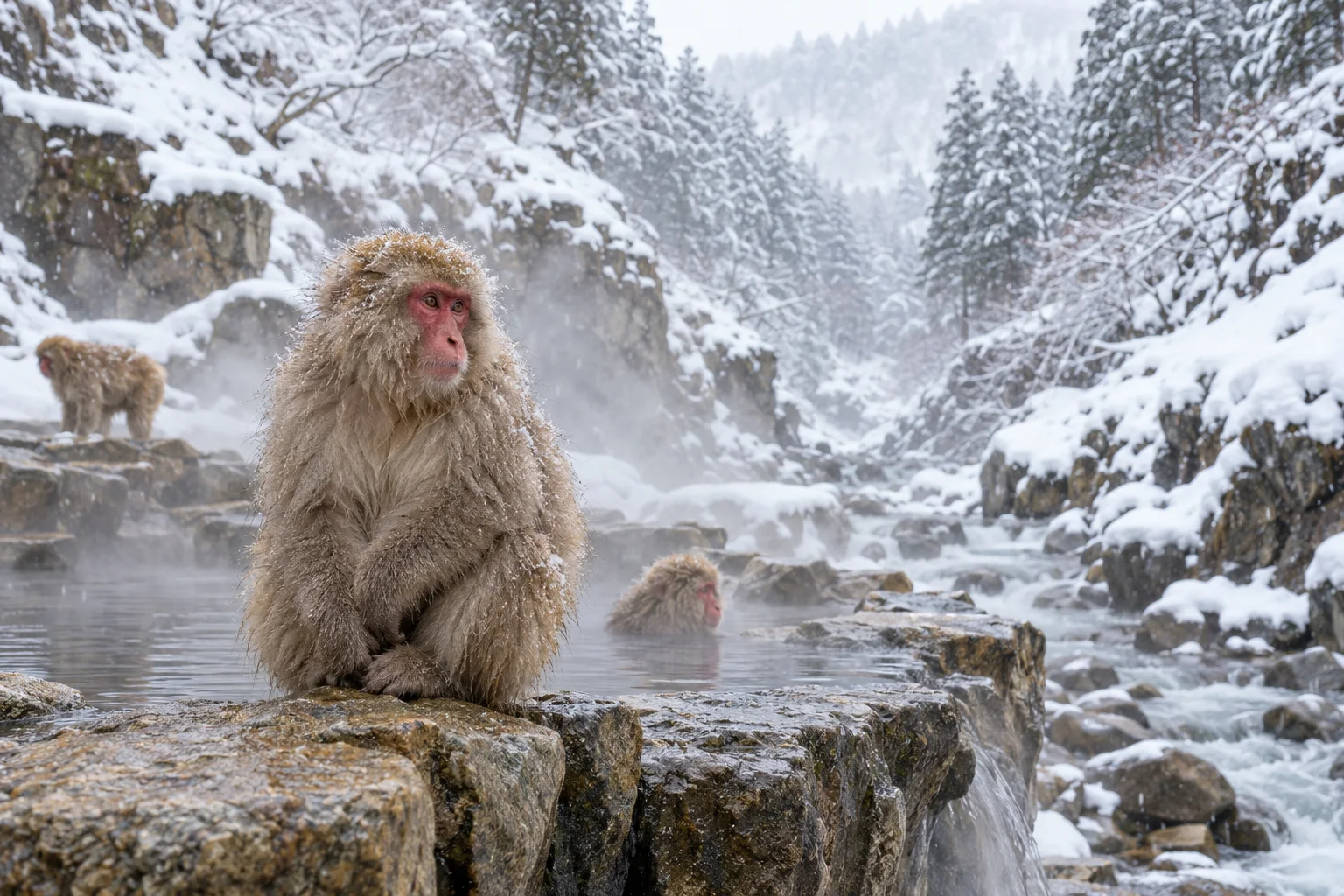
Reaching Jigokudani Snow Monkey Park involves public transport or driving to the broader Yamanouchi area, followed by a walking approach. The final path can be snowy, icy, wet or muddy. Check the park's current conditions before departure. Waterproof boots with strong tread, warm layers and gloves are basic equipment in winter.
Walking time varies with surface, fitness and crowds. A map's estimate is not a guarantee. Carry water, but keep food sealed and out of sight. There are limited facilities on the trail, so use toilets before beginning and pack out rubbish.
If a member of the group cannot safely manage the path, choose another activity and do not pressure them. Snow-monkey imagery is not worth a fall or cold injury.
Watch macaques without changing their behaviour
Japanese macaques at Jigokudani are wild. Some may use the hot spring; others may remain in the forest or valley. Their presence and behaviour cannot be guaranteed. Do not demand a refund from nature or approach an animal to manufacture the expected photograph.
Never touch, feed, call, imitate or stare closely at a macaque. Keep bags closed, children beside an adult and the route clear. Do not use flash near an animal or push a camera into its path. A monkey entering the water needs space to leave.
Use a longer lens and include the environment. The ethical photograph shows wild behaviour without bait or interference. If staff give an instruction, follow it immediately. An animal that bares teeth, approaches directly or appears agitated needs more distance.
Add an onsen town with correct expectations
Yudanaka and Shibu Onsen can turn the outing into an overnight rather than a transport race. Ryokan schedules may include fixed dinner and breakfast times. Arrive when requested and explain dietary needs well in advance; a multi-course kitchen may not be able to make last-minute substitutions.
At a communal bath, wash before entering, keep towels out of the water and follow the property's rules. Ask in advance about tattoos, private baths, mobility access and mixed or gendered facilities. Never photograph in a changing room or bath, even when empty.
Traditional accommodation may use floor bedding, steps and shared bathrooms. Confirm what your group needs before booking. A modern hotel is not a lesser experience if it makes the trip workable.
Choose a second day by season
The surrounding slopes put Nagano on the world map when it hosted the 1998 Winter Olympics. In winter, skiing and snowboarding require proper equipment, lessons when needed and insurance covering the activity. Check avalanche and resort information; do not follow tracks beyond controlled terrain. A clear city forecast says little about mountain wind or visibility.
Outside winter, consider Obuse for museums and chestnut food, Togakushi for shrine and forest routes, or another city day. Togakushi paths and buses require seasonal checks, footwear and realistic timing. Summer thunderstorms and heat still affect mountain walking.
Do not combine a remote shrine, monkey park and ski session in one day. Each adds transport, changing clothes and weather exposure. One mountain objective is enough.
Food, craft and local identity
Nagano is associated with soba, apples, mushrooms, oyaki, sake and preserved foods. Ingredient lists may be difficult for allergies; buckwheat can cause severe reactions, and noodle kitchens may share water or equipment. Carry a Japanese allergy explanation.
For gifts, look for food from a named producer, woodwork, paper or prints connected to an identified maker. Check whether regional food can be carried through your destination's customs and whether it contains an allergen. An object with a clear maker and place of production tells a more useful story than a generic souvenir.
Safety, access and final preparation
Cold injury can begin before someone admits discomfort. Watch for numbness, clumsiness, confusion and persistent shivering. Move indoors, replace wet layers and seek help. Carry traction aids only if you know how and where to use them; they do not make every icy path safe.
Zenko-ji and city transport offer accessible options, but historic thresholds and mountain paths vary. Contact the park, temple and accommodation directly about surfaces, steps, toilets and assistance. Snow can temporarily change an otherwise accessible route.
The evening before, check rail, bus, park and weather updates from official sources. Keep a city alternative if the mountain route is unsafe. Explore the Nagano place page, return to the Japan hub, compare the seasonal scale of Hokkaido, or continue the craft route through Kanazawa.
Questions and answers
Can Nagano City and the snow monkey park fit into one day?
They can with an early start, but an overnight gives weather and transport flexibility and allows Zenko-ji to receive proper time.
Are snow monkeys guaranteed to enter the hot spring?
No. They are wild animals whose location and behaviour depend on weather, food and natural choice. Never demand a guaranteed performance.
Do visitors need winter boots for Jigokudani?
In snowy or icy conditions, waterproof footwear with strong grip is essential. Ordinary smooth-soled shoes are unsafe on the access path.
Sources
Tokyo · 35.6762° N, 139.6503° E
This story belongs to Nagano, Japan. A country that is really many places: an imperial capital, merchant ports, a rebuilt peace city, a northern Ainu homeland and craft towns.