Palm Springs Modernism: Hot Springs, Neutra and the Desert Tram
Agua Caliente homeland, 1940s desert modernism and the 1963 Aerial Tramway explain Palm Springs, with a heat-smart route through the valley.
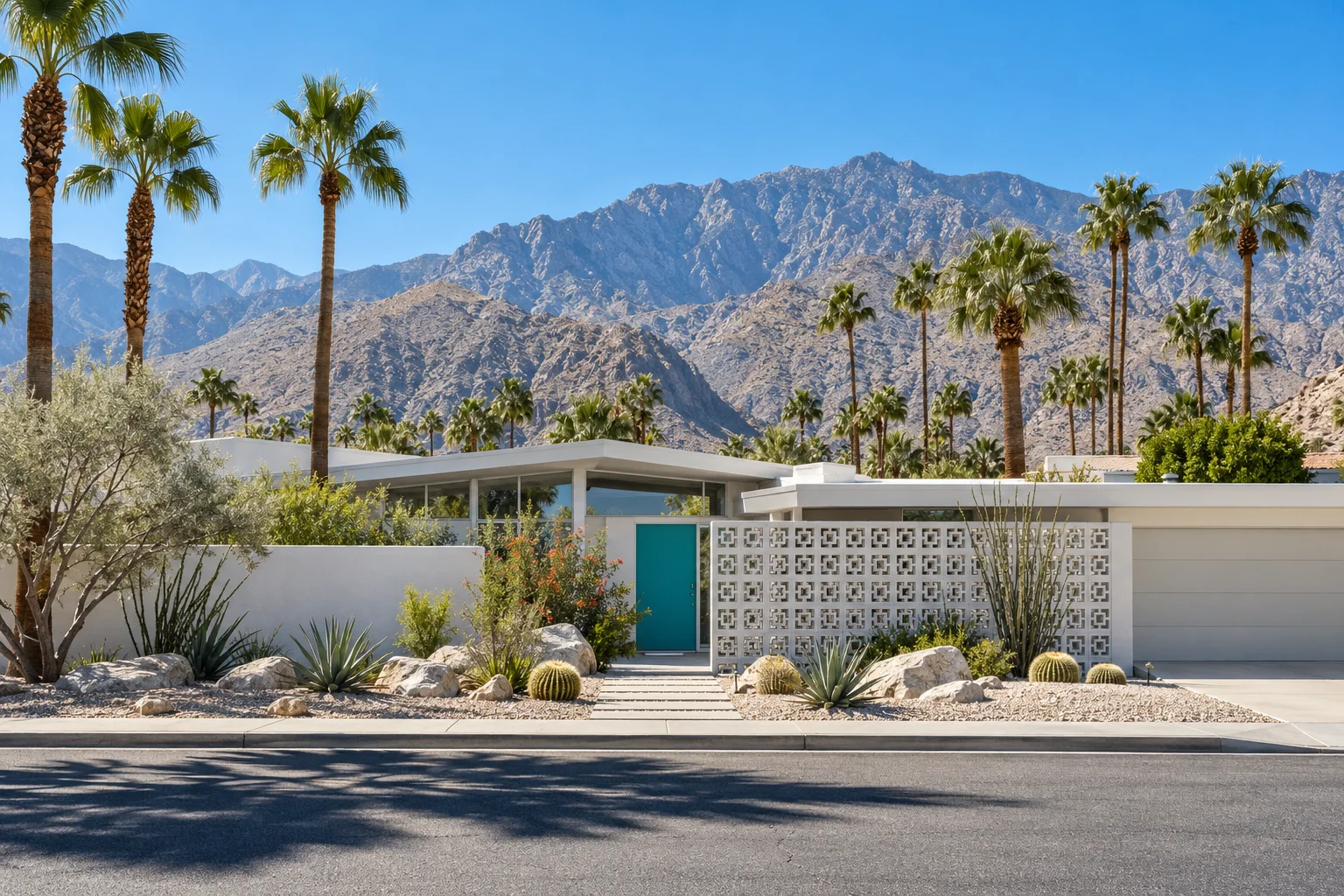
Cover: AI-generated illustration. © ANUSHKA DAHANAYAKE (PVT) LTD.
Palm Springs is a desert oasis twice over: first as the homeland of the Agua Caliente Band of Cahuilla Indians, who built a culture around its hot mineral springs, and then as a twentieth-century retreat where architects tested what modern design could do in a hot, dry climate. The palms and pools are a result, not the origin. Knowing both layers makes the city easier to read and the heat easier to respect.
The springs and the Agua Caliente
Archaeological evidence suggests Native people have lived in the Palm Springs area for more than 8,000 years. The Agua Caliente Band takes its name from a hot mineral spring that rises in the centre of today's city, and Indian Canyons and Tahquitz Canyon, where palm oases shelter streams, remain sacred to the Tribe. The Agua Caliente Indian Reservation was established here in 1876 by executive order of President Ulysses S. Grant. The reservation took shape in the 1870s as alternating sections of Tribal land and land held by the Southern Pacific Railroad. Palm Springs is unusual in the United States for its checkerboard of restricted tribal land intermingled with private and public parcels, a pattern that still shapes development.
Walking the palm-lined canyons is the clearest way to see what drew people to the oasis in the first place. The canyons are run by the Tribe, with their own admissions, hours and cultural expectations, so consult the official tribal source before visiting and follow every instruction.
From hotel village to Hollywood hideaway
The hot spring at Séc-he was already in written records by 1823. Permanent non-Native settlement began in the 1880s with John Guthrie McCallum, and Welwood Murray opened the village's first hotel in 1886. In the early resort era, from about 1900 to 1935, Nellie Coffman's Desert Inn became the social centre. From the 1930s to the 1960s Hollywood made Palm Springs a national destination: studio contracts that kept stars within two hours of Los Angeles turned it into a convenient escape, and the later midcentury boom brought Elvis and Priscilla Presley here for their honeymoon in May 1967. LGBTQ+ leadership and preservation campaigns since the 1970s have shaped the city's identity and helped save many of the buildings that visitors now tour.
Desert modernism: Neutra, Frey and the tram
Architects found the Coachella Valley's light, mountains and winter sun an ideal test bed. Richard Neutra designed the Kaufmann Desert House for Edgar J. Kaufmann Sr., the Pittsburgh department-store owner who had earlier commissioned Frank Lloyd Wright's Fallingwater; it was built around 1946-47 as a winter retreat and is designated a Class 1 Historic Site by the Palm Springs City Council. Albert Frey, whose own Frey House II dates to 1964, tied his career to Palm Springs. Visit Palm Springs also names E. Stewart Williams, Donald Wexler, Dan Palmer and William Krisel among the midcentury architects who defined the city.
The Palm Springs Aerial Tramway, which opened in September 1963, is the era's engineering showpiece. The Valley Station was designed by Frey and Robson Chambers, and the Mountain Station by E. Stewart Williams. It is described as the largest rotating aerial tramway in the world, lifting visitors from desert floor to mountain forest in minutes. The design lesson is climate: deep shade, indoor-outdoor living and strong horizontal lines that respond to mountain geography, not just colourful doors and breeze-block patterns.
A three-day route that follows the design
Begin day one at the Palm Springs Art Museum or an architecture centre for design context, then take a reputable guided tour, a published self-guided route or public street views. Homes remain private: do not enter driveways, climb walls, hold a photo session on someone's pavement or fly a drone over a residence, and avoid publishing house numbers or images of residents. Move indoors by midday. Downtown offers museums, galleries and restaurants within a small area, and a locally designed print or book reflects Palm Springs better than a copied architectural motif.
Day two is the tramway or a carefully chosen trail. The operator publishes separate winter and summer schedules and warns that hours can change, so check the first and last tram for your date. Carry a warm layer, because the top is dramatically cooler than downtown. If hiking instead, treat the city's heat guidance as a limit: the Palm Springs Fire Department warns that extreme heat can cause dehydration, heat exhaustion and heat stroke rapidly. Start early only when the forecast is appropriate, carry substantial water, hike with a partner, and abandon summer afternoon hikes. Do not approach rattlesnakes or bighorn sheep.
Day three picks one direction. Palm Desert offers shops and gardens, Desert Hot Springs a separate spa history, and Indian Canyons and Tahquitz Canyon the Tribe's own sites. Joshua Tree National Park needs a separate day and a realistic driving plan: limited services, temperature swings and mobile dead zones demand water, fuel and offline navigation. Never climb vegetation or leave marked surfaces for a photograph.
Heat, getting around and the practical rest
Late autumn through early spring offers the most comfortable outdoor conditions and the highest demand; Modernism Week and festivals raise rates sharply. Summer is cheaper but dangerously hot. A downtown base supports walking, buses and occasional rides; SunLine buses serve the valley but frequency may not suit every plan, and architecture routes and Joshua Tree are easier by car. Palm Springs is one city in a larger valley, so an address in Palm Desert, Rancho Mirage or Cathedral City is not necessarily close to downtown.
Drink water regularly, reduce alcohol in hot periods and never leave a person or animal inside a vehicle. Supervise pools, since resort rules on glass, diving and hours vary. Desert nights can feel cold after a hot afternoon, and winter storms can bring snow to the mountains, so check both valley and mountain forecasts for an elevation day. Ask hotels about doorway widths, shower configuration and the route from parking rather than assuming a modern building is accessible.
Continue through our United States collection, read what makes the United States special, explore California's coast in the San Diego guide, or compare another distinctive art city in the Santa Fe guide.
Questions and answers
Can Palm Springs be visited without a car?
A central stay can support downtown walking, buses and rides. A car is more useful for dispersed architecture, neighbouring cities and Joshua Tree.
Is summer hiking safe in Palm Springs?
Extreme heat can become life-threatening quickly. Follow city warnings, avoid peak heat and cancel hikes when conditions are unsafe.
Can visitors photograph Palm Springs homes?
Photograph only from lawful public viewpoints without blocking roads, entering property or identifying residents. Tours should follow local rules.
Sources
New York City · 40.7128° N, 74.0060° W
This story belongs to Palm Springs, United States. A country of home towns and large ideas, from Independence Hall and the first national park to jazz, skyscrapers and volcanic islands.