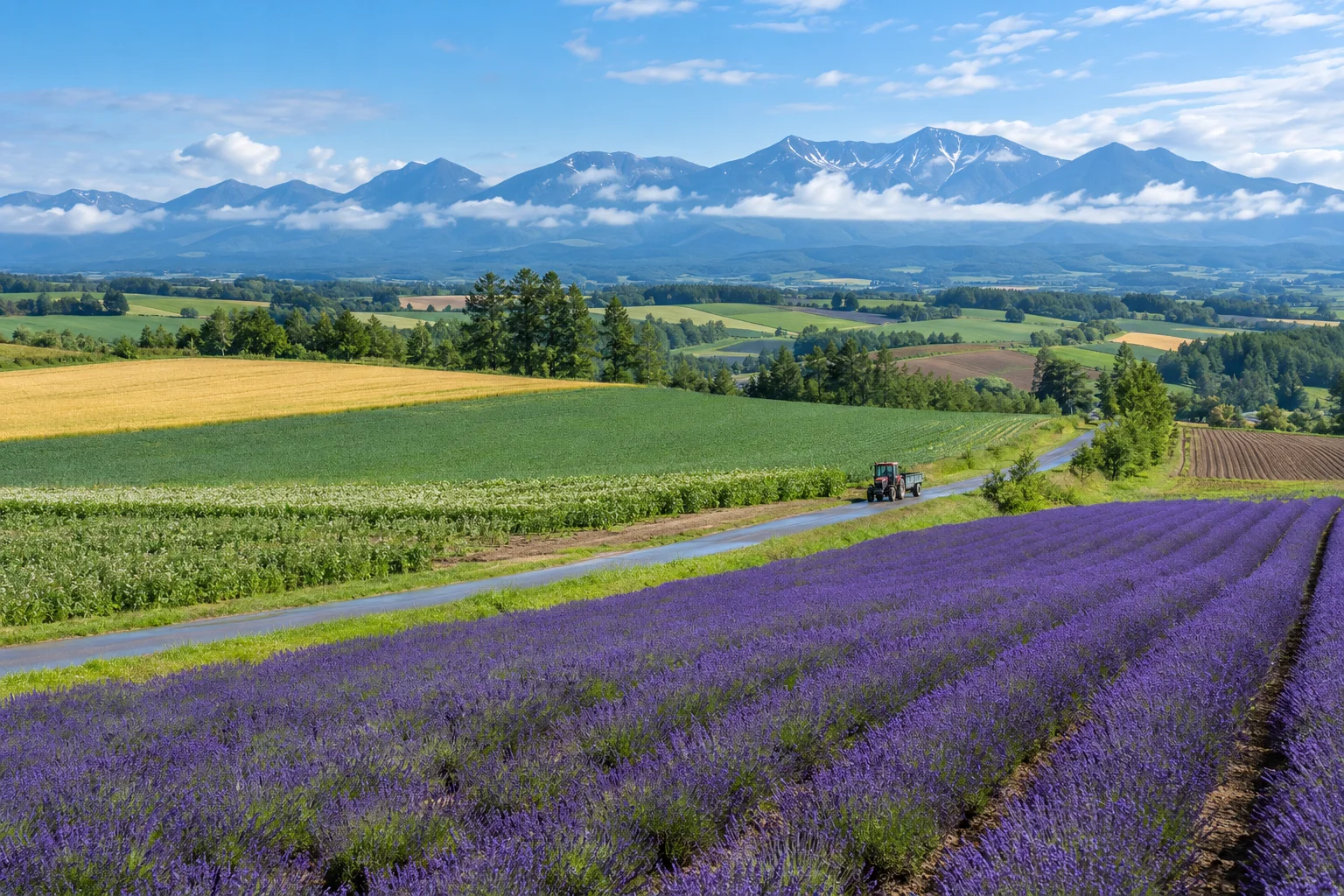
Japan's northern island: an Ainu homeland, a pioneer farming frontier and Shiretoko's UNESCO wilderness, all on an unusually large scale.
What makes Hokkaido distinctive
Hokkaido is Japan's northern island and largest prefecture, covering 83,424 square kilometres. For most of Japanese history it was Ezo, the homeland of the Ainu, before Japan annexed and renamed it in 1869. It became a full prefecture in 1947. Ainu heritage, pioneer farming settlement and large wild landscapes give it an identity unlike anywhere else in the country.
Shiretoko was inscribed as a World Heritage site on 14 July 2005, and Upopoy, the National Ainu Museum and Park at Shiraoi, opened in 2020 with about 10,000 items.
Home to the Ainu, annexed and renamed in 1869, and now known for Shiretoko, a snow festival that began with six statues and the museum that opened in 2020.
· 4 min read
Questions and answers
Who are the Ainu?
The Ainu are the indigenous people of Hokkaido, recognised as such under a law enacted in April 2019. Upopoy, the National Ainu Museum and Park at Shiraoi, opened on 12 July 2020.
What makes Shiretoko special?
Inscribed by UNESCO on 14 July 2005, it has seasonal sea ice formed at the lowest latitude in the northern hemisphere, feeding an unusually productive ecosystem.