Singapore · Country Guides
Tiong Bahru Beyond the Cafés: A Neighbourhood Guide
A useful Tiong Bahru walk connecting pre-war housing, market life, murals and local businesses without treating a residential estate as a photo set.
· 6 min read
Tiong Bahru · 1.2851° N, 103.8271° E
A lived-in residential estate known for rounded pre-war flats, a working market, a Monkey God temple, murals and a layered history beyond its cafés.
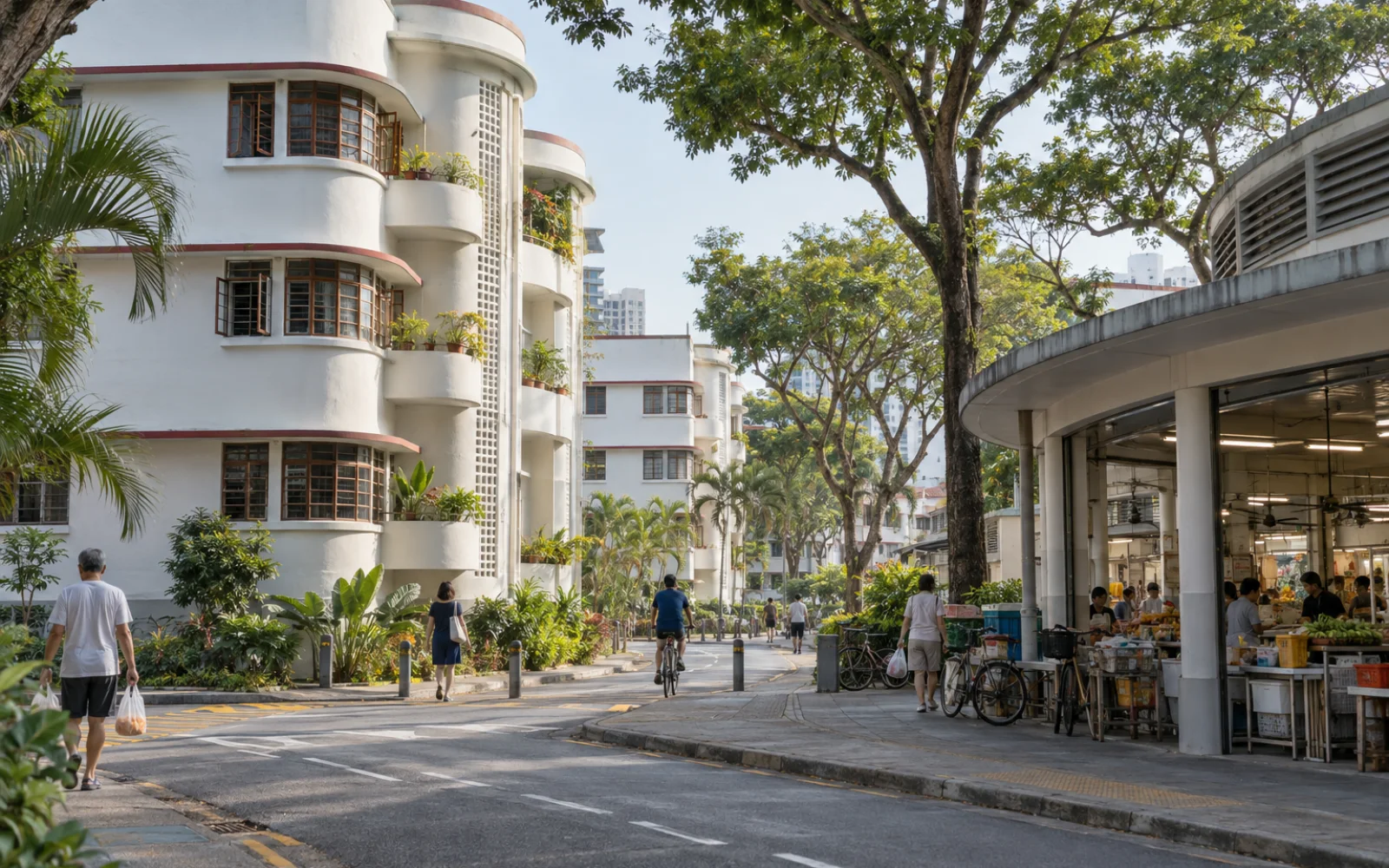
Tiong Bahru is usually described as Singapore's first public housing estate. The Singapore Improvement Trust began building here in 1936, finished its first block, Block 55, at the end of that year and completed more than 780 flats by 1941. Twenty of the pre-war blocks were gazetted for conservation in 2003. Their rounded balconies, horizontal lines, external stairs and shaded corridors answered both modern architectural ideas and tropical living.
The estate is also a working neighbourhood. Tiong Bahru Market anchors daily life, Qi Tian Gong Temple, associated with the Monkey God, remains a place of worship, and murals record community memories of the estate. Its history reaches back before the flats to burial grounds, and includes wartime air-raid experience.
The Tiong Bahru neighbourhood guide explains the architecture, the market and the heritage trail. For more of the city, browse the Singapore collection.
Singapore · Country Guides
A useful Tiong Bahru walk connecting pre-war housing, market life, murals and local businesses without treating a residential estate as a photo set.
· 6 min read
Its low-rise pre-war flats use curved corners, horizontal lines, shaded corridors and tropical ventilation rather than the towers common elsewhere.
Remain on public paths, keep entrances clear, lower voices and avoid photographing residents through windows or using stairwells as portrait sets.
One short, occasional email with a useful new guide, a place story and notes on what we have updated.
Join by emailSend us that email and we will add you to the list. We only email people who ask, and you can leave any time. See our privacy policy.
