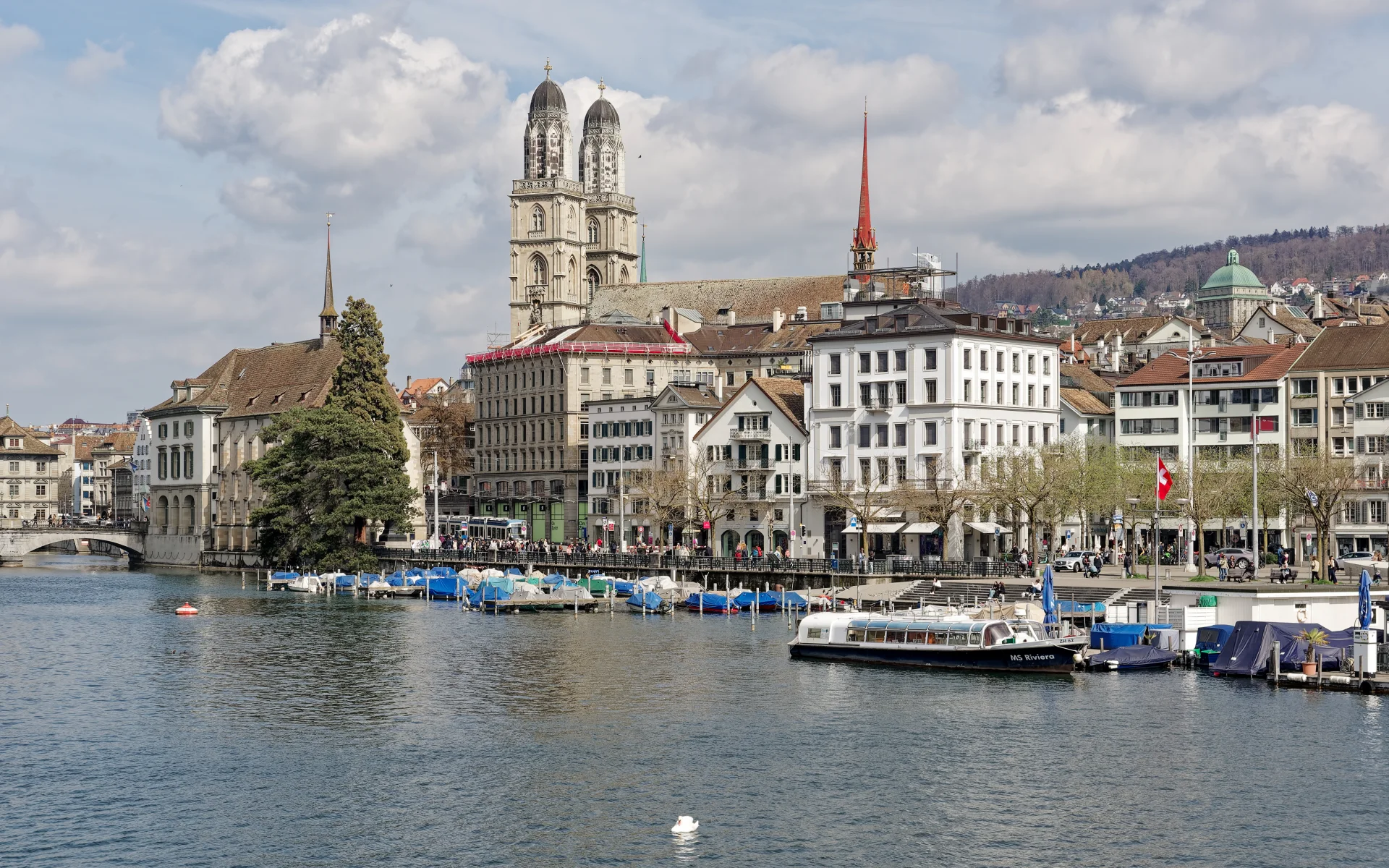
A river-and-lake city whose Reformation churches, Dada history, neighbourhoods and trams matter as much as its polished centre.
A city that opens beyond the old town
Zürich is a river-and-lake city whose reputation for banking hides an unusually restless cultural history. Romans established a customs post here called Turicum. The settlement became a free imperial city in 1218 and joined the Old Swiss Confederacy in 1351. In 1519, under Huldrych Zwingli, it became one of the main centres of the Protestant Reformation, and the church towers on the riverbank, including the Grossmünster, belong to that argument.
In February 1916 Hugo Ball and Emmy Hennings opened the Cabaret Voltaire at Spiegelgasse 1, whose performances are counted as the beginning of Dada. Today Zürich is the country's largest city and home to ETH Zurich, and districts such as Zürich-West, Enge, Wiedikon and Seefeld each carry a different rhythm along the Limmat and the lake.
From Roman Turicum to a free imperial city, Zwingli's Reformation and the Cabaret Voltaire, Zürich's story is told along the Limmat and the lake.
· 4 min read
Questions and answers
What makes Zürich distinctive?
The Limmat and the lake, a Reformation history under Zwingli, the birth of Dada at the Cabaret Voltaire in 1916 and distinct neighbourhoods linked by trams.
Is Zürich only a financial city?
No. It is also a centre of the Reformation, the home of ETH Zurich and the place where Dada began in 1916.