Abisko Travel Guide: Trails, Aurora and Arctic Safety
An honest guide to Abisko National Park's trails, mountain weather, northern lights, midnight sun and low-impact travel.
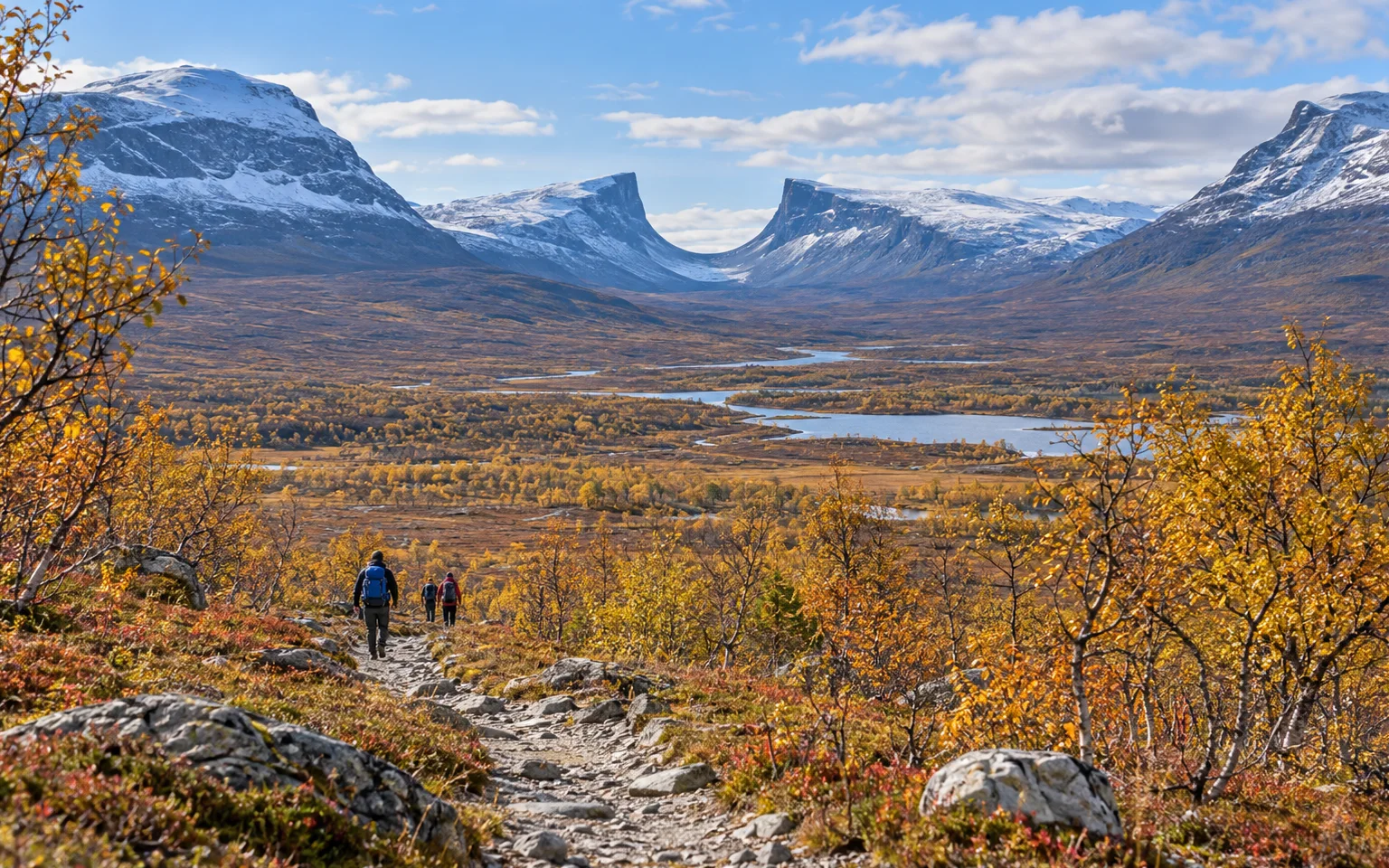
Cover: AI-generated illustration. © ANUSHKA DAHANAYAKE (PVT) LTD.
Abisko National Park is one of Swedish Lapland's most accessible mountain landscapes, but “accessible” is relative. A railway delivers visitors beside Lake Torneträsk, birch woodland and the start of the Kungsleden trail; beyond the station are cold, wind and terrain that demand judgement. Abisko rewards travellers who choose a season deliberately and leave space for weather.
Understanding the park
Abisko was protected in 1909, the year Sweden passed its first nature-conservation laws and created its first national parks, and scientists were here even earlier: a research station opened in 1903 and moved to its present Abisko site in 1913, making this one of the longest-studied subarctic landscapes anywhere. The iron-ore railway built through the valley early in the twentieth century is what opened it to visitors.
The Abiskojåkka river cuts a canyon near the visitor centre, creating the easiest short walk. Njullá mountain and the STF tourist station anchor many activities, while Lapporten—the U-shaped mountain gate visible to the southeast—is a landscape feature, not a roadside attraction to reach quickly. Kungsleden begins at Abisko and runs south; walking its first kilometres does not require committing to the whole trail.
Abisko village, Abisko Östra, and the tourist station are separate. Confirm which rail stop, shop and restaurant serves your accommodation. Services are sparse, particularly between seasons. Buy supplies before arrival if self-catering and never assume a late train will be met automatically.
Getting there and local movement
Night trains from Stockholm and services from Kiruna or Narvik stop in the area, subject to timetable; our Kiruna guide covers the mining town most travellers pass through on the way. Reserve sleepers early and build disruption margin. Abisko Turiststation is closest to park facilities; Abisko Östra serves the village. Missing the distinction with luggage in winter is a serious inconvenience.
A car is unnecessary for a compact stay, though useful for side trips. Winter roads require experience, proper tyres and emergency clothing. Tours may collect guests, but pickup locations vary. Inside the park, movement is primarily walking, skiing or snowshoeing; snowmobiles are regulated and visitors should follow marked restrictions.
Choosing the right season
February and March balance snow, dark evenings and useful daylight. December and January have polar night and severe cold; they suit travellers who understand that outdoor time may be short. Aurora activity needs darkness and clear sky, not simply a famous location. Stay several nights, watch cloud forecasts and reject any guarantee.
June and July bring midnight sun and hiking, but high trails retain snow and meltwater raises streams. Mosquitoes can be intense in sheltered areas. August has cooler hiking and berries; September brings autumn birch colour, dark nights and possible early snow. Late April–May and October–November are transitions when trails, ice and businesses can be awkward.
A flexible three-day itinerary
Day one: check in, visit Naturum when open and walk the canyon loop in suitable conditions. Ask staff about closures, river levels and current trail surfaces. Do not begin a remote route immediately after an overnight train.
Day two: choose one major outing. In summer, follow a marked trail towards Njullá viewpoints or along Kungsleden, turning back with generous reserve. In winter, join a guided snowshoe or ski trip unless experienced in Arctic travel. Keep evening free for aurora, but sleep if cloud or fatigue makes waiting unproductive.
Day three: use weather to decide between a second trail, lake views and a guided cultural or nature activity. A chairlift or seasonal facility should never be assumed open; verify before building the day. In bad weather, shorten exposure and use indoor interpretation and skip the photograph.
Equipment, costs and booking
Summer day walkers need waterproof shell, insulating layer, hat, gloves, map, food and water. Winter visitors need base layers, serious insulation, face protection and boots with space for warm socks. Traction aids help around compacted paths but do not replace winter skill. Phone coverage and batteries are unreliable; download maps and carry backup power warm.
Beds are limited, and prices vary sharply by season, room type and booking terms. Compare a dormitory bed, private room and guided activity for your actual dates before setting a budget. Meals at remote accommodation cost more than town restaurants. Check whether linen, breakfast, sauna, equipment and station transfer are included. Reserve winter weekends and the main summer hiking season well ahead.
Self-caterers should plan every meal because shop range and hours are small. Pack out waste from trails. Water from maintained taps is simplest; untreated surface water always carries some risk despite a pristine appearance.
Safety, access and low-impact travel
Tell accommodation or a trusted person your route and return time. Turn around for rising wind, whiteout, deep water or fading daylight. Avoid frozen rivers and lakes unless current local authorities explicitly confirm a route. In cold conditions, numb skin, clumsiness and uncontrolled shivering demand immediate action. Emergency rescue is not a substitute for planning.
The station area and visitor facilities have some step-free access, but snow, gravel, roots and steep trails limit independent mobility. Ask for precise distances, gradients, surfaces and adapted equipment. An accessible room does not guarantee an accessible nature programme.
Read Abisko National Park's current visitor rules before setting out. Camping and fires are restricted to designated places; dog-control rules and protected areas also apply. Landing a drone in the park is prohibited under the published park regulations. Give reindeer wide space and do not block their movement. Quiet observation improves both wildlife welfare and the visitor experience.
Photographers should carry a red-light option, avoid shining torches at other people and leave enough room on viewing platforms. For aurora, manual camera settings and a stable tripod matter more than approaching dangerous slopes. In summer, midnight light disrupts sleep, so pack an eye mask; in winter, schedule daylight exposure to support wellbeing.
Decisions before leaving the station area
Write down the turnaround time, weather trigger and backup route. A forecast icon cannot describe ridge wind or visibility, so ask staff about the exact trail. Carry more food than the planned duration requires and keep an emergency layer dry. Groups should match the slowest member and stay together. Solo hikers need a named contact who will raise concern at an agreed time.
Rail disruption deserves its own plan. Do not place an international flight directly after a winter train from Abisko, and keep contingency funds. Download tickets and contacts. If a service is cancelled, follow operator instructions and never walk beside the railway or accepting an unverified lift.
Wildlife watching should remain passive. Telephoto lenses prevent pressure on birds and mammals, while food scraps attract animals to people. Reindeer may move through apparently empty areas; step aside, stop dogs and wait. These habits, together with staying on durable ground, matter more than claiming a pristine destination while leaving damage.
Patience is essential here. Travellers comparing aurora bases across the border can read our Finnish Lapland northern lights guide.
Continue with our Sweden guide and discover the Sweden places page.
Questions and answers
How many days do you need in Abisko?
Three nights give time for a short canyon walk, one substantial day hike and several chances for clear aurora skies in winter.
Can you reach Abisko without a car?
Yes. Trains serve Abisko Östra and Abisko Turiststation, but departures are limited and delays occur, so confirm the correct stop for your lodging.
When is the best time for northern lights?
Dark nights occur from late August into April. February and March combine darkness with longer daytime and established snow, but aurora is never guaranteed.
Is Abisko suitable for inexperienced hikers?
Marked short trails are manageable in good summer weather, but mountain conditions change quickly. Winter travel and longer routes require suitable skills, equipment or a guide.
Sources
Stockholm · 59.3293° N, 18.0686° E
This story belongs to Abisko, Sweden. Bronze Age carvings, a walled Hanseatic town, a prize founded by an inventor's will and a public right to walk through the forest.