Antwerp for First-Time Visitors: Art, Fashion and a Two-Day Plan
Antwerp opened a purpose-built exchange in 1531, still holds the oldest printing presses in the world and sent the Antwerp Six to London in 1986.
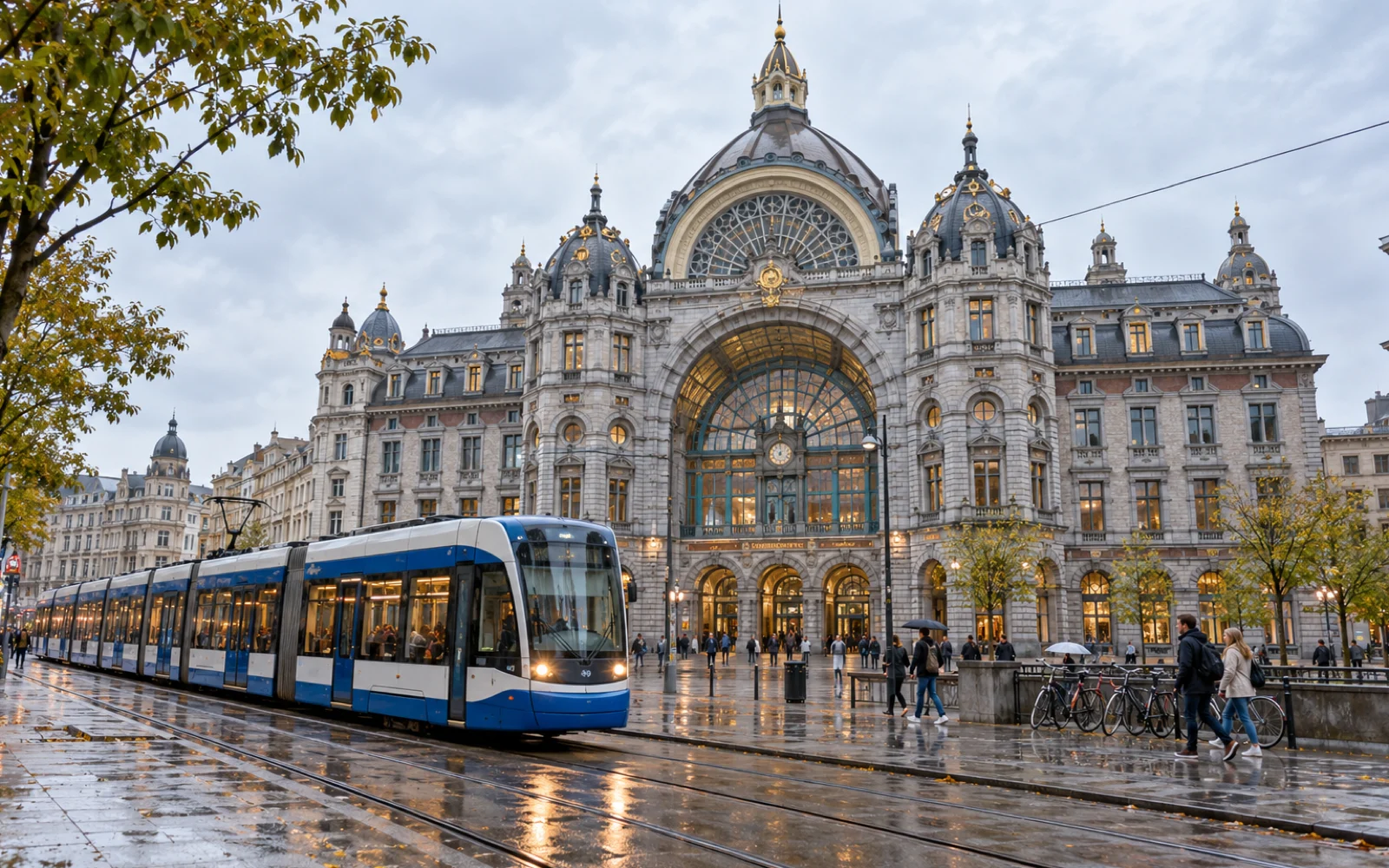
Cover: AI-generated illustration. © ANUSHKA DAHANAYAKE (PVT) LTD.
Antwerp's story begins with a legend and a river. According to the old tale, a giant named Druon Antigoon charged tolls on the Scheldt and cut off the hand of anyone who refused to pay, until Silvius Brabo killed him and threw the giant's hand into the water. The statue in the Grote Markt shows the throw, and the Antwerpse Handjes biscuits sold across the city carry the legend into the shops. The legend is unlikely to be the true origin of the name, but it explains why the city teaches its children about the river.
Trade made the real city. During the sixteenth century, Antwerp grew into a major trading centre, and its Golden Age is closely tied to the Age of Exploration. Its stock exchange opened in 1531, carrying the inscription "To the merchants of all nations", and is described as the world's first purpose-built commodity exchange. The port that fed that wealth is still working: today the Port of Antwerp ranks second in Europe after Rotterdam, and the city is known as the hub of the world's diamond trade. A walk along the quays shows how the legend, the exchange and the diamond trade all depend on the same stretch of water.
Ideas moved through Antwerp as readily as goods. Christophe Plantin moved to the city around 1550, and his house, De Gulden Passer, became the base of a printing house that passed to his son-in-law Jan Moretus. The Museum Plantin-Moretus houses the two oldest surviving printing presses in the world, a 36-line Gutenberg Bible and the five-language Biblia Polyglotta of 1568-1573. UNESCO inscribed it in 2005, and the archive had already entered the Memory of the World Register in 2001. A few streets away, the Cathedral of Our Lady has a north tower 123 metres high, completed in the early sixteenth century, and it displays Rubens' The Descent from the Cross of 1612.
Antwerp's modern pride is design. In 1986 six designers who had studied at the Royal Academy of Fine Arts, among them Dries Van Noten, Ann Demeulemeester, Dirk Bikkembergs, Walter Van Beirendonck, Dirk Van Saene and Marina Yee, took their collections to London in a hired truck and were dubbed the Antwerp Six. Their breakthrough turned a port city into a fashion capital, and the MoMu fashion museum now keeps that story. Antwerpen-Centraal, a Beaux-Arts railway station built between 1895 and 1905 to Louis Delacenserie's design and nicknamed the railway cathedral, greets visitors with the same confidence.
Two days: station, Scheldt and one collection
After the station, walk west toward Rubenshuis. The historic Rubens residence is closed for restoration, while the Rubens Experience, garden and library have visitor access, so check hours before making it an anchor. Continue to Grote Markt for the guildhouses, city hall and the Brabo fountain, then enter the cathedral if services permit. Choose Plantin-Moretus for the afternoon, timed if the weekend is busy, and end at Het Steen and the Scheldt promenade, where watching river traffic gives better context than the old centre alone.
On day two, start at KMSKA, the Royal Museum of Fine Arts Antwerp, which ranges from old masters to modern art and can occupy several hours. Reserve where required. Fashion-focused visitors can choose MoMu and the surrounding district, and architecture and port history visitors may prefer MAS in the Eilandje docks, whose rooftop panorama depends on weather. The Red Star Line Museum nearby deserves focused time for migration history. If rain changes the plan, keep to one district: KMSKA pairs with the Zuid streets, and MAS with Eilandje.
The diamond district near the station is a working commercial area, not a museum set. If buying, compare written specifications, returns and certification instead of responding to pressure.
Costs, families and safety
Accommodation, museums and dinner form the main costs, while the station, river, markets and architectural walks are free. A city pass makes sense only when its current inclusions match your plan, and KMSKA, Plantin-Moretus and a desired restaurant should be reserved during exhibitions or holiday weekends. Carry a backup payment method even though cards are widely accepted.
Families can pair one museum with the riverside or the docks. The station is busy across several levels, so agree a meeting point, and keep children away from quay edges and cycle lanes. The zoo beside the station can fill most of a day, so include it by replacing a museum, not adding to the programme. Stations, shopping streets and busy trams warrant normal care with phones and wallets, and emergency number 112 covers urgent assistance. Port tours are fixed, security-controlled excursions, not permission to enter operational docks. Before departure, verify museum opening days, cathedral services and tram disruptions, and cap the programme at one substantial museum per day.
Trains, rules and food in one place
Direct trains connect Brussels, Ghent and other Belgian cities. Check SNCB/NMBS for engineering work and the exact train product, since a local ticket does not cover every high-speed service. If driving, study Antwerp's low-emission zone first, because some foreign vehicles require registration even when compliant and enforcement is camera-based.
Local foods include the Handjes biscuits, bolleke-style amber beer and Flemish dishes, and the beer is often stronger than its easy-drinking presentation suggests. Tipping is modest when service is included. Main streets are relatively level, but cobbles, tram tracks and construction interrupt routes, and historic properties may offer only partial accessible routes. Contact each venue with specific needs.
Spring and early autumn suit walking, and wind beside the Scheldt can make temperatures feel lower. Monday and holiday closures can reshape the itinerary. Antwerp is multilingual, but a greeting before switching to English is courteous. Respect worship in churches, ask before close-up market photographs and do not block cycle lanes. If time remains, choose one neighbourhood instead of another major museum: Zuid connects KMSKA with cafes, and Eilandje makes sense when MAS is already planned. Both Zuid and Eilandje are residential and working areas, so keep entrances clear.
Continue through the Belgium destination hub, read what makes Belgium special, or explore all country guides.
Questions and answers
How many days are enough for Antwerp?
Two days cover the historic centre, one major art museum and the old docks. Add a third for fashion, architecture or a slower neighbourhood day.
Can you visit Antwerp without a car?
Yes. Intercity trains arrive at Antwerpen-Centraal, and walking, trams and buses cover the visitor areas. A car adds parking and low-emission-zone complications.
Which Antwerp museum should a first-time visitor choose?
Choose KMSKA for a broad art collection, Plantin-Moretus for printing history, MAS for city and port perspectives, or MoMu for fashion.
Sources
Brussels · 50.8503° N, 4.3517° E
This story belongs to Antwerp, Belgium. Small, three-language and full of inventions the world knows without crediting Belgium: oil painting at its finest, the saxophone and lambic beer.