Bregenz and Lake Constance: Cable Car, Lakeside and Border Planning
A Bregenz base guide that separates the compact Austrian city, weather-dependent Pfänder and seasonal cross-border lake network.
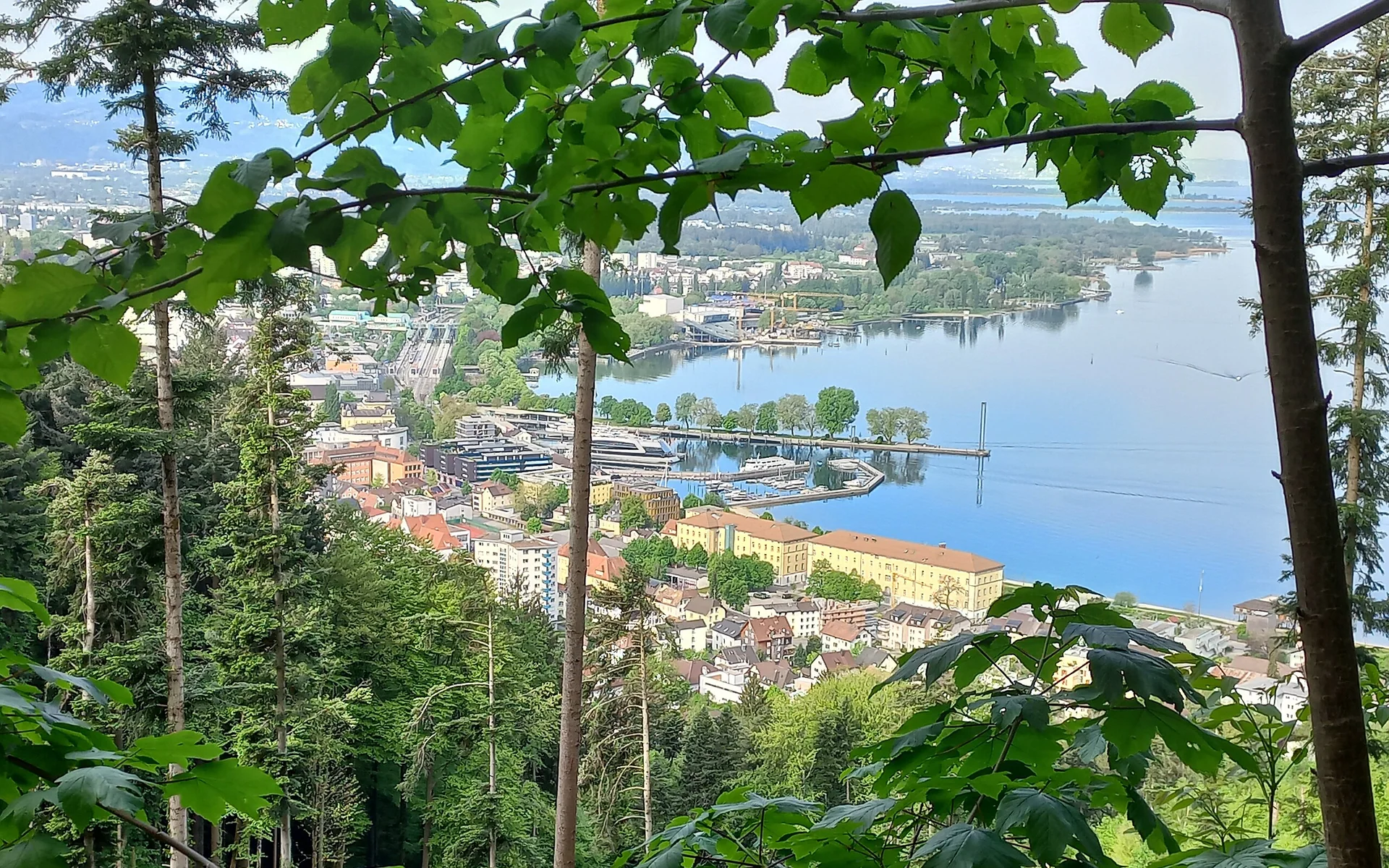
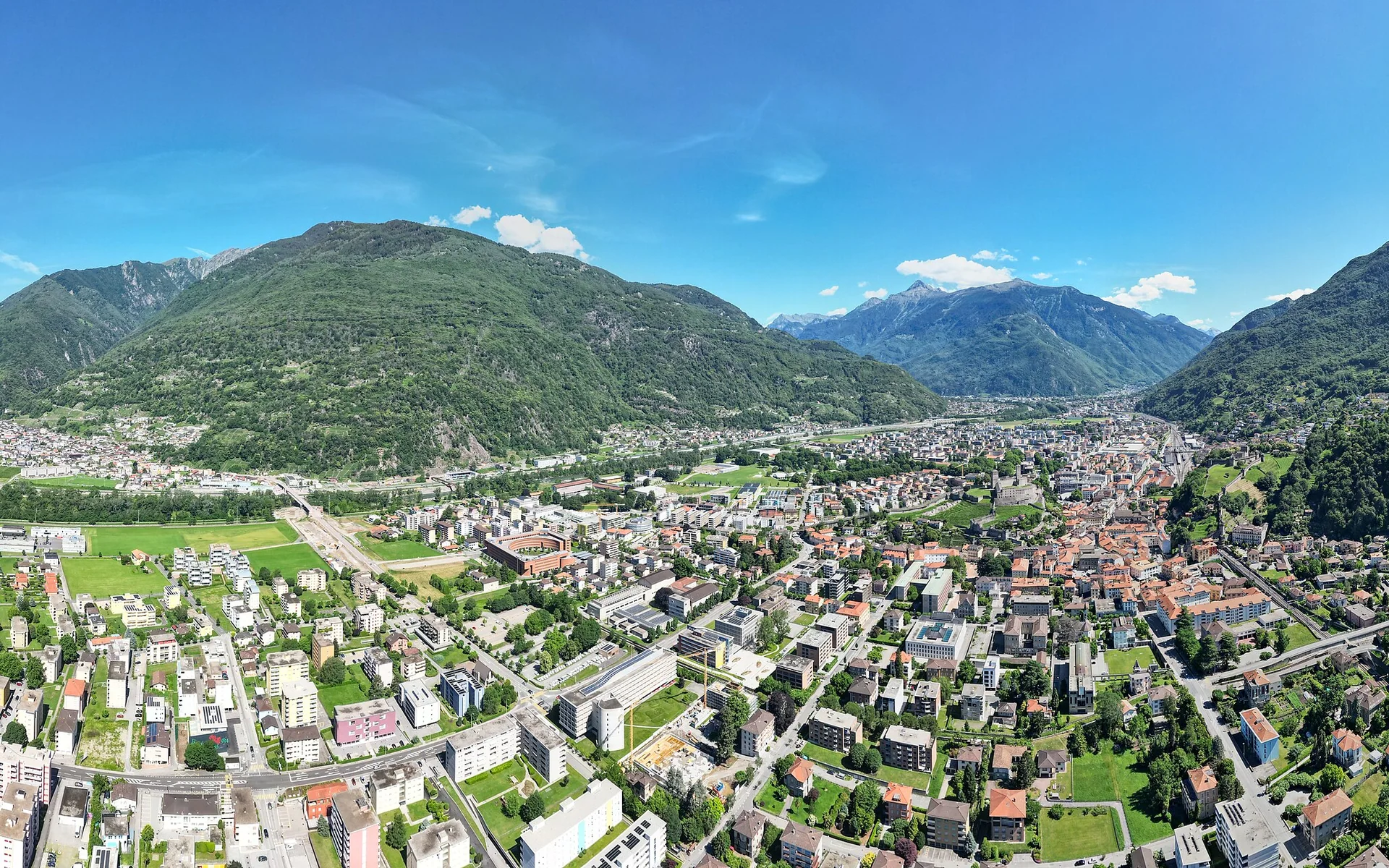
Bregenz works because three experiences meet in a small area: an Austrian lakeside city, the Pfänder above it and rail or boat links across borders. It fails when a visitor tries to collect Austria, Germany and Switzerland in a single day. Choose one city layer, one mountain window and at most one cross-border branch.
Cover photograph: “Bregenz-view from Pfaender to Bregen harbour, central station-caserne-lake constance-01ASD” by Asurnipal, licensed CC BY-SA 4.0. Cropped to 16:10 and converted to WebP; no generative alteration.
Why Bregenz matters: an old lake town with a modern eye
Bregenz is the capital of the Austrian state of Vorarlberg, and its story is written in two levels: the medieval Upper Town on the hill and the lakefront below. A relief of a Celtic goddess at the old city gate hints at how far back people lived on this shore.
The Upper Town's landmark, the Martinsturm, shows how a city grows by layers. It began around 1250 as a warehouse from the time of the city's founding, barely taller than the wall. In 1362 Count Wilhelm III of Montfort founded St Martin's Chapel inside it and had it decorated with frescoes, and between 1599 and 1601 the master builder Benedetto Prato raised it into a tower crowned by a huge wooden dome, the first characteristic baroque structure in the Lake Constance region. For centuries a watchman looked out from it for fire.
Local memory is kept in stories as well as stone. Bregenz still honours Guta, the old woman who, according to the city's tradition, warned the people of an attack by forces from Appenzell in 1406. The Old Town Hall of 1662 is the city's largest half-timbered building, and the 17th-century Deuringschlössle later inspired painters including Egon Schiele.
Modern Bregenz is just as proud of its architecture. The Kunsthaus Bregenz by the Swiss architect Peter Zumthor opened in 1997 with a translucent glass facade designed around natural daylight; it won the Mies van der Rohe Award for European Architecture in 1998, and Zumthor described it as looking, from outside, like a light fixture. In summer the lakeside festival stage turns the shore into an open-air opera house.
That combination of history, art and water, with the Pfänder rising behind and Germany and Switzerland a short ride away, is what makes the city a rewarding base, and it begins with where you stay.
Use the station-harbour axis as the base test
Bregenz Hauptbahnhof, the lakefront and the compact centre sit close enough to organise a car-free stay. Confirm the route from the platform to accommodation, particularly during events or construction. Bregenz also has Hafen and Riedenburg stations for regional services, but a similarly named stop is not automatically useful for an intercity arrival.
Stay near the centre when evening food and a simple departure matter. A lake-facing room farther out may require a bus or longer walk. Check VVV/VMOBIL for local transport and ÖBB for rail changes rather than using a static tourist map.
The Austria hub helps compare Bregenz with inland city and Alpine bases, and the guide to what makes Austria special sets the lake city within the wider country.
Walk the lower city before leaving the shore
Begin around Kornmarktplatz and the lakefront, then move into the upper town only when surfaces and gradients suit the group. Bregenz is compact, but the Oberstadt introduces slopes and old paving. The Martinsturm area and historic streets deserve time without being treated as a short pre-cable-car checklist.
The harbour and promenade change character around events and ferry departures. Keep boarding zones open and do not assume every pier is public. In summer heat, use the shaded city sections between exposed lake walks; in rain, pick a confirmed museum and skip waiting under a terminal roof.
Visitors with limited mobility should ask the tourism office about step-free approaches to the upper town. A level lakefront does not describe the whole city.
Assign the Pfänder to visibility, not the timetable alone
The Pfänderbahn rises from near the centre to Bregenz's local mountain. Check the operator's live status, maintenance dates and weather before buying. A running cable car does not guarantee long views across Lake Constance, and cloud can make a lower city day more rewarding.
At the top, choose between a short viewpoint visit and a signed walk. The latter requires appropriate shoes, layers, water and a return deadline. Mountain conditions can differ from the shore. Families should distinguish a manageable nearby circuit from longer paths that leave the cable-car area.
Do not walk down an unfamiliar route merely to avoid a return fare. Identify the grading, surface and final transport connection before committing.
Understand that the lake network changes by season
Lake Constance boats provide attractive links, but services and frequencies vary significantly. Check Vorarlberg Lines or the relevant operator for the date. A route shown on a regional diagram may be a summer connection, an excursion sailing or a service requiring a transfer.
Build the day around the dependable rail return, then add a boat only when the timetable aligns. Wind and operational changes can disrupt sailings. Keep enough time to reach the correct pier, and do not confuse a scenic cruise with point-to-point transport.
Bicycles, wheelchairs and large luggage have operator-specific rules and capacity. Confirm before arrival, because not every vessel accepts every item.
Choose one cross-border branch by purpose
Lindau in Germany is a logical heritage-and-harbour branch by regional rail or seasonal boat. St Gallen in Switzerland offers a different inland cultural day via rail. Friedrichshafen adds aviation and lake interests. Select one because it suits the traveller, not because a map places three countries within reach.
Cross-border tickets have validity zones and operator rules. The Bodensee Ticket may be useful, but compare it with point-to-point fares for the actual journey. Carry identity documents required for the trip and allow for delays even within the Schengen area.
Return to Bregenz before the last convenient connection. A late event, cancelled boat or missed transfer becomes more complicated when accommodation is across a national border.
Let the festival calendar change the city plan
The Bregenz Festival and its lakeside stage are major summer draws, but performance dates affect accommodation, restaurants, pedestrian routes and security controls. Book only through official channels and read weather or cancellation terms for an open-air event.
Outside performance periods, the stage area may have tours or restricted access; check before turning up, as entry is not guaranteed. Visitors uninterested in opera still need to know the calendar because crowds and prices can reshape a quiet lake break.
During a large event, arrive by rail, eat earlier and keep the next morning flexible. Do not schedule a first train connection immediately after a late performance without checking the actual service.
Plan for water without assuming a beach day
Lake access, lidos and swimming conditions vary by site and season. Use designated areas, follow local warnings and never enter near harbour traffic. Water temperature can remain cold even on a warm day. Children and weak swimmers need supervision, and an unsupervised shore is not equivalent to a managed pool.
A rainy visit can still use the Vorarlberg Museum or Kunsthaus Bregenz after confirming hours and current exhibitions. Choose one indoor anchor, not a rush through both, to replace a cancelled mountain.
The Innsbruck guide offers a comparison with an Austrian city where the mountain relationship is different, and the Zell am See guide shows how another Austrian lake town pairs water with a mountain. Lake Constance border logic is best kept within official transport planning.
Build a two-day sequence with one movable half-day
Day one can cover Bregenz's lower and upper city, lakefront and one museum. Keep the Pfänder for the clearest half-day. Use the remaining half-day for Lindau or another chosen branch only if the return is simple and no major event consumes the evening.
If there is one day, decide between mountain and border excursion. Trying both usually turns the city into a transfer point. In fog, skip the summit and deepen the city; when boats are off-season, use rail without treating it as a compromise.
End the plan with a border-proof return
Save the final hour in Austria, not on a distant pier. Check the platform and service in the official journey planner, carry a backup payment method and know whether the ticket needs validation. A hotel guest card may include transport, but only within stated zones and dates.
The premium Bregenz experience is simple: see the city as a city, use the Pfänder when it can deliver a safe mountain window, and cross one border only when the journey adds a clear reason to the stay.
Questions and answers
Is Bregenz a practical car-free base?
Yes. The main station, harbour, centre and Pfänder cable-car valley station are close, while regional trains connect nearby lake towns. Check the exact border ticket and seasonal boat timetable.
What is Bregenz known for?
Bregenz is the capital of Vorarlberg and is known for its lakeside festival stage, its Upper Town with the Martinsturm, raised into a tower with a large wooden dome in 1599 to 1601, and the Kunsthaus Bregenz, a glass-clad art museum by Peter Zumthor that opened in 1997.
Does the Pfänder cable car operate in all weather?
No mountain lift should be assumed to run regardless of wind, maintenance or conditions. Check the operator on the day and keep a lakeside alternative.
Sources
Vienna · 48.2082° N, 16.3738° E
This story belongs to Austria. A country whose best-known exports are carried in the head: a carol, a waltz rhythm, Mozart and an hour over one coffee.