Haarlem for First-Time Visitors: Art, Hofjes and a Better-Paced Day Trip
A practical Haarlem route that balances major art, quiet courtyards and the market square, with honest advice on transport, access, time and nearby coast trips.
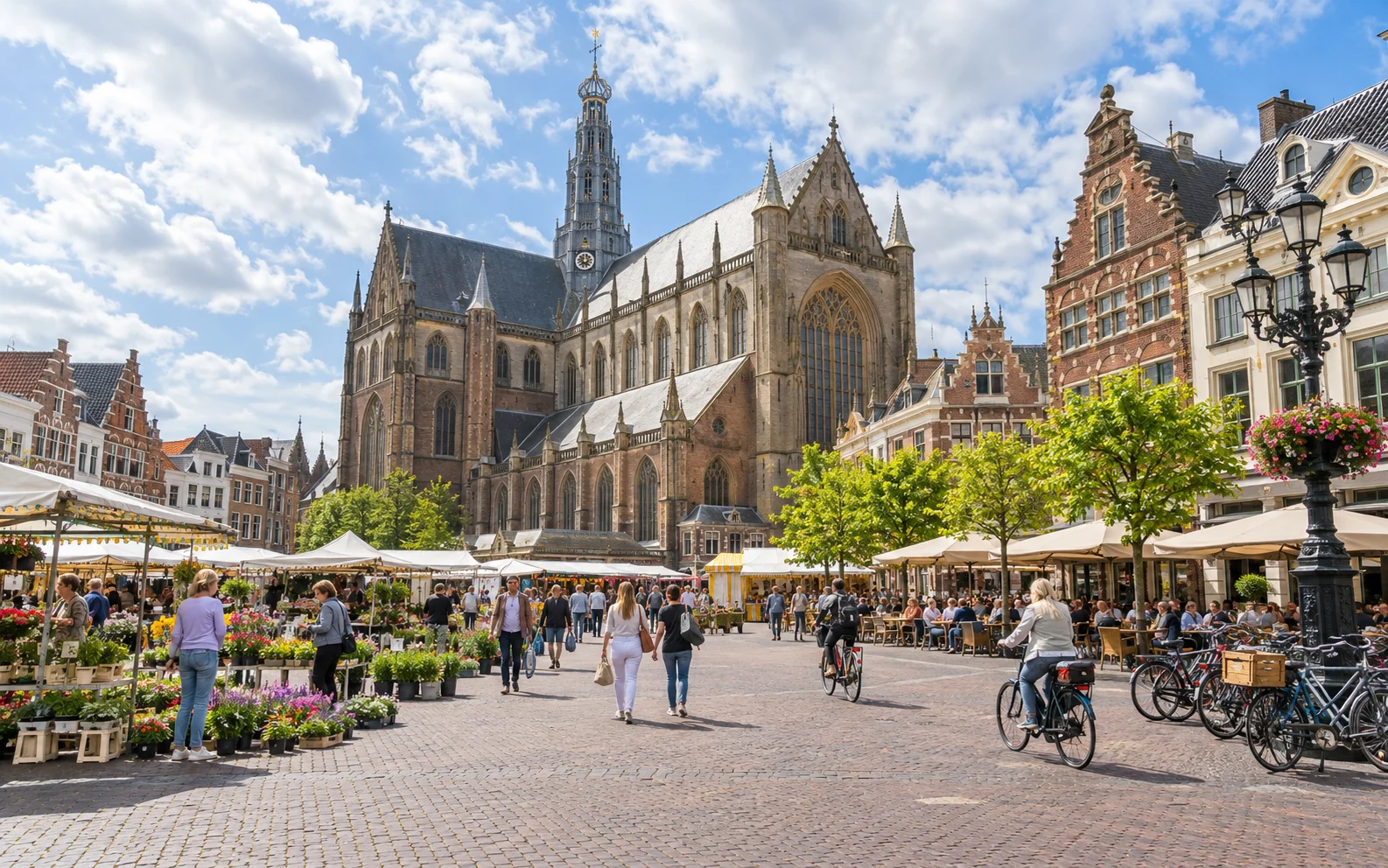
Cover: AI-generated illustration. © ANUSHKA DAHANAYAKE (PVT) LTD.
Haarlem is close enough to Amsterdam for a simple day trip but deserves its own identity. The Grote Markt gathers civic and church architecture in one generous square, Frans Hals anchors a major art story, Teylers combines science and collections in a historic setting, and small hofjes reveal a quieter tradition of communal housing. Its compactness supports slow looking rather than aggressive sightseeing.
This guide plans one full day with an optional overnight or coast extension. It avoids promising access to every courtyard and helps visitors choose between two substantial museums. Check current exhibitions and opening days, as museum locations and schedules can vary.
Getting to Haarlem
Frequent trains connect Amsterdam Centraal and Haarlem, usually in roughly fifteen to twenty minutes, while Schiphol can be reached by rail or bus depending on transfers and final accommodation. Use the NS and 9292 planners on the day. Haarlem has more than one station; Haarlem Centraal is the useful stop for the historic centre.
From the station, walk south through the old streets toward Grote Markt. The route is short enough that a rental bike is unnecessary for a central day. Contactless travel may be available, but each traveller needs a separate accepted card or device and must tap in and out. Driving adds parking cost and little convenience.
Morning: Grote Markt before the crowds
Begin at the Grote Markt. The Grote or St Bavo Church dominates the square, while the town hall and surrounding façades explain Haarlem's historic prosperity. Market days bring flowers, food and daily life but also reduce clear walking space. Check church opening around services and events.
Inside, the organ and vast Gothic interior deserve more than a quick circuit. Photography rules and admission arrangements can change. Visitors unable to manage thresholds or specific areas should consult the current access page or contact the church. Outside, circle the square before choosing a café; the most obvious terrace is not automatically the best value.
Walk toward the Amsterdamse Poort or along the Spaarne for a sense of water and city scale. Molen de Adriaan is a reconstructed windmill with tours at set times. Treat it as an optional booked experience, not something guaranteed to be open whenever you pass.
Choose Frans Hals or Teylers first
The Frans Hals Museum explores the painter, Haarlem art and changing interpretations of the collection. Its current visitor information directs museum visits to Groot Heiligland 62; exhibitions at the former HAL location ended in August 2025. Read the current ticket and entrance information and ignore any older two-location itinerary. Allow at least ninety focused minutes and check which works or galleries are open.
Teylers Museum combines art, fossils, scientific instruments, books and the atmosphere of an early public museum. Its historic rooms are part of the experience. It appeals to visitors who enjoy the history of knowledge as much as a conventional painting gallery. Temporary exhibitions and conservation can affect routes.
Seeing both is possible but demanding. For a first day, choose one before lunch and leave the other for mid-afternoon only if attention remains. Families and mixed-interest groups may find Teylers broader; painting specialists may prioritise Frans Hals. The right choice depends on the traveller, not a ranking.
Hofjes require respect
Haarlem's hofjes are charitable residential courtyards, historically created for women and older residents. Some permit visitors during daytime hours; others remain private. An open gate is not always an invitation. Follow signs, enter silently, keep groups small and do not photograph residents, windows or interiors.
A self-guided route can link public courtyards with streets such as the Vijfhoek and the “Golden Streets” shopping area. Independent shops are working businesses, not scenery. Ask before photographing products or staff and avoid occupying a doorway while consulting a map.
Afternoon options
If you visited Frans Hals in the morning, spend the afternoon at Teylers or walk the Spaarne and visit De Adriaan when booked. If you began at Teylers, continue to the Frans Hals location or choose the Proveniershof area and Haarlemmerhout park. Keep one part unstructured.
Beer-history visitors may be interested in the brewery housed in a former church, but it is a hospitality venue, not a free architectural attraction. Reserve at busy times, drink responsibly and do not plan a cycle afterwards. Families can substitute a playground, park or shorter river cruise where seasonal services operate.
Adding the North Sea coast
Zandvoort and Bloemendaal beaches are accessible from Haarlem by train, bus or bicycle. A combined day works best in summer when daylight is long: city sights in the morning, then the coast after lunch. Check return transport and wind conditions. The North Sea can be cold and powerful even on a bright day.
Do not attempt the coast simply to increase a destination count. If art and Haarlem neighbourhoods are the priority, stay in the city. An overnight base in Haarlem can make a separate beach half-day much more relaxed while retaining easy Amsterdam access.
Costs, food and reservations
A Haarlem day can remain moderate: rail, one museum, lunch and perhaps a second admission. The Grote Markt, Spaarne and public streets are free. Calculate combination products against actual opening and your pace. Museumkaart rules and tourist cards change, so use current venue information.
Reserve major temporary exhibitions, timed windmill tours and special dining. The regular museum collection may be flexible outside holidays. Bakeries, market stalls and cafés offer alternatives to a full restaurant lunch. Tipping is modest; round up or add a small amount for attentive table service.
Accessibility and safety
The central route is compact, but bricks, bridges, old thresholds and historic museum rooms can create barriers. Both major museums publish access information. Ask about the precise entrance, lifts, seating and toilets. Hofjes may have narrow gates or uneven paths and should not be relied on as accessible attractions without confirmation.
Guard belongings on crowded trains and markets, lock bicycles and stay out of cycle lanes. Canals and the Spaarne have open edges in places; supervise children. At night, use normal urban awareness and confirm late transport.
Seasons and rain
Spring supports flower-region excursions, but Haarlem itself is not a tulip field and peak flower weekends are busy. Summer suits the coast and terraces; autumn makes museum days comfortable; winter can be quiet except during events and Christmas markets. Always carry a light waterproof layer.
In rain, centre the day on St Bavo, one museum, a long lunch and the second museum if energy allows. Save courtyards and the coast for better conditions. Haarlem's collections make a strong day even when outdoor plans contract.
Continue through the Netherlands destination hub, read what makes the Netherlands special, compare another Dutch city with The Hague, or browse all countries for your next stop.
Questions and answers
Is Haarlem worth visiting from Amsterdam?
Yes. Frequent trains make Haarlem an easy independent day trip, but it is not merely a smaller Amsterdam: its Grote Markt, art museums, hofjes and access to the coast create a distinct visit.
Can Haarlem and Zandvoort be visited in one day?
They can, but only with priorities. Spend a focused morning in Haarlem and take the train or bus to the coast later; do not expect two museums, a complete city walk and a relaxed beach day.
Are Haarlem's hofjes open to visitors?
Some historic courtyards allow respectful public entry at specified times, while others are private or closed. Follow signs, keep quiet and never treat residents' homes as museum displays.
Sources
Amsterdam · 52.3676° N, 4.9041° E
This story belongs to Haarlem, Netherlands. A country that exists in its present shape because people kept the water out, then chose to live beside it on their own terms.