Lugano by Lake and Funicular: A Practical Ticino Guide
A useful Lugano plan connecting the elevated station, arcaded centre, lake promenade and one mountain viewpoint without copying a Lake Como itinerary.
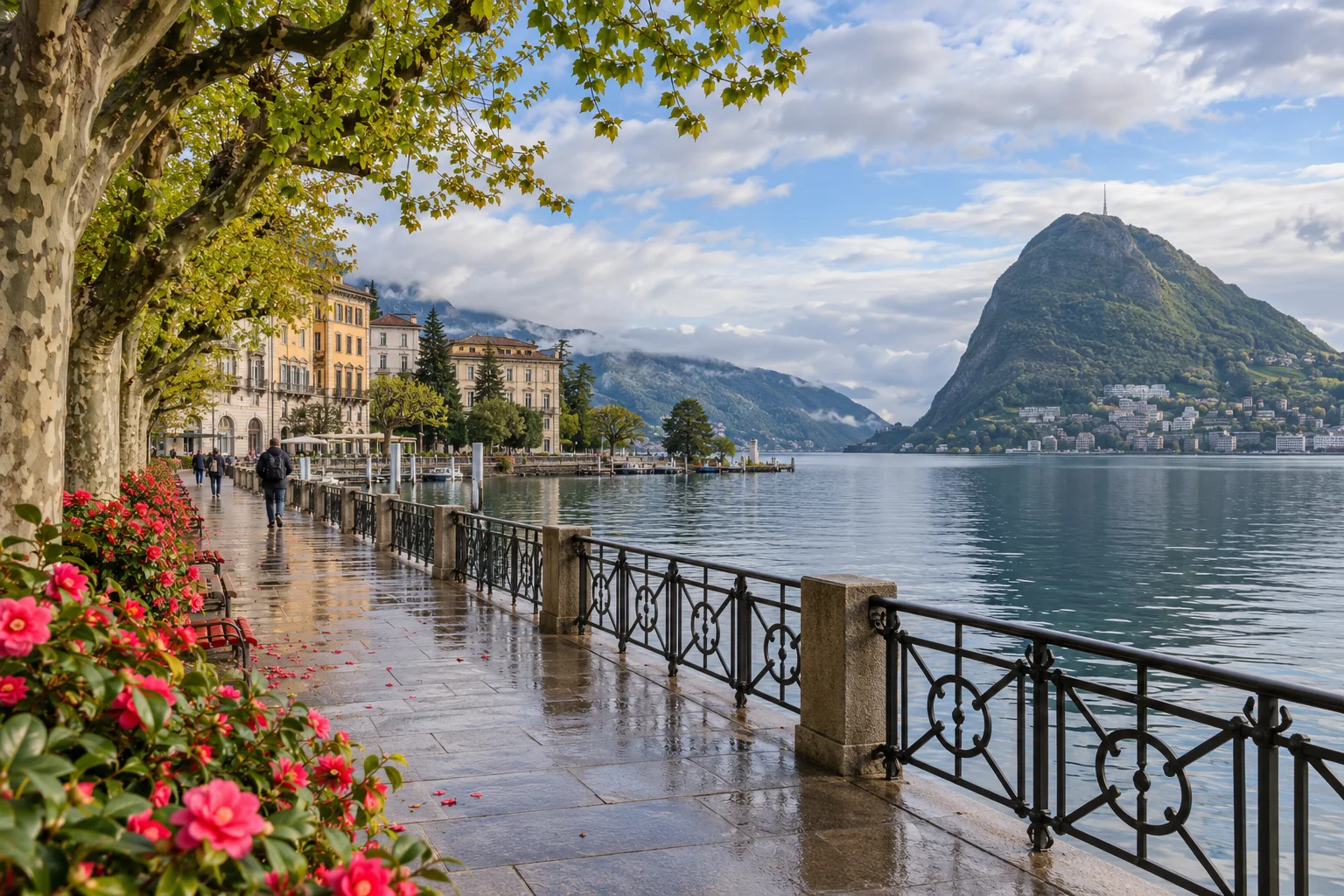
Cover: AI-generated illustration. © ANUSHKA DAHANAYAKE (PVT) LTD.
Lugano is not a substitute for an Italian lake town. It is a Swiss city in Italian-speaking Ticino, with its own transport system, commercial centre and mountain geography. The station sits above the lake, arcaded streets lead into public squares and Monte San Salvatore closes the bay with a profile visible from much of the promenade. Two days let that structure emerge without racing around the entire lake.
Descend from the station intelligently
Mainline trains link Lugano with northern Switzerland through the Gotthard, which makes a two-centre trip with the Lucerne guide straightforward, and south toward Milan, explored in what makes Milan special. From the station, the centre lies downhill. The short funicular to Piazza Cioccaro can avoid luggage on steep streets; operating details and fares should be checked because maintenance can change access. Walking takes roughly ten minutes but includes a real gradient.
Stay in the centre for restaurants and easy evening walks, near the station for early rail travel, or around Paradiso for access toward San Salvatore. A lakeside map distance can hide a climb, rail line or busy road. Ask the accommodation for the best luggage route; the shortest line is not always the easiest.
If arriving from Italy, ensure the ticket covers the cross-border train and carry required travel documents. Switzerland is in Schengen but outside the EU customs union, which matters for purchases and allowances.
Day one: centre, LAC and the lake edge
Begin around Piazza della Riforma and the pedestrian centre. Arcades provide some shelter in rain, and nearby streets show the city's working commercial character. Churches require normal respect: dress appropriately, lower voices and follow photography signs. On the lakefront, Santa Maria degli Angioli holds the city's great Renaissance treasure, Bernardino Luini's Passion and Crucifixion fresco of 1529, which fills the screen wall that once divided the congregation from the Franciscan friars.
Walk toward the LAC cultural centre and continue along the lake. Decide whether to turn through Parco Ciani or extend toward Castagnola. The waterfront is public living space, so share narrow sections with runners, families and cycles. Wet stone and fallen leaves can be slippery after the spring rain that gives the vegetation its colour.
Parco San Michele above Castagnola offers a different viewpoint over the gulf and San Salvatore. Official tourism information describes access from nearby areas on foot, but slopes and path surfaces matter. Check accessibility information if steps are difficult.
Day two: choose one mountain, not both
Monte Brè and Monte San Salvatore stand on different sides of the bay. Each uses its own access and gives a distinct view. Check official funicular operation, maintenance periods, last descent and weather. A cloud layer can remove the reason for travelling upward, while broken cloud after rain may reveal the landscape gradually.
Monte Brè can combine with village streets and paths on the eastern side. San Salvatore rises above Paradiso and offers lake and Lombardy views; its funicular began public service in March 1890, making it one of the oldest working lines in the region. Neither should be treated as a casual urban elevator: bring suitable shoes, water and a layer, and match any onward hike to actual conditions.
Ask the accommodation whether it issues the Ticino Ticket before booking. The regional tourism board says participating stays provide free public transport from check-in through the day of checkout, while mountain railways and boats generally offer discounts, not universal free rides. The ticket cannot simply be purchased by an ineligible day visitor. Price the mountain ride separately and use official sales channels.
Boat journeys require border attention
Lake Lugano has an irregular shape and crosses toward Italian territory. Boat routes and seasons vary. Confirm the destination, country, pier, return and passport requirements. A short-looking crossing can leave you far from a simple land return if the final boat is missed.
Wind and thunderstorms affect lake travel. Check the forecast and operator notices, especially in warm months. A lake cruise should be chosen for the route itself, not as a guarantee of clear mountain views.
Rain does not cancel Lugano
Ticino receives substantial rain, sometimes in intense periods. Use a wet morning for the LAC, an exhibition, churches with open access, cafés or the sheltered centre. When rain eases, gardens and the lakefront often have richer colour and fewer crowds.
Do not enter mountain paths during storms, cross flood barriers or assume a funicular operating means every summit trail is safe. Lightning and water movement change the risk quickly. A day trip by regional rail can be another alternative if conditions differ elsewhere, but check live information and ignore a single weather icon.
Italian language and food context
Begin interactions with an Italian greeting. Many people speak other languages, but Italian identifies the canton more accurately than defaulting to German. Menus reflect connections with northern Italian cooking and distinct Ticino traditions; ask about local ingredients instead of labelling everything simply Italian.
Lunch menus can reduce restaurant cost. Grottos outside the centre may require transport and have seasonal hours, so verify before travelling. Service is included in menu prices, with modest rounding for good service. Respect private tables and do not photograph staff or diners without permission.
Swimming and heat
In summer, designated lidos provide managed access and facilities. Use official bathing areas, observe opening rules and assess water temperature and storms. Do not enter from an unfamiliar rocky shore or swim across boat routes. Heat can build in the city even when mountain peaks look cool, so carry water and shade protection.
Families should understand depth and supervision rules at each facility. A calm lake surface is not proof that every access point is safe.
Buy from Ticino rather than from a stereotype
Look for work by a named Ticino illustrator, food producer, craftsperson or publisher. Camellias, the bay's shape, stone villages and funicular geometry can identify Lugano without using a generic palm-and-sun souvenir. Ask where food was produced and whether it can legally enter your home country.
Avoid copied funicular logos, cantonal heraldry and tourism campaigns. Do not buy an item merely because it imitates a luxury label. Original design tied to a route you walked has more meaning and less legal ambiguity.
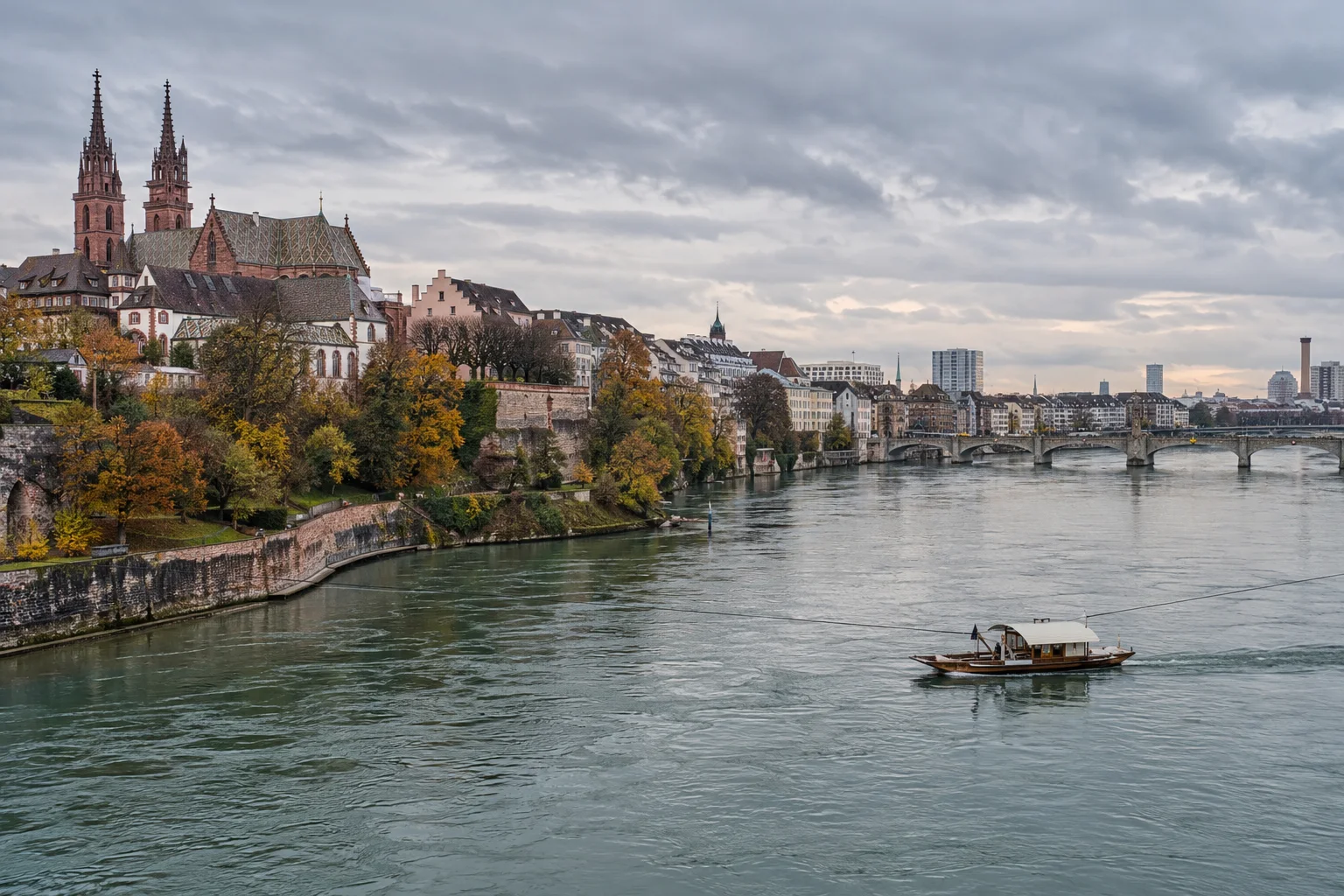
Before travel, check the station funicular, chosen mountain system, boat timetable and storm forecast. Save the hotel route offline. Visit the Lugano place page and complete the Switzerland collection. For a contrasting Rhine-and-art city, return to the Basel guide.
Allow extra departure time when returning uphill to the station. A closed funicular or crowded replacement bus turns a short connection into a steep luggage walk, and cross-border trains should not be treated as casually replaceable.
Questions and answers
How many days does Lugano need?
Two full days cover the centre, lakefront and one mountain or village excursion; a third gives flexibility for rain or a longer boat journey.
Which viewpoint is better, Monte Brè or San Salvatore?
They provide different angles and transport systems. Choose one according to current operation, weather, walking ability and the onward route rather than trying to rush both.
Is Lugano culturally the same as northern Swiss cities?
No. It is Swiss and Italian-speaking, with Ticino's own climate, food traditions and regional identity. Italian is the respectful default greeting language.
Sources
Bern · 46.9480° N, 7.4474° E
This story belongs to Lugano, Switzerland. A multilingual country where lakefront cities, alpine railways and strongly local identities sit within one remarkably connected landscape.