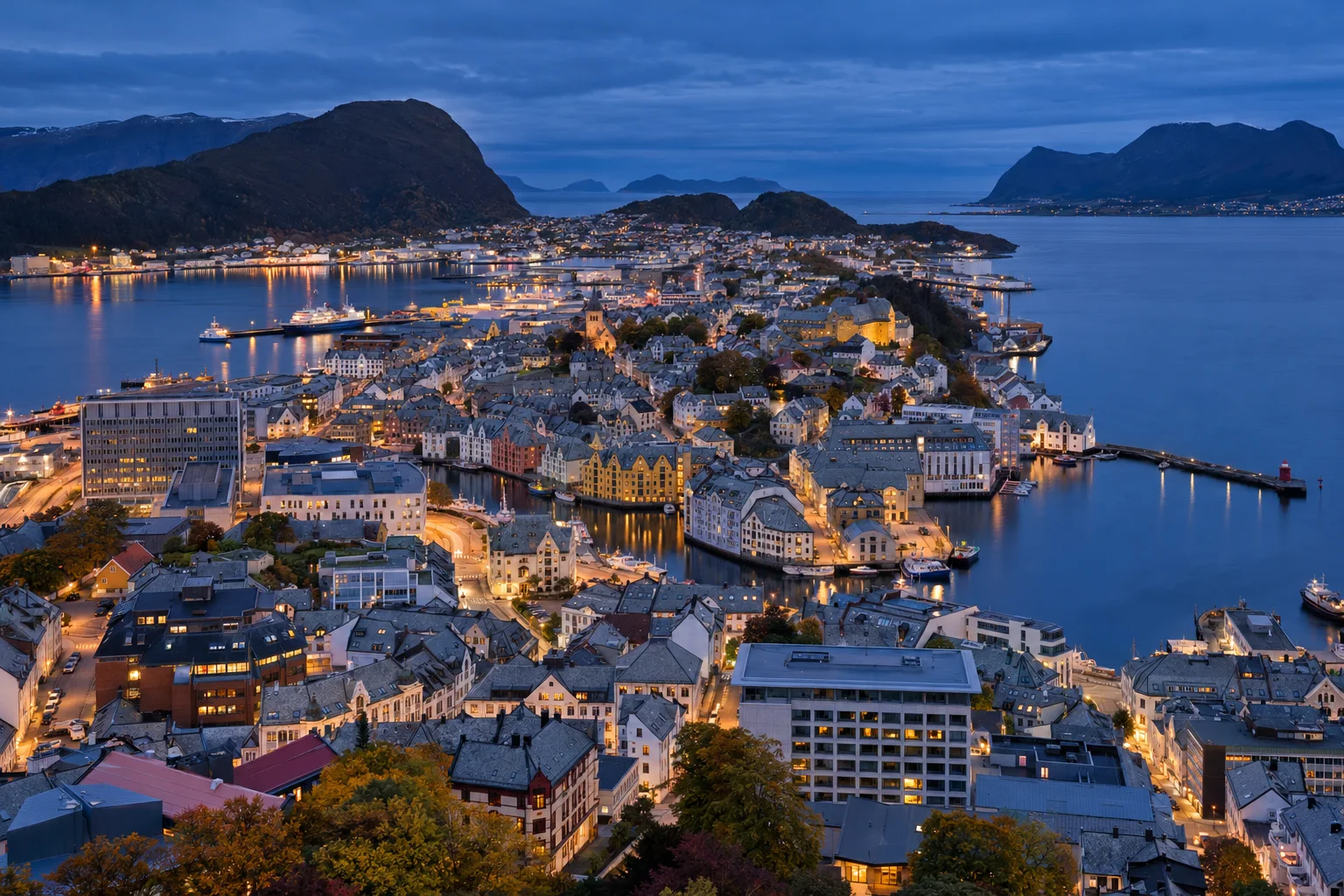
Stavanger: Norway's Oldest Cathedral, Sardine Cans and the Oil Capital
From a 12th-century cathedral and a canning boom to the 1969 Ekofisk discovery, Stavanger's three eras shape the harbour, the old town and the Lysefjord day.

Cover: AI-generated illustration. © ANUSHKA DAHANAYAKE (PVT) LTD.
Stavanger has reinvented itself three times, and each version is still on view within a short walk of the harbour. It was a medieval cathedral town, then the canning capital of Norway, then the country's oil capital after a find in the North Sea at Christmas 1969. White timber houses, sardine history and a petroleum museum sit alongside a fjord whose cliffs are among the most visited in the country.
Norway's oldest cathedral
Stavanger Cathedral is Norway's oldest, dating to about 1125, with Bishop Reinald of Winchester credited with managing its construction. Sources place the start of building around 1100 and completion around 1150, and Norwegian local history suggests Reinald arrived from England about 1112 and was certainly in Stavanger by 1125. It remains a living church at the heart of the old street grid, and the city counts 1125 as its founding year. Check access around services and events.
Timber houses, tin cans and a quiet harbour
Gamle Stavanger, west of Vågen, preserves 18th- and 19th-century white timber houses that survived the modernisation of the central city. The lanes are public but the buildings are homes, so speak quietly, avoid doorsteps and do not aim cameras through windows.
The canning story explains why the area stayed prosperous. The first canning factory in Stavanger was established in 1873, and canning fish balls and sprats became an important industry by the end of the nineteenth century. Stavanger remained the canning capital of Norway until around 1970, though one source says the last factory went bankrupt in 1982. The Norwegian Canning Museum, just west of Vågen, tells the story of the industry and the thousands of people it employed.
From Ekofisk to the Petroleum Museum
The canning sector was in decline by the start of the 1960s when the hunt for oil began in the North Sea. Phillips reported the Ekofisk discovery to the Norwegian government on 23 December 1969, and the field proved the largest oil and gas discovery in North Sea history. How oil changed the Stavanger region charts the shift. The Norwegian Petroleum Museum opened in 1999 and explains the engineering, labour, economics and environmental questions of that transformation. The city's modern reputation as the Oil Capital begins here.
Swords in rock and a European year
South of the centre, at Hafrsfjord, three swords called Sverd i fjell, each about ten metres tall and unveiled in 1983, commemorate the battle that is traditionally said to have united Norway under Harald Fairhair. Stavanger and Sandnes were also European Capitals of Culture in 2008, sharing the title with Liverpool, which helped cement a cultural scene with an ambitious restaurant and gallery life.
Day one: harbour and old town; day two: mountain or water
Day one. Begin at Vågen before excursion groups arrive, and keep access routes clear and out of private pontoons. Walk into Gamle Stavanger, then choose one museum, either petroleum, maritime or canning, instead of collecting entrances, and check winter schedules and Monday closures. Cross the harbour to the cathedral and, if you like cafés, Øvre Holmegate, whose painted frontage is a contemporary identity instead of the whole of Stavanger.
Day two. Preikestolen is a mountain walk, not a city viewpoint. The Preikestolen Foundation estimates about four hours return and roughly 500 metres of elevation gain; the stone path is uneven with steep and exposed sections, and there are no toilets on the trail. Check the mountain forecast, not the city's, and note that Visit Norway advises specialist equipment and a guide from November to April. Do not stand at the unfenced edge for a staged image. A Lysefjord cruise, which shows the cliffs and waterfalls from below, is the sensible alternative for limited mobility or poor trail weather; compare vessel size, accessibility and cancellation terms. Do not attempt both a full cruise and the hike in one day.
Keep three versions of the day: hike when trail, transport and group are ready; boat when the fjord is navigable but walking is poor; museums and neighbourhoods when both are unsuitable. Check the operator and forecast two evenings ahead and again that morning.
Reading the layers on a rainy day
West-coast weather means that at least part of a visit may be wet, and Stavanger suits that. The cathedral, the canning museum and the petroleum museum make a coherent indoor sequence that follows the city's three eras in order, medieval, industrial and modern. Taken in that order, the old town's wet cobbles stop looking like an obstacle and start looking like part of the setting: this is a harbour that has always worked in rain, whether the cargo was fish, tin or drilling equipment.
Base, transport and money
The centre around Vågen and the railway station works without a car and puts Gamle Stavanger, the cathedral, ferries and museums within walking distance. Stavanger Airport is outside the city, so compare the airport coach and bus, and buy tickets through the named operator, since a contactless card may not replace the ticket app. For Preikestolen, confirm the whole chain of city departure, fjord crossing or road transfer, trailhead arrival and return before booking a room.
A useful budget combines one deliberate dinner with bakery and supermarket meals. Norwegian prices include service, tipping is optional and tap water is safe. Ask which species the seafood is and where it came from, since a harbour location does not prove local sourcing. For a keepsake, look for a named regional ceramicist, illustrator or textile worker instead of goods that copy company marks or crests. Save the airport route and hotel entrance offline before arrival, and give a fjord or mountain day a generous margin for the return journey. Wet cobbles in the old town are slippery, so wear shoes with grip, and pack a waterproof layer even when the city forecast looks settled.
Use the Stavanger place page for its design identity and the Norway collection for the wider route. Continue north through the Bergen and Bryggen guide or the Ålesund guide, or follow the coast south to the Kristiansand guide.
Questions and answers
Can Stavanger and Preikestolen fit into one day?
They can, but the result is rushed. Give the city one day and reserve another for the hike or a Lysefjord cruise so weather and transport have room to change.
How difficult is the Preikestolen hike?
The return route is roughly four hours with about 500 metres of ascent over uneven mountain terrain. Fitness, footwear and current conditions matter.
Is a Lysefjord cruise a substitute for the hike?
It is a different experience rather than a lesser one, showing cliffs and waterfalls from water without the exposed trail or summit view.
Sources
Oslo · 59.9139° N, 10.7522° E
This story belongs to Stavanger, Norway. A long coastal country where Viking-age towns, Hanseatic wharves, fishing islands and Arctic cities each hold a different history.