Bergen in the Rain: Bryggen, Mountains and Better Planning
A practical two-day Bergen guide that treats rain as a planning condition rather than a reason to abandon the city or attempt unsafe mountain paths.
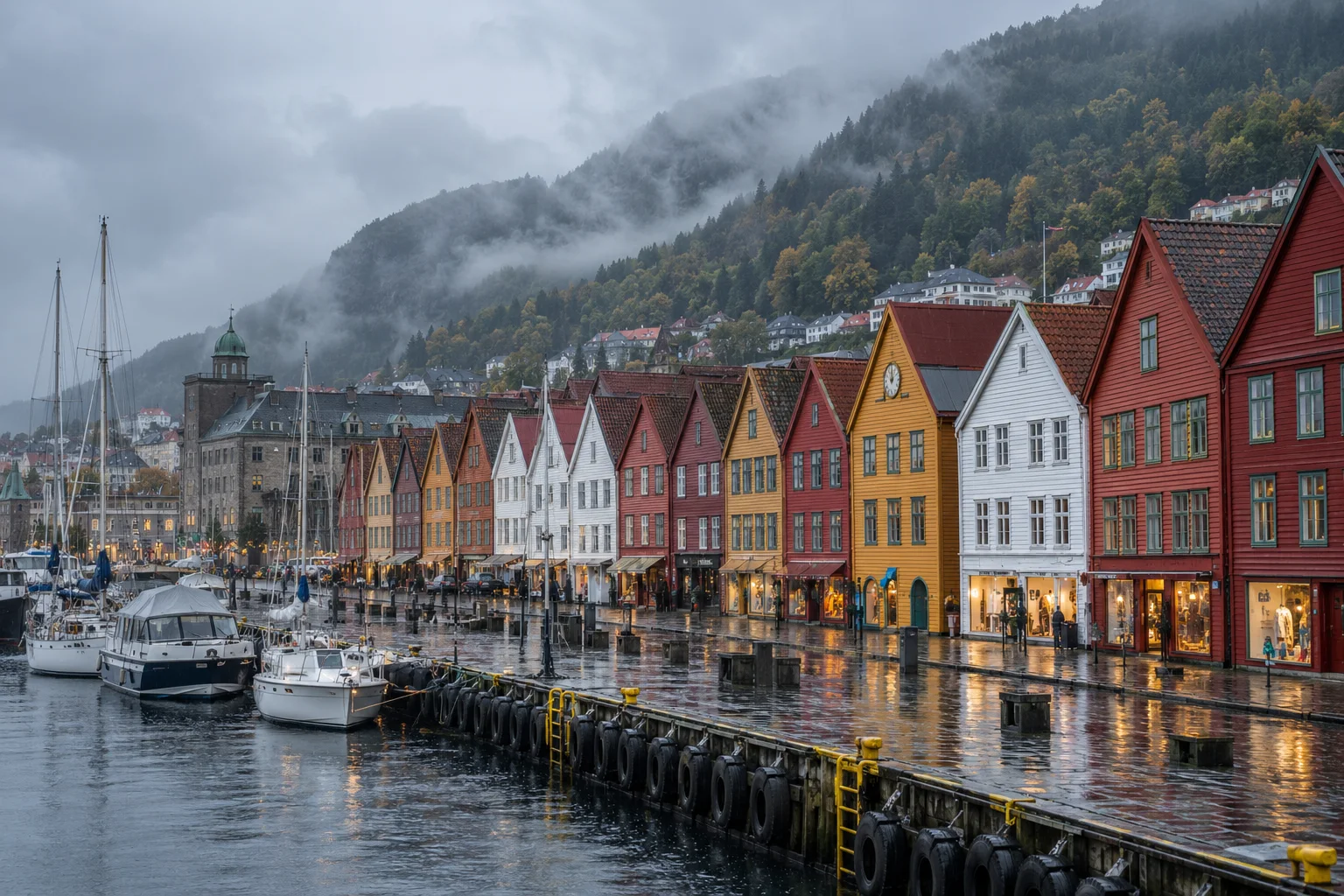
Cover: AI-generated illustration. © ANUSHKA DAHANAYAKE (PVT) LTD.
Bergen's rain is not a branding joke; it is a practical condition that changes stone, timber, visibility and mountain surfaces. The city remains useful in poor weather because Bryggen, museums, cafés and compact streets occupy the harbour edge. Two full days allow the plan to move around the forecast instead of forcing a summit into fog.
Arrive by rail, airport light rail or coastal ship
The railway from Oslo terminates close to the centre after a long scenic journey. Bergen Airport connects by light rail and airport bus with different journey times and stops. Compare the hotel location, luggage and arrival hour before choosing. A taxi can help a group with mobility needs, but is not the automatic city solution.
Staying around Vågen gives immediate access to Bryggen and the harbour but may bring nightlife or cruise-day crowds. Near the railway station is useful for onward travel. Nordnes offers a more residential peninsula atmosphere. Check gradients: a room that looks close can sit above steep wet streets.
The Bergen Card includes Skyss local buses and Bybanen light rail, including the airport line. The official 2026 rules exclude Vy trains, express coaches, regional boats and ferries, with limited included local boat services. Price the card against the museums and local rides you will actually use; rain alone is not a reason to buy it.
Day one: understand Bryggen from front and back
Start early along Vågen before larger groups gather. Bryggen's gabled frontage is only the visible edge of a timber environment. Enter public passages slowly, respect shop access and recognise that some doors and upper areas are private. Historic timber increases fire risk; obey smoking and flame restrictions without exception.
Wet boards, cobbles and thresholds are slippery. Use shoes with grip and avoid umbrellas that block narrow passages; a hooded waterproof often works better. Ask before photographing inside workshops or shops. Crafts and artwork belong to named makers, not to the heritage label in general.
Continue to Bergenhus Fortress or around the harbour according to access and weather. Military, event and museum areas can have different opening conditions. At the fish market, compare origin, displayed price and preparation before ordering. The visitor setting does not guarantee every product is local.
Use Fløyen as a weather decision
The Fløibanen provides quick access to a viewpoint and walking network, but cloud can erase the panorama. Check the live view, wind and path status before paying. A ride can still be worthwhile for forest walking when the upper trails are safe, but do not buy it solely for a promised photograph.
Walk down only if footwear, daylight and surfaces suit. The route can be wet and steep. In snow or ice, traction may be necessary. Families should keep children on marked paths and away from drops.
Ulriken is higher and more exposed. Treat it as a separate mountain decision, not the next automatic stop. The popular Vidden traverse requires fitness, navigation, enough daylight and conditions suitable for exposed terrain. Official guidance emphasises the Norwegian Mountain Code: plan, adapt, carry equipment and turn around when necessary.
Day two: choose culture or a safe outdoor window
For sustained rain, select one substantial museum. KODE's buildings and exhibitions vary, so check which collection is open. The Bryggens Museum provides archaeological context near the heritage site. The Hanseatic Museum's status and locations can change with restoration, making its official site essential.
If the forecast improves, combine a lower neighbourhood walk through Nordnes or Sandviken with one indoor stop. Wooden residential streets are lived-in places. Keep voices down, avoid photographing through windows and do not sit on private steps.
Rain can intensify quickly. Carry a dry layer and protect electronics. Do not let a prepaid ticket pressure you onto a mountain path in fog, high wind or thunder.
Fjord excursions are not interchangeable
Routes marketed from Bergen vary in length, transport mix and actual fjord. Some combine train, bus and boat; others are direct cruises. Read the full itinerary, transfer responsibility, cancellation policy and return time. A long tour can consume the entire daylight window.
Weather changes visibility and sea comfort. Confirm the operator's status, but also decide whether the experience still offers value in the forecast. Bring warm and waterproof layers even in summer. Remain seated or use rails when instructed, and never fly a drone from a vessel.
If prone to motion sickness, prepare before departure and choose a suitable position according to medical advice. Missing a connection through slow sightseeing can be expensive when the ticket places transfer responsibility on the traveller.
Food, costs and cruise-day timing
Bergen's centre becomes busy when large ships are in port. Visit Bryggen early, use museums during peak outdoor congestion and eat away from the narrowest harbour frontage when you want a calmer meal. Reservations help for a particular restaurant, but retain flexibility around weather.
Seafood prices vary. Ask whether a dish is priced by weight and where the product came from. Norway's service charge is included; modest rounding is sufficient. Carry a second payment method, though cards are widely used.
Buy from the maker behind the object
Bryggen contains workshops and shops where the maker can be identified. Ask who designed or produced an item and whether it was made in the region. Independent print, knitwear, ceramics, books and food can carry a clearer relationship to Bergen than a generic troll souvenir.
Do not copy UNESCO branding, business signs, shipping logos or another artist's Bryggen illustration. Original design can use the rhythm of gables, wet timber and harbour geometry without impersonating the heritage authority.
Before travel, check rail or airport transport, mountain operation, rain and wind, and museum opening. Keep a dry pair of socks and an indoor alternative. Visit the Bergen place page and Norway collection, then prepare for polar conditions with the Tromsø guide, or plan a fjord road trip with the Geirangerfjord guide.
Protect the onward connection
Do not schedule a fjord cruise to finish immediately before a long-distance train or flight. Harbour conditions, boarding queues and traffic can remove a narrow margin. Collect stored luggage early and identify the correct airport stop before departure. If using the railway toward Oslo, bring food and essential medication with you, then check engineering notices rather than assuming the scenic service follows its ordinary pattern. A wet walk to the station also takes longer than the same route on a dry map.
Questions and answers
How many days does Bergen need?
Two full days cover Bryggen, one mountain or viewpoint and a museum; add a third if a fjord trip is important so weather has another chance.
Should visitors hike in heavy rain?
Not automatically. Wind, fog and saturated paths can make exposed or steep routes unsafe. Choose a low route or indoor plan when conditions are poor.
Is Bryggen only a photo frontage?
No. It is a UNESCO-listed timber environment with passages, workshops and businesses. Fire safety, private space and respectful movement matter.
Sources
Oslo · 59.9139° N, 10.7522° E
This story belongs to Bergen, Norway. A long coastal country where Viking-age towns, Hanseatic wharves, fishing islands and Arctic cities each hold a different history.