St. Moritz and the Engadin: Lake, Rail and Seasonal Planning
A practical St. Moritz guide that moves beyond luxury shorthand to the lake, railway, public transport and wider Upper Engadin.
Cover: AI-generated illustration. © ANUSHKA DAHANAYAKE (PVT) LTD.
St. Moritz is easier to understand as part of the Upper Engadin than as a single luxury resort. The lake, high valley, mineral-spring area and Rhaetian Railway connect a landscape larger than the hotel façades on the hillside. Three nights allow one local day and one regional day without rushing the long arrival.
Let the railway journey earn its time
The Rhaetian Railway approaches the Engadin through an extraordinary system of curves, tunnels and viaducts. From northern Switzerland, routes via Chur and the Albula line can make the journey a central experience. In July 2008 the Albula line from Thusis to St. Moritz and the Bernina line onward to Tirano in Italy were inscribed together as the Rhaetian Railway in the Albula / Bernina Landscapes World Heritage Site, celebrated for mountain engineering completed in the early twentieth century. Check the current SBB and RhB timetable, because engineering work, seasonal services and route choices affect the trip.
Ordinary regional trains differ from branded panoramic services. A reservation or supplement may apply to one and not another. Choose for schedule, window experience and budget instead of assuming the most heavily marketed train is the only scenic option. Keep luggage manageable during transfers or investigate official forwarding services.
Drivers must account for alpine passes, winter equipment and closures. The Vereina car transporter offers another route under specific conditions, but rail removes parking and weather-driving pressure for many visitors.
Know St. Moritz Dorf from St. Moritz Bad
St. Moritz Dorf rises above the lake and contains many central shops, hotels and hillside views. St. Moritz Bad sits toward the southwest near the lake, sports areas and the historical mineral-spring district. The railway station occupies a lower position between lake and town, so arrival can involve a bus, hotel transfer or climb.
Choose accommodation by the activities you will actually use. A Dorf hotel may suit restaurants and elevated views; Bad can reduce travel for cross-country or lake access. Ask about bus stops, icy walking surfaces and whether an advertised transport benefit is included. Engadin guidance notes that participating multi-night accommodation can include regional public transport, but eligibility and seasons must be confirmed.
Winter day: town, lake and one sport
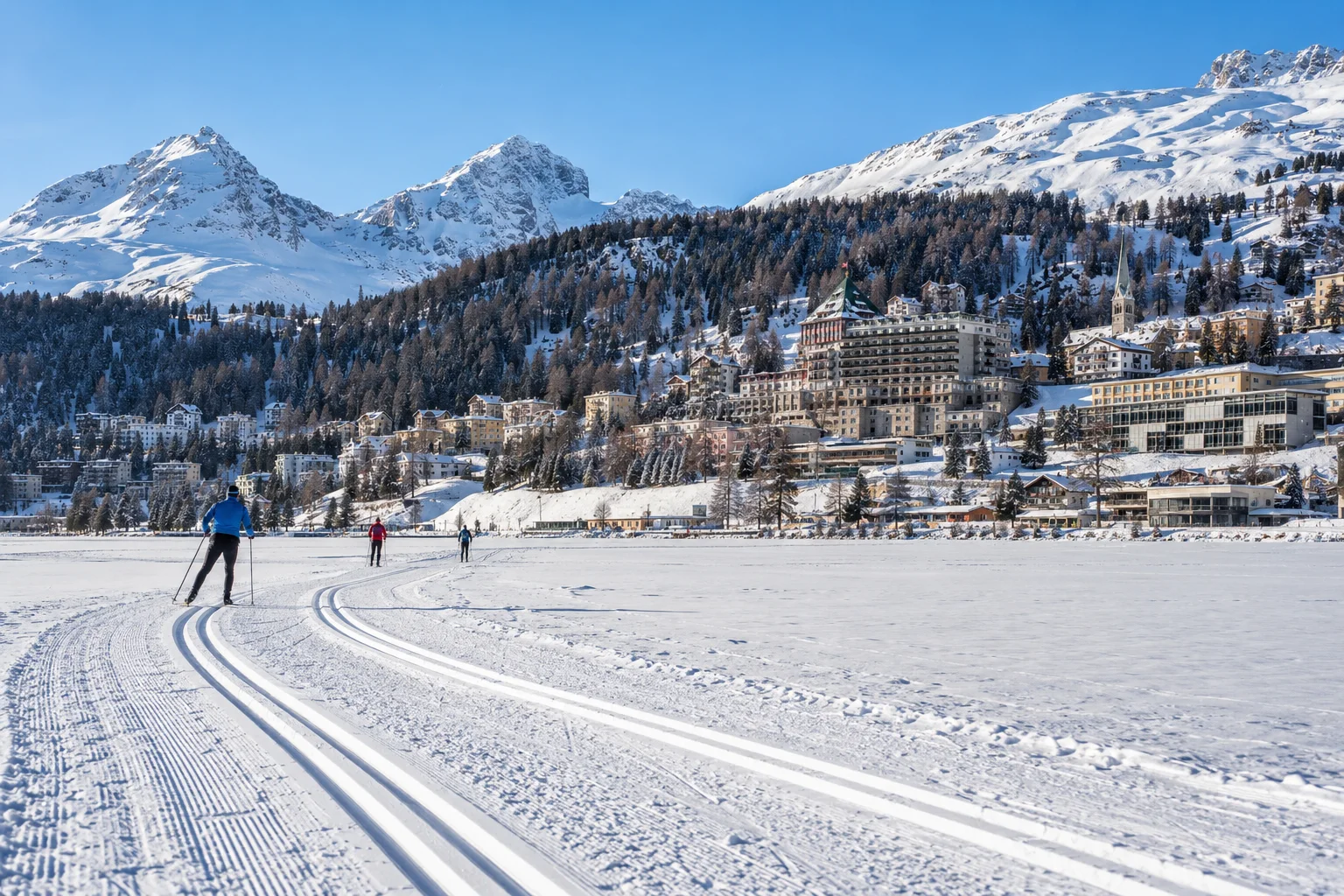
Begin with an orientation walk rather than immediately buying a mountain ticket. The Leaning Tower area, hillside streets and lake edge show the town's vertical plan. Snow and freeze-thaw create slippery pavements; use appropriate footwear and avoid shortcuts down banks.
The frozen lake can host marked routes and events only after professional assessment. Never step onto ice because others appear in the distance or because a previous year's photograph shows an event. Follow current barriers, municipal instructions and organised access. Conditions can change within a season.
Cross-country skiing offers a way to experience the valley, but beginners should check the official Engadin winter-sports report for currently prepared tracks, choose one suitable for their level and consider a lesson. Do not walk in ski grooves or stop across a track. Equipment hire staff can match boots and skis more reliably than a generic online list.
Summer day: use the wider valley
In snow-free months, lakeside paths, Muottas Muragl, Val Roseg and neighbouring villages offer different scales. Pick one regional journey and verify trail status, transport and weather. High-elevation summer still brings cold, thunderstorms and lingering snow.
The Engadin bus and rail network makes a car unnecessary for many routes. Confirm the last return and whether an accommodation pass covers it. Cyclists and walkers should respect shared-path signs, livestock and protected ground. Do not leave marked trails to produce an empty landscape photograph.
Mountain systems and weather value
Corviglia and other lift areas operate seasonally and may close for wind, maintenance or transitional periods. Read the official operating calendar; a resort does not function identically all year. Use webcams and elevation forecasts on the morning itself.
At high altitude, sunlight is intense and weather changes quickly. Carry insulation, rain protection, water and sun protection. Visitors arriving from low elevation should pace strenuous activity and descend if illness develops. Buying a lift ticket does not make an exposed walk suitable.
Costs without pretending St. Moritz is cheap
The destination has premium hotels and restaurants, but a planned budget is possible. Compare accommodation in nearby villages connected by rail or bus, use lunch menus and choose one paid mountain experience. A supermarket meal can support an active day when eaten responsibly and packed out completely.
Check local taxes, transport inclusions and cancellation terms before comparing room rates. A cheaper room without useful transport may cost more overall. Keep a second payment method and some Swiss francs for smaller transactions.
Events change the town
St. Moritz has a strong claim to the history of winter sport: it hosted the Winter Olympic Games in 1928 and again in 1948, one of only three places to host them twice. Winter races, polo, festivals and private events can restrict access, fill hotels and alter transport. Check the official calendar before booking, whether you want to attend or avoid them.
Around athletes and private guests, photograph the public scene and not identifiable people. Follow barriers on the lake and never enter a course. Staff instructions take priority over a desired viewpoint.
Find the Engadin in what you buy
Seek a named regional producer, local food, book, craft or original landscape work. Romansh language and Engadin architectural details offer deeper place connections than generic luxury marks. Ask where an item was made and whether the artist is credited.
Look closely at village houses in the valley for sgraffito, the scratched plaster decoration typical of Engadin façades, and for Romansh inscriptions. If a print or craft refers to either, ask the maker about the source and meaning; local context is more valuable than a generic alpine label.
Two days before arrival, check the rail route, regional pass conditions, weather and any event closures. Keep one day movable. Continue through the St. Moritz place page and Switzerland collection, then shift from snow to southern vegetation with the Lugano guide. For another car-free alpine base, compare the Zermatt guide, and for lakes and mountains reached by rail from the north, the Interlaken weather planning guide.
Protect the return journey
The same scenic geography that makes arrival memorable also makes a missed long-distance connection expensive. Confirm the first regional service, platform changes and any reservation on the onward train. In winter, leave additional margin for walking from the hotel and for bus delays on icy roads. If flying the same day, choose a departure that tolerates disruption, not the last mathematically possible connection.
Travellers carrying ski equipment should verify storage and carriage rules before reaching the platform. Label bags clearly, keep valuables separate and avoid filling door areas during boarding. An official luggage service can be worth comparing when the itinerary includes several changes.
Questions and answers
Is the train to St. Moritz part of the experience?
Yes. The Rhaetian Railway route through the Albula landscape is a major reason to prefer rail, but check engineering information and reserve only where the chosen service requires it.
Can anyone walk on frozen Lake St. Moritz?
Only when local authorities and organisers have declared relevant areas open. Lake ice changes and visual appearance does not prove safety.
How long should visitors stay?
Three nights allow a town-and-lake day plus one wider Engadin or mountain day while providing some flexibility for weather.
Sources
Bern · 46.9480° N, 7.4474° E
This story belongs to St. Moritz, Switzerland. A multilingual country where lakefront cities, alpine railways and strongly local identities sit within one remarkably connected landscape.