Sydney for First-Time Visitors: Harbour, Beaches and Transport
A useful first-time Sydney guide to harbour days, beach choices, ferries, Opal payments, airport transfers and safe swimming.
By Ceylon Trends · · 6 min read
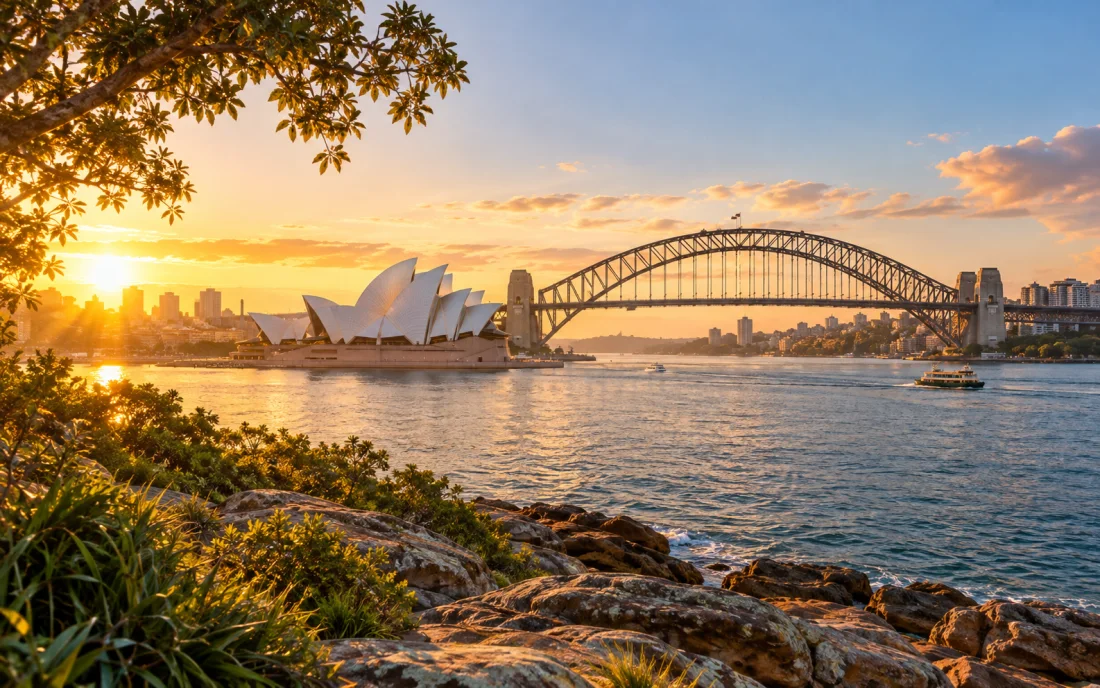
Sydney makes the most sense from the water. Its harbour splits and connects neighbourhoods, ferries function as both public transport and sightseeing, and the open-ocean beaches require a different plan from the sheltered harbour shore. A first visit becomes easier when it is organised as one harbour day, one beach day and one flexible city or neighbourhood day.
This guide focuses on decisions that prevent wasted time: where to base yourself, how to pay for transport, which beach fits the day and when conditions should change the plan. Check Transport for NSW and official attraction websites shortly before travelling because timetables, fares, track work and access arrangements can change.
Choose a base with useful connections
No single Sydney neighbourhood is best for everyone.
- Circular Quay and The Rocks: ideal for immediate harbour access, ferries, the Opera House and Bridge views. Accommodation is often expensive and the area can be busy when large events or cruise arrivals coincide.
- Central and Surry Hills: useful for trains, light rail, restaurants and a broader range of room prices. This is a practical base for travellers splitting time between harbour and beaches.
- Darling Harbour and Barangaroo: convenient for waterfront dining, family attractions and walking into the central business district. Check the exact route to a train or light-rail stop.
- Bondi Beach: best for travellers who genuinely want early beach time. It requires a bus connection from the rail network, so it is less efficient for repeated trips to distant parts of the city.
- Manly: a relaxed base with a memorable ferry commute, but bad weather or late-night plans in the centre make the distance more noticeable.
Compare the accommodation's walk to transport and its weekend noise, not just its suburb name. Sydney distances can look short on a flat map while steep streets, heat and harbour inlets make the journey longer.
For broader context, use the Australia place guide and the cultural overview in what makes Australia special.
Opal, contactless payment and airport transport
Sydney's Opal network covers trains, buses, light rail and public ferries. Adult visitors can generally use an Opal card or the same contactless bank card, phone or watch to tap on and off. Use one payment method consistently; a physical card and its digital-wallet version may be treated separately. Each passenger needs a separate card or device.
Public Sydney Ferries accept Opal and contactless payment and include Opal benefits. Some private ferry services use different products and fares, so identify the operator rather than assuming every boat from the same wharf works identically.
Airport stations sit below the domestic and international terminals and connect to the T8 line. An airport-station access fee is added to the rail fare and is not simply the ordinary city fare, so compare the current total for your group with an official taxi or rideshare estimate. A solo traveller heading near a station may find the train efficient; several people with heavy luggage may value a direct vehicle. Transport for NSW also lists bus options.
Download the official trip-planning information or an offline map before leaving Wi-Fi. Allow extra time for weekend track work, replacement buses and ferry changes caused by weather.
Day 1: understand the harbour
Begin at Circular Quay and walk to the Sydney Opera House, then continue through the Royal Botanic Garden if paths and opening arrangements permit. The view back towards the Opera House and Harbour Bridge helps establish the city's geography.
Walk through The Rocks later in the day, but avoid treating it only as a souvenir stop. Read the interpretation around its lanes and consider one well-chosen museum or guided experience. If climbing the Bridge is outside the budget or unsuitable, pedestrian viewpoints and foreshore walks still provide excellent perspectives.
Use a public ferry as transport, not just a loop with no destination. Manly creates a harbour-to-ocean day; Watsons Bay combines harbour views with a coastal walk; Parramatta reveals how far the harbour and river system extends. Check the return timetable before wandering away from the wharf.
Do not overload this day with an inland attraction. Harbour light and weather change quickly, and unplanned time beside the water is part of the value.
Day 2: choose the right beach, not every beach
Bondi suits visitors who want an iconic surf beach and the Bondi-to-Coogee coastal walk. The full walk takes time and includes steps; shorten it at Bronte or another exit if heat, mobility or energy requires. Start earlier on hot days and carry water.
Manly suits visitors who want the ferry journey, a broad ocean beach and an easy town centre. It is a coherent day with less switching between modes.
Coogee has a neighbourhood feel and works well as the finish or starting point of a coastal walk. Sheltered harbour beaches can be preferable when the ocean is rough, although every swimming location still needs a conditions check.
Ocean safety is not optional. Choose a patrolled beach, swim between the red and yellow flags and follow lifeguard instructions. Flags mark the supervised swimming area; they are not decoration. Do not enter the water after drinking alcohol, at night or when the beach is closed. If no flags are present, enjoy the sand and walk rather than guessing whether the water is safe. Keep children within direct reach around water.
Sun protection matters even when cloud or wind makes the temperature comfortable. Use shade, protective clothing and sunscreen, and avoid planning the exposed coastal walk in the harshest part of a very hot day.
Day 3: match the city to your interests
Choose one branch rather than crossing Sydney repeatedly:
- Culture and design: spend time at the Art Gallery of New South Wales, Australian Museum or a temporary exhibition, then explore nearby streets.
- Food and neighbourhoods: pair Surry Hills with Redfern, or use light rail to visit Chinatown and Haymarket. Check opening days before planning around a market.
- Nature: allow a proper day for Taronga Zoo or a harbour-side reserve rather than squeezing it between city sights.
- History: combine a focused museum visit with The Rocks, Barangaroo Reserve or a trip towards Parramatta.
- Wet weather: move the beach to the clearest day and use museums, galleries and covered food stops when rain arrives.
The Blue Mountains deserve a separate full day and an early start. They should not be added to a three-day Sydney itinerary unless they are a higher priority than either the harbour or beach day. Check weather, visibility, fire information, walking-track alerts and transport before departure.
Budget and booking priorities
Sydney's best experiences do not all require premium tickets. Harbour ferries, coastal walks, beaches, gardens and neighbourhood exploration can form the core of the trip. Spend selectively on the Opera House experience, performance, BridgeClimb, special meal or wildlife attraction that matters most.
Book major paid experiences ahead, especially in holidays and event periods, but retain a weather-flexible block for the beach. Restaurant reservations are useful for a particular waterfront venue; they are unnecessary for every meal.
Common mistakes include failing to tap off, confusing a private cruise with a public ferry, underestimating airport-station fees, attempting Bondi and Manly in a hurried half-day, and entering surf outside the flags. Another is staying at a beach while planning every evening in the central city. Put the accommodation near the experience you expect to repeat.
Sydney is most rewarding when the journey has a purpose: ferry to a neighbourhood, walk between two beaches, or follow the harbour edge until the skyline changes. Build around water and weather, and the city feels coherent rather than scattered.
Questions and answers
Can visitors use contactless cards on Sydney public transport?
Yes. Most adult visitors can tap on and off with the same contactless card or device and receive adult Opal fares and benefits on eligible services.
Should a first-time visitor choose Bondi or Manly?
Choose Bondi for the coastal walk and eastern-beaches atmosphere; choose Manly when a harbour ferry journey and an easy beach day are the priorities.
Is the Sydney Airport train included in normal fare caps?
Airport stations charge an access fee in addition to the train fare. Current fees and the separate airport-station cap should be checked with Transport for NSW before travelling.