Norway · Country Guides
Oslo: From Viking Trading Place to Opera House on the Fjord
Akershus Fortress, Christian IV's 1624 rebuild, the Fram polar ship, the 2008 Opera House and MUNCH show how Oslo's waterfront tells its history.
· 5 min read
Oslo · 59.9139° N, 10.7522° E
A fjord capital whose history sits along the waterfront: trading place, Akershus Fortress, a king's grid and a modern opera house.
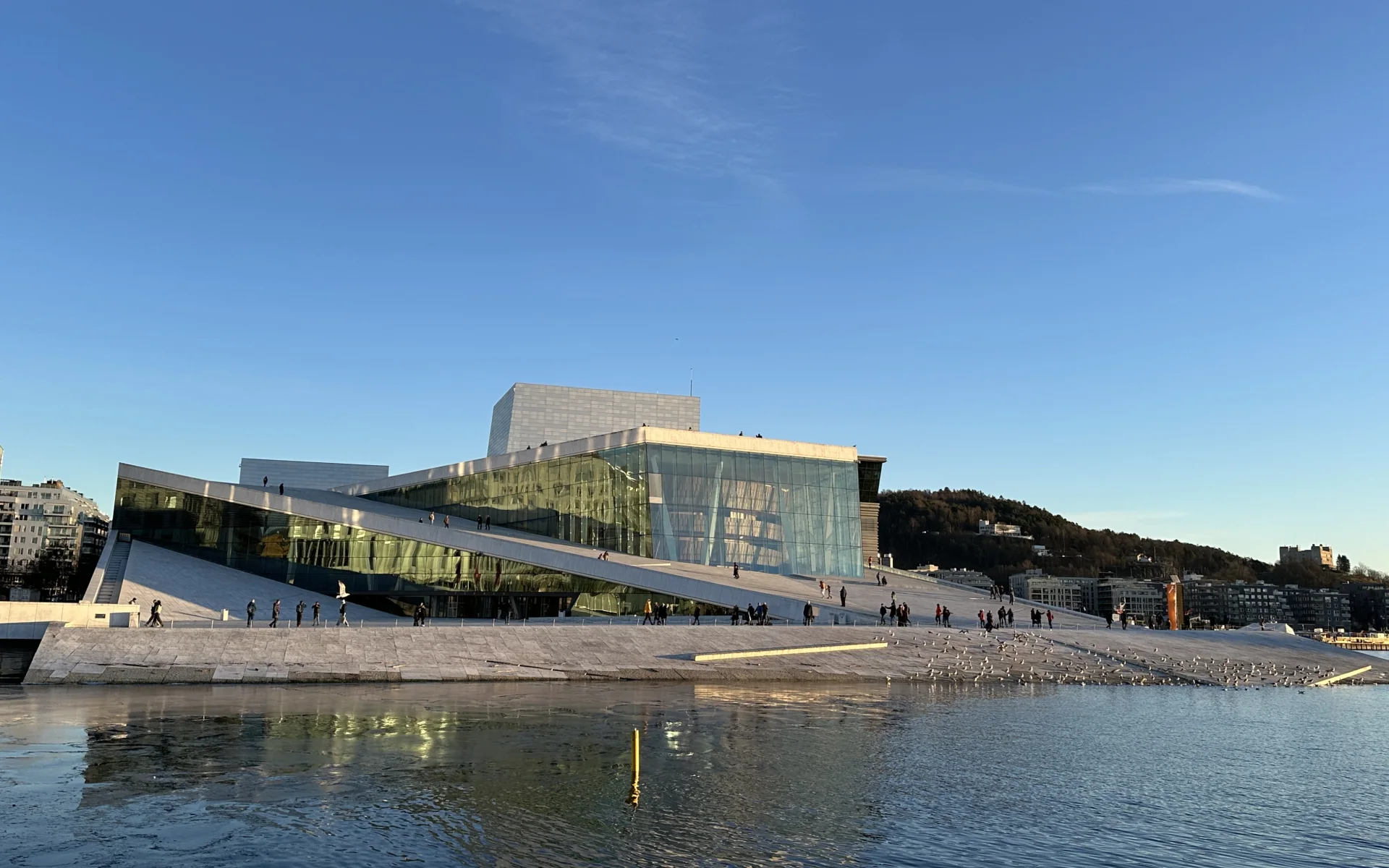
Oslo is a city that was founded, burned, moved and renamed, and the waterfront is where those chapters sit within a short walk of each other. Trading began here around the year 1000 to 1050, and Akershus Fortress dates from the 1290s. After a fire in 1624, Christian IV of Denmark-Norway built a new town under the fortress walls and called it Christiania; the straight streets of Kvadraturen are his grid, and the name Oslo returned in 1925.
Today the shore also holds the 2008 Opera House and MUNCH, while Bygdøy has the Fram polar ship and Viking boats.
The Oslo guide to the waterfront and neighbourhoods follows that sequence. Compare Bergen or see the Norway overview.
Norway · Country Guides
Akershus Fortress, Christian IV's 1624 rebuild, the Fram polar ship, the 2008 Opera House and MUNCH show how Oslo's waterfront tells its history.
· 5 min read
After a fire in 1624, Christian IV of Denmark-Norway built a new town under the walls of Akershus and called it Christiania. The name Oslo has been used for the city again since 1925.
Akershus Fortress, the 2008 Opera House, the MUNCH museum and, on Bygdøy, the Fram polar ship and Viking boats.
One short, occasional email with a useful new guide, a place story and notes on what we have updated.
Join by emailSend us that email and we will add you to the list. We only email people who ask, and you can leave any time. See our privacy policy.
