South Korea · Country Guides
Busan by Coast: Markets, Hillsides and Beach Planning
A practical Busan plan separating western harbour history from eastern beaches, with useful market, hillside, transport and coastal-weather decisions.
· 6 min read
Busan · 35.1796° N, 129.0756° E
South Korea's largest port city, where fishing markets, steep hillside neighbourhoods, urban beaches and a wartime capital past shape the character.
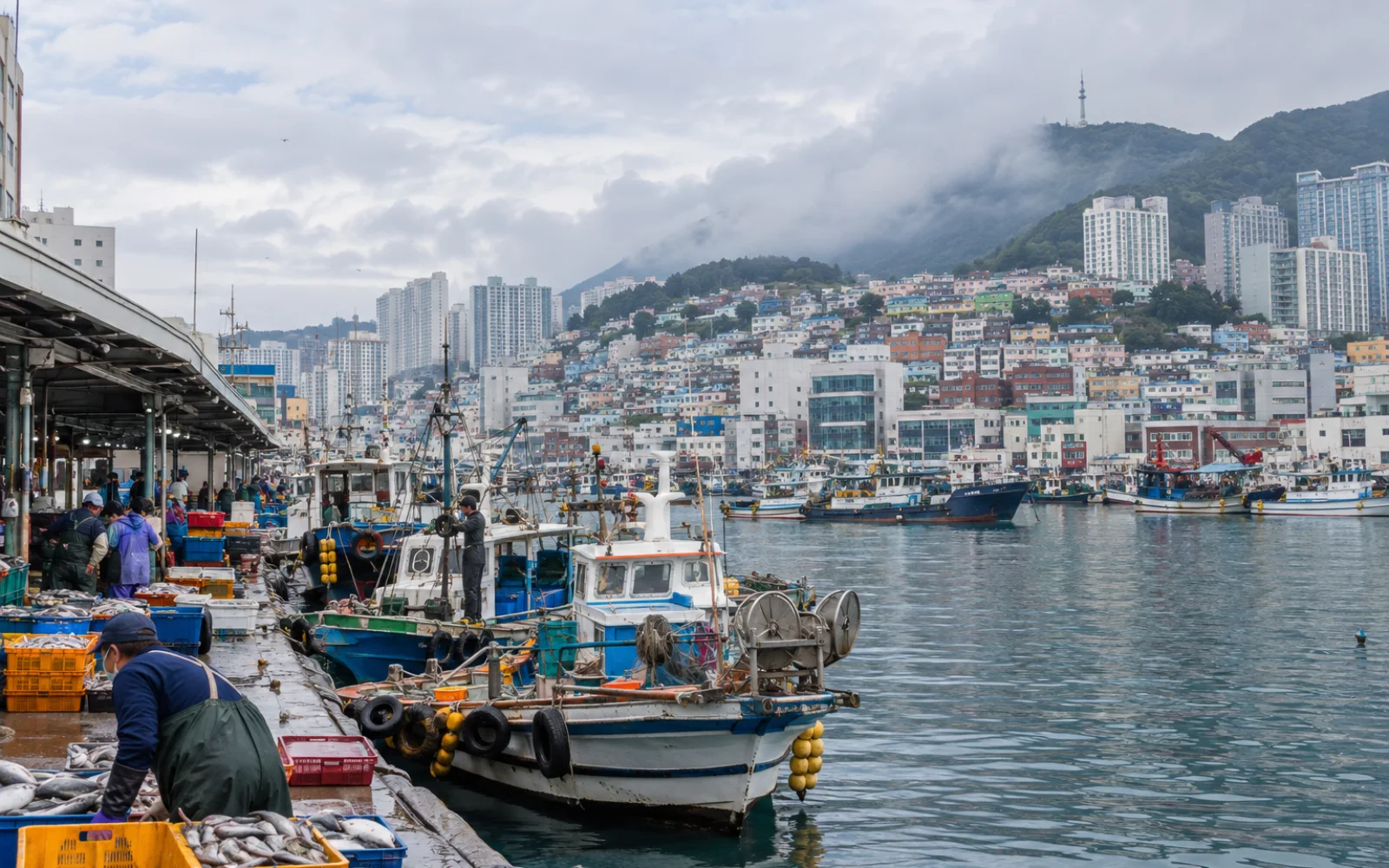
Busan is South Korea's largest port city, stretched around bays and divided by steep terrain. Jagalchi and Nampo belong to the western harbour story, while Haeundae and Gwangalli sit far to the east. Jagalchi remains a working seafood market rather than a stage set.
The city also carries a wartime past. From August 1950 to August 1953 Busan served as South Korea's temporary capital, one of the few southern cities never captured, and refugees who poured in traded goods in the Nampo streets to survive. Gamcheon's terraced hillside houses were built from the mid-1950s by refugees, many of them followers of the Taegukdo religious movement, and the village is still a residential community.
The Busan coast and market guide covers the markets, Gamcheon, the beaches and the transport between them. The South Korea collection shows how Busan differs from the other regional cities.
South Korea · Country Guides
A practical Busan plan separating western harbour history from eastern beaches, with useful market, hillside, transport and coastal-weather decisions.
· 6 min read
No. The western markets, central stations and eastern beaches are far apart. Choose one coastal side per day and allow for transfers.
Ask first, keep aisles clear and do not handle seafood or make a worker the subject without consent. The market is a workplace.
One short, occasional email with a useful new guide, a place story and notes on what we have updated.
Join by emailSend us that email and we will add you to the list. We only email people who ask, and you can leave any time. See our privacy policy.
