South Korea · Country Guides
Incheon Beyond the Airport: Treaty Port, Chinatown and Dolmens
Treaty port history from 1883, the jajangmyeon story, the 1950 landing and Bronze Age dolmens explain Incheon beyond its airport code.
· 5 min read
Incheon · 37.4563° N, 126.7052° E
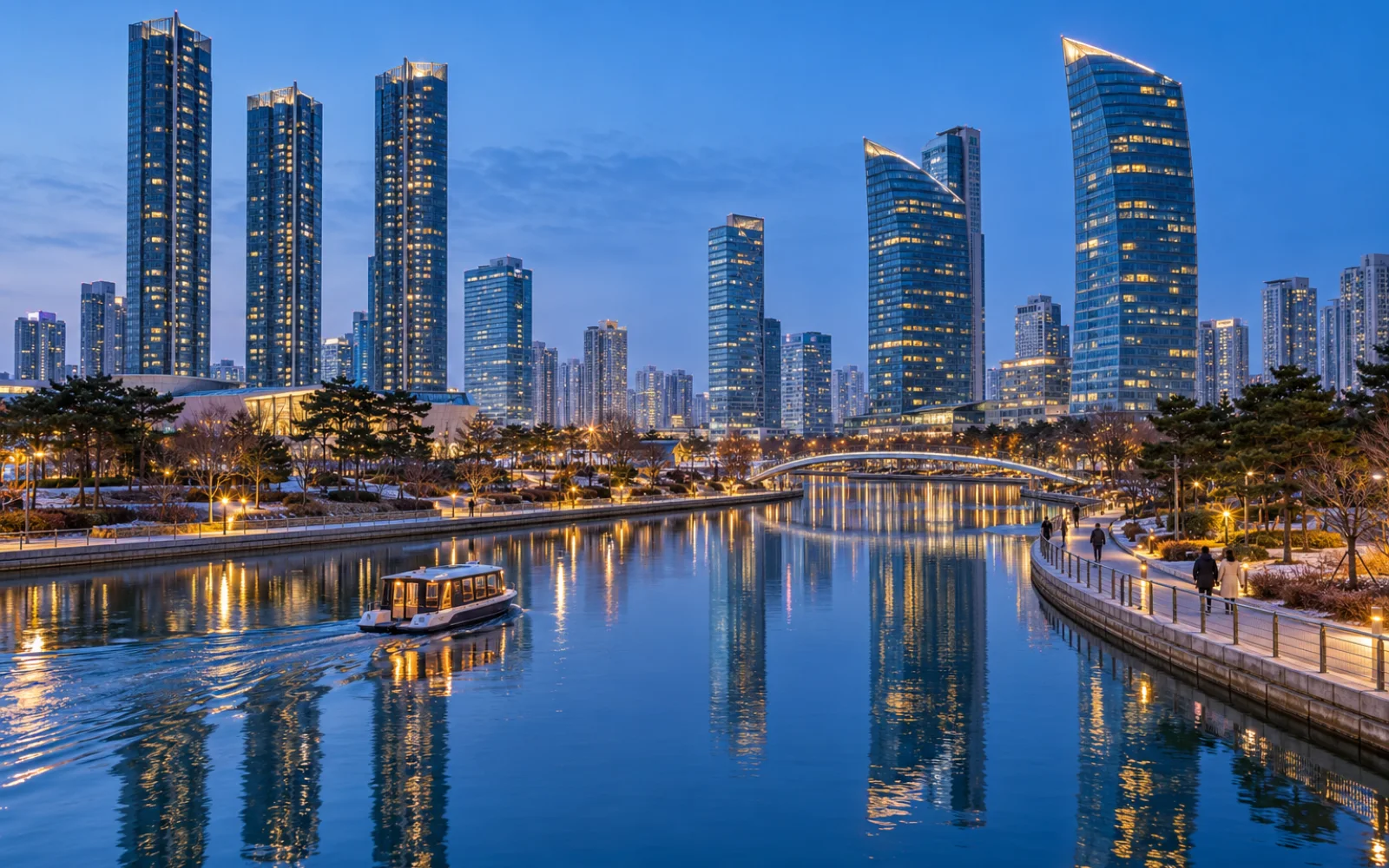
A port metropolis of airport islands, treaty-port streets, a Chinatown founded in 1884, tidal coast and planned Songdo districts beyond the Seoul transfer.
Incheon International Airport opened in 2001 on land reclaimed between Yeongjong and Yongyu islands, but the city's own story is much older. Chemulpo, as the port was known, opened to foreign trade as a treaty port in 1883, and Chinese settlers arrived the following year, founding the Chinatown that still stands. Jayu Park, developed on Eungbongsan in 1888, is widely described as Korea's first Western-style park.
Incheon also sits at the centre of modern Korean history. The Incheon Landing of September 1950 reversed the momentum of the Korean War and led to the recapture of Seoul. Gonghwachun, a Chinese restaurant operating from about 1905 to 1983, is considered the first place in Korea to serve jajangmyeon, and the Jajangmyeon Museum now stands on its site. On Ganghwa Island, Bronze Age dolmens were inscribed on the UNESCO World Heritage List in 2000, while Songdo, like the airport, sits on reclaimed land.
The Incheon airport, city and island guide covers the port district, Songdo and the islands. The South Korea collection shows where Incheon fits among the other regions.
South Korea · Country Guides
Treaty port history from 1883, the jajangmyeon story, the 1950 landing and Bronze Age dolmens explain Incheon beyond its airport code.
· 5 min read
No. The airport is on Yeongjong Island, while historic Incheon and Songdo require separate rail, bus or taxi travel with meaningful transfer time.
Only with enough immigration, baggage, transport and security margin. A short layover should remain near the airport rather than risk a missed flight.
One short, occasional email with a useful new guide, a place story and notes on what we have updated.
Join by emailSend us that email and we will add you to the list. We only email people who ask, and you can leave any time. See our privacy policy.
