South Korea · Country Guides
Jeonju: Hanok, Food and Living Heritage
A two-day Jeonju guide that treats hanok lanes as a living neighbourhood and connects food, paper, performance and architecture without rushing.
· 6 min read
Jeonju · 35.8242° N, 127.1480° E
A food and heritage city whose hanok lanes remain homes, workshops and cultural spaces, set beside a royal shrine and a red-brick cathedral.
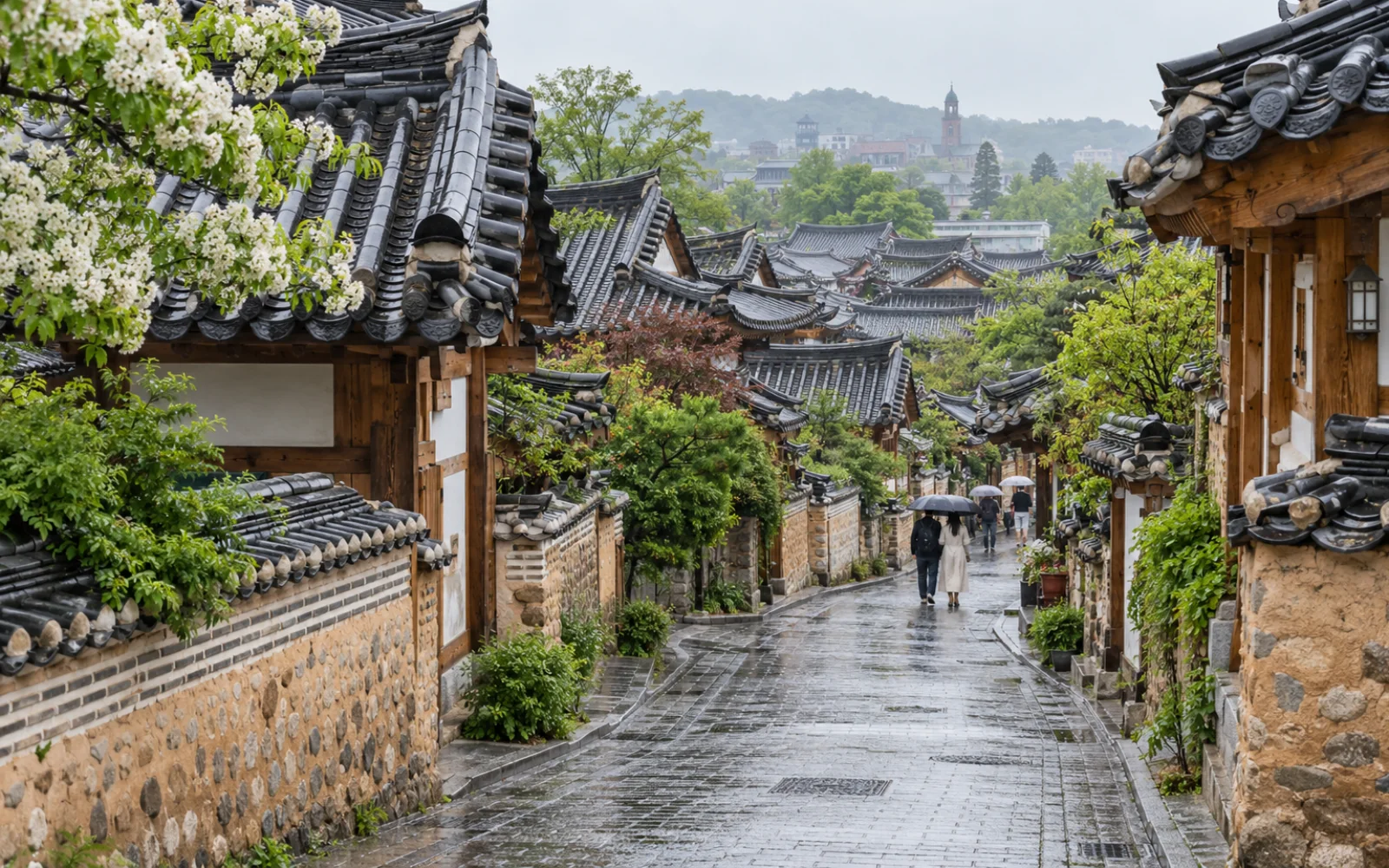
Jeonju Hanok Village contains hundreds of traditional-style buildings, yet its value is not a roof count. Homes, guesthouses, workshops, restaurants, cultural institutions and religious or historic sites share the same lanes, so the village is living urban fabric.
Several histories sit side by side. Gyeonggijeon was founded in 1410 to hold the portrait of King Taejo, founder of the Joseon dynasty, while Jeondong Cathedral, a red-brick Romanesque church built between 1907 and 1914, marks a later Catholic story. Hanji paper craft, ginkgo-lined streets and the city's reputation for food complete the picture, and Omokdae gives an elevated view across the roofs.
The Jeonju hanok, food and heritage guide sets out a two-day route through the village, its museums and its table. The South Korea collection shows how Jeonju differs from the other cities.
South Korea · Country Guides
A two-day Jeonju guide that treats hanok lanes as a living neighbourhood and connects food, paper, performance and architecture without rushing.
· 6 min read
Yes. It contains homes, guesthouses, workshops, cultural sites and businesses, so visitors should keep entrances clear and moderate noise.
Yes. An overnight allows a quieter early walk, one properly paced meal and heritage visits without compressing the city into a rushed day trip.
One short, occasional email with a useful new guide, a place story and notes on what we have updated.
Join by emailSend us that email and we will add you to the list. We only email people who ask, and you can leave any time. See our privacy policy.
