Switzerland · Country Guides
St. Moritz and the Engadin: Lake, Rail and Seasonal Planning
A practical St. Moritz guide that moves beyond luxury shorthand to the lake, railway, public transport and wider Upper Engadin.
· 5 min read
St. Moritz · 46.4908° N, 9.8355° E
A high Engadin lake town whose railway arrival, mineral springs and clear alpine light reach beyond luxury imagery.
St. Moritz is easier to understand as part of the Upper Engadin than as a single resort. The lake, high valley, mineral-spring area and Rhaetian Railway connect a landscape larger than the hotel façades on the hillside. In July 2008 the Albula line from Thusis to St. Moritz and the Bernina line onward to Tirano in Italy were inscribed together as the Rhaetian Railway in the Albula / Bernina Landscapes World Heritage Site, celebrated for mountain engineering completed in the early twentieth century.
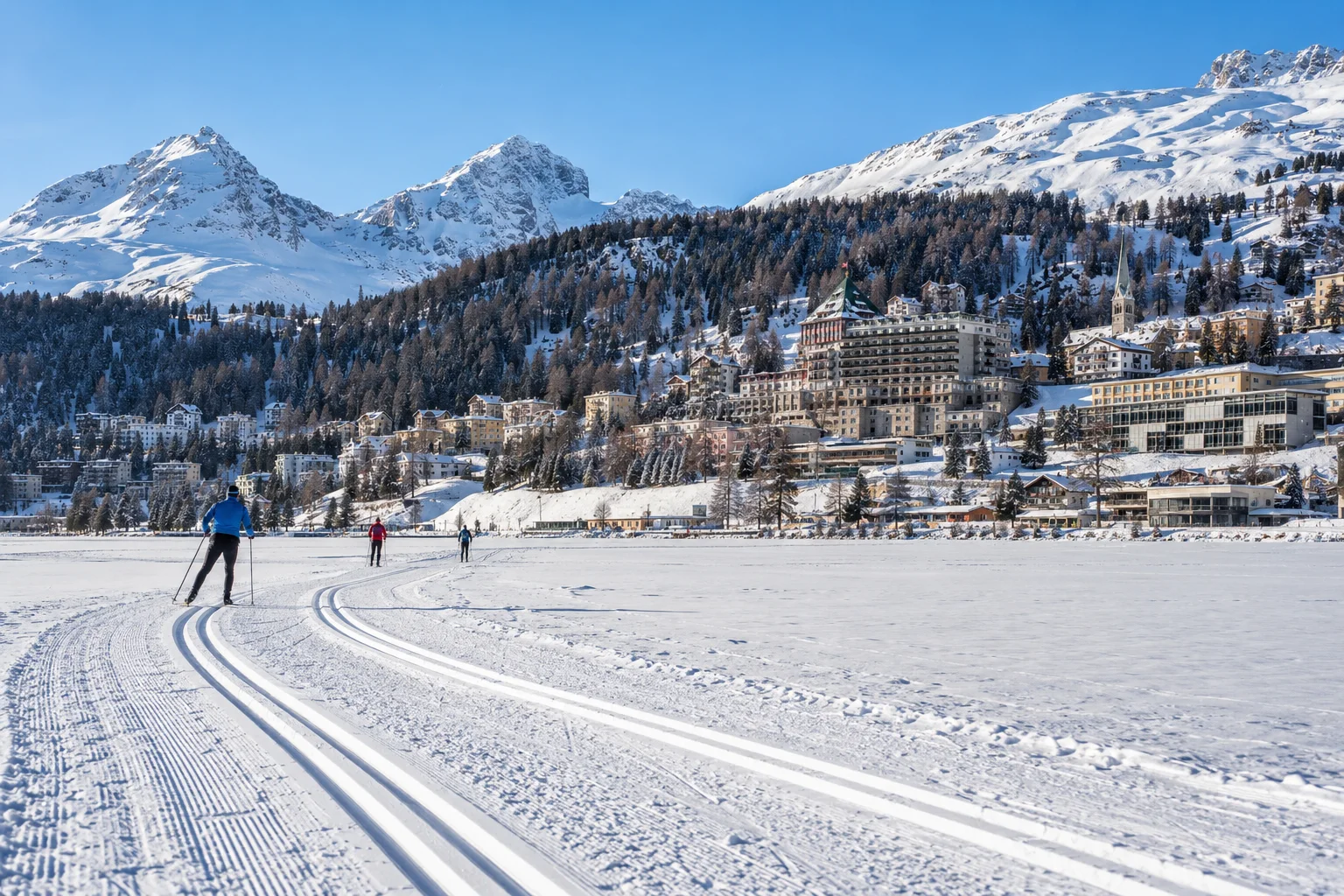
The town has two parts: St. Moritz Dorf rises above the lake and holds central shops and hotels, while St. Moritz Bad lies toward the south-west near the lake, sports areas and the historical mineral-spring district. In winter the lake becomes terrain for sport.
The St. Moritz and Engadin planning guide covers the railway, the lake and regional travel. The Switzerland collection compares the region with the rest of the country.
Switzerland · Country Guides
A practical St. Moritz guide that moves beyond luxury shorthand to the lake, railway, public transport and wider Upper Engadin.
· 5 min read
Its place in the Upper Engadin, a lake that becomes winter terrain, a mineral-spring history and an arrival by the UNESCO-listed Rhaetian Railway.
Dorf rises above the lake with central shops and hotels, while Bad lies toward the south-west near the lake, sports areas and the mineral-spring district.
One short, occasional email with a useful new guide, a place story and notes on what we have updated.
Join by emailSend us that email and we will add you to the list. We only email people who ask, and you can leave any time. See our privacy policy.
