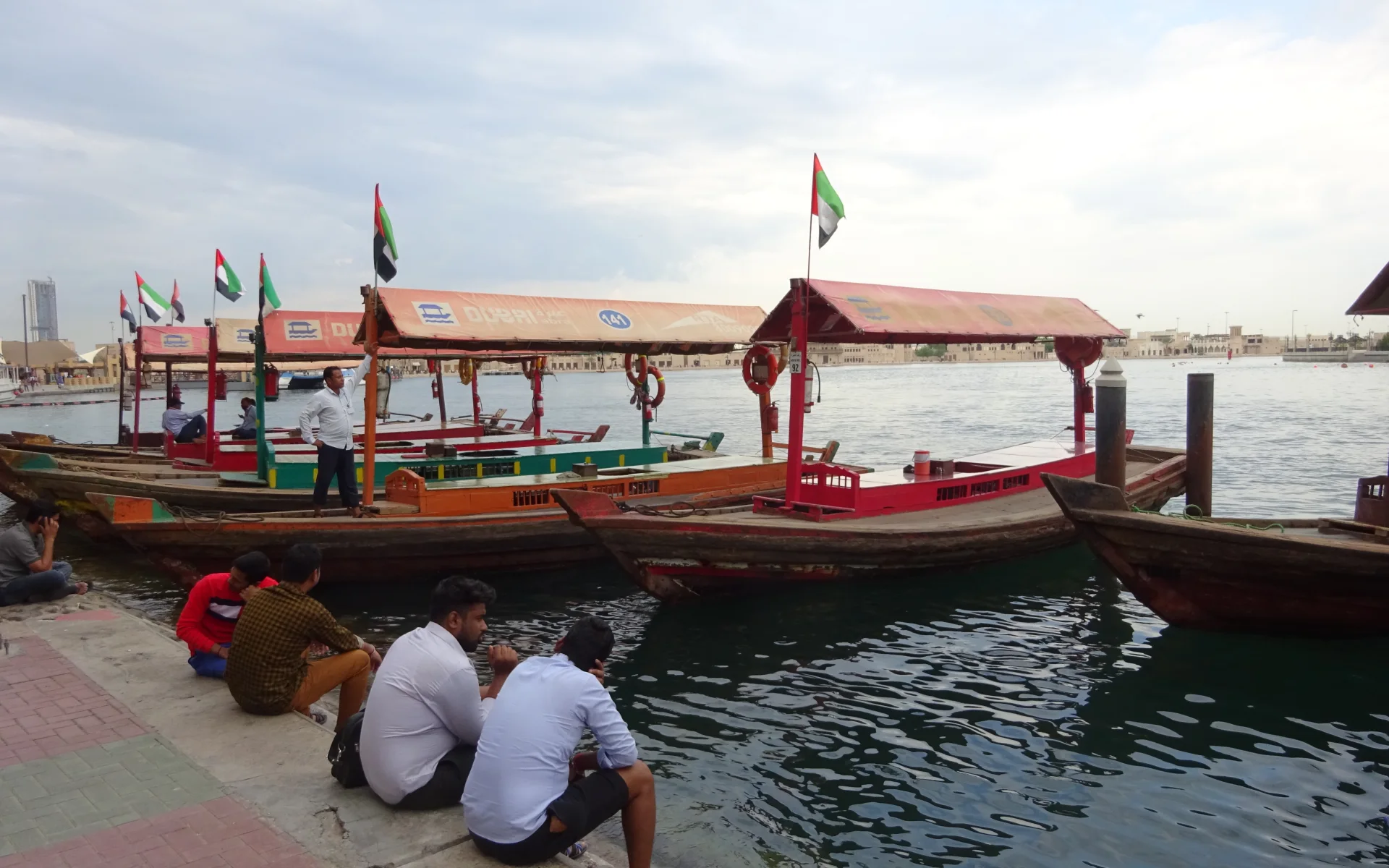
A global city that grew from a Creek port, where pearling history, a wind-tower quarter and abra crossings sit beside metro-linked towers.
Read Dubai from the Creek outward
Dubai makes more sense when the story begins beside the Creek rather than inside a mall. The Creek is a natural saltwater inlet of the Persian Gulf, and it was Dubai's only port. Members of the Bani Yas tribe settled on the Bur Dubai bank in the nineteenth century and founded the Al Maktoum dynasty. Pearling was the main economic sector until cultured pearls arrived in the 1930s, and dhows brought goods from India and East Africa.
Al Fahidi Fort dates to about 1787 and is considered the oldest surviving building in Dubai. Beside it, the Al Fahidi Historical Neighbourhood, once Bastakiya, was settled in the 1890s by Iranian pearl and textile merchants, and its wind towers caught the breeze. The first bridge across the Creek, Al Maktoum Bridge, was built only in 1963, which is why abras still carry people between Deira and Bur Dubai.
Pearling boats, dhows from India and East Africa, Al Fahidi Fort of about 1787 and wind-tower houses explain the port city that modern Dubai grew from.
· 5 min read
Questions and answers
What makes Dubai distinctive?
A trading port on the Creek, where pearling, dhows, the Al Fahidi wind-tower quarter and abra crossings sit beside the much larger linear city of towers.
Is old Dubai walkable year-round?
Distances are manageable, but extreme heat and humidity can make walking unsafe. Cooler-season mornings are best and indoor alternatives matter.