United Arab Emirates · Country Guides
Fujairah East Coast and Heritage: A Practical Two-Day Guide
A two-day Fujairah plan separating the city and historic sites from a weather-dependent Gulf of Oman coast or diving day.
· 5 min read
Fujairah · 25.1288° N, 56.3265° E
The UAE's east-coast emirate on the Gulf of Oman, where Hajar ridges meet ports, farms, forts, villages and the oldest surviving mosque.
Fujairah is the UAE's east-coast emirate, facing the Gulf of Oman rather than the Arabian Gulf. The Hajar Mountains press close to ports, farms, forts and beaches, so mountain weather, road distance and marine conditions shape every journey in a way that differs from Dubai.
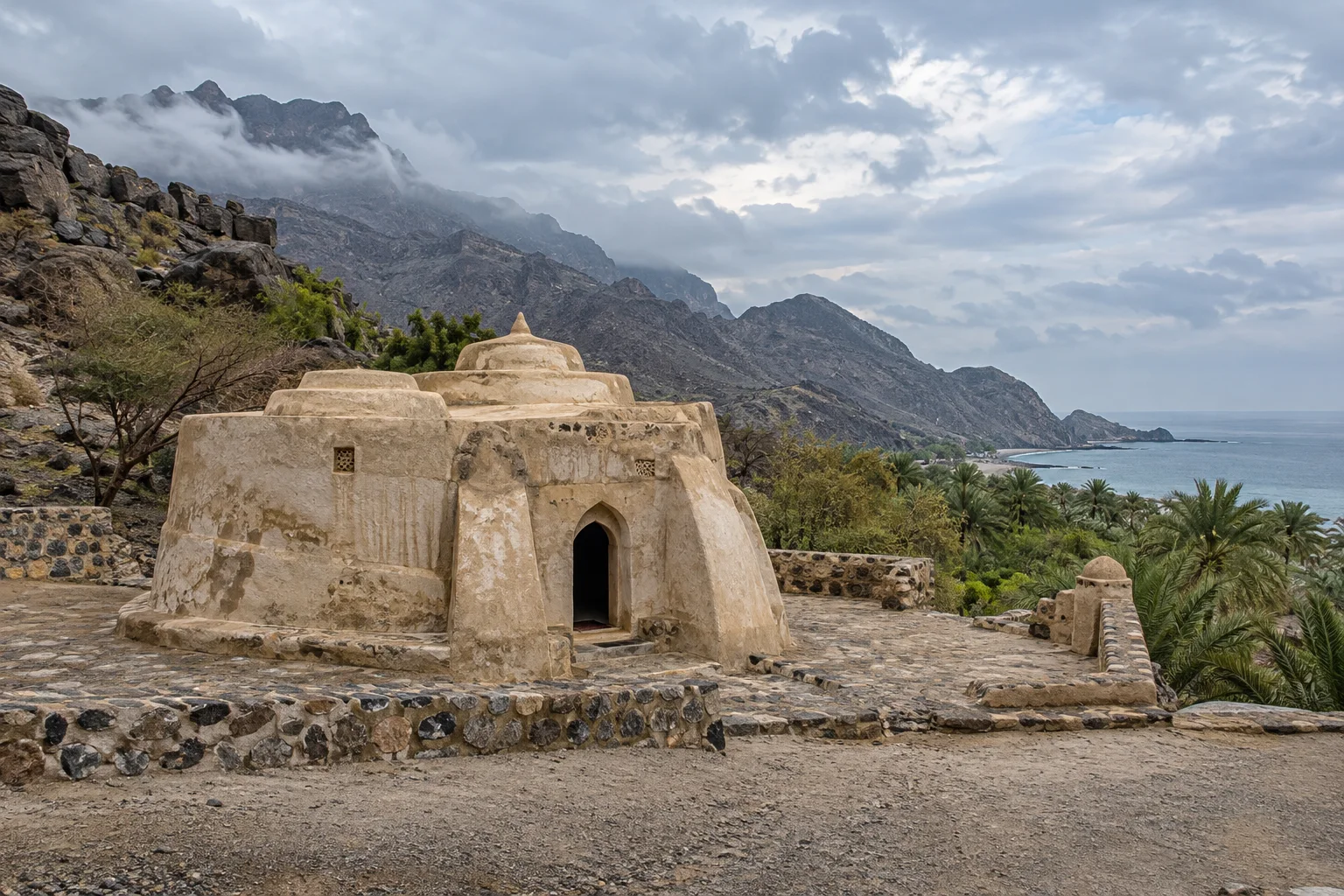
Fujairah Fort and Fujairah Museum anchor the city's heritage, with archaeological displays showing how long people have farmed, fished and traded along this coast. Al Bidyah Mosque, about 35 km north of the city, is widely regarded as the oldest surviving mosque in the UAE. Older accounts date it to the fifteenth century, while coral-block dating reported in 2017 points to the late sixteenth century; either way the small domed building predates the modern emirates by centuries. Dibba Al Fujairah lies farther north and is a separate place.
The Fujairah east-coast guide covers the fort, the coast and the mountain roads. The UAE collection places Fujairah beside the Gulf-coast emirates.
United Arab Emirates · Country Guides
A two-day Fujairah plan separating the city and historic sites from a weather-dependent Gulf of Oman coast or diving day.
· 5 min read
It faces the Gulf of Oman and has mountain-backed settlements, different marine conditions and east-coast road geography.
A small domed mosque about 35 km north of Fujairah city, widely regarded as the oldest surviving mosque in the UAE, dated to the late sixteenth century by 2017 coral-block dating.
One short, occasional email with a useful new guide, a place story and notes on what we have updated.
Join by emailSend us that email and we will add you to the list. We only email people who ask, and you can leave any time. See our privacy policy.
