Boyne Valley Visitor Guide: Newgrange Bookings, Bases and Transport
A booking-first Boyne Valley guide that explains Newgrange's official access system, realistic bases and what to do when tickets or rural transport constrain the day.
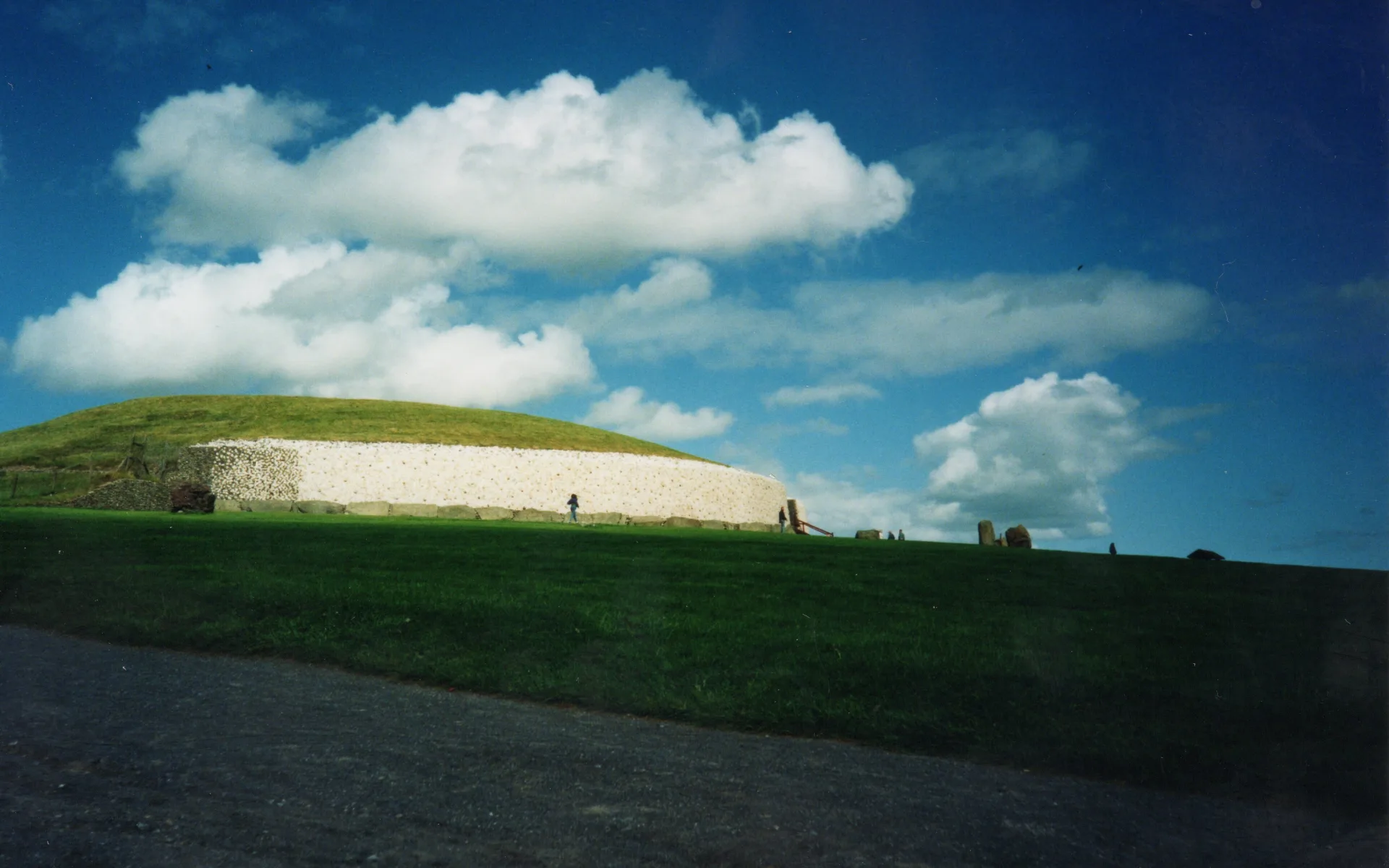
Newgrange is not a roadside monument where a flexible arrival is enough. It is part of Brú na Bóinne, a protected archaeological landscape visited through a controlled tour system. Secure the correct official ticket first; only then should you decide where to stay and what else fits.
Cover photograph: “Newgrange Passage Tomb, County Meath” by Stanley Howe, licensed CC BY-SA 2.0. Cropped to 16:10 and converted to WebP; no generative alteration.
Why Newgrange matters: a 5,000-year-old calendar in stone
Newgrange, Knowth and Dowth were built around 3200 BC by Neolithic communities beside the River Boyne in County Meath. Heritage Ireland, which manages the site, dates all three great passage tombs to that period, roughly 5,200 years ago, and notes that together they hold the largest collection of megalithic art in Western Europe, carved into kerbstones and passage stones.
What makes Newgrange extraordinary is its alignment. Above the entrance sits a small opening known as the roof-box. On the mornings around the winter solstice, from 18 to 22 December, the rising sun shines through it and a beam travels up to 19 metres along the passage to light the chamber floor, fading after about 17 minutes. For thousands of years nobody living had seen it happen. Local traditions spoke of sunlight entering the chamber, though they placed it in summer. The archaeologist Michael J. O'Kelly began a long excavation in 1962, and at dawn on 21 December 1967 he stood alone in the chamber and watched the light arrive, about four and a half minutes after sunrise. The tomb had been designed to catch the shortest day of the year.
That discovery changed how the world looks at Neolithic Ireland. The builders understood the sky well enough to frame one sunrise, and they left art that still carries meaning even if its exact symbolism is unknown. For Irish people, Brú na Bóinne is a source of deep pride, a reminder that a sophisticated society flourished on the island long before its written history began. Every December, people still gather in the dark hoping for clear sky.
Seeing it today depends on a carefully managed access system, which shapes every practical decision below.
The official booking rule changes the whole trip
Heritage Ireland states that Brú na Bóinne tickets are limited, advance booking is essential for monument tours, and unauthorised third-party tickets will not be accepted. Booking windows vary by season. Check the live page instead of copying a release interval from an old guide.
Every person, including children and infants, needs a ticket. Choose the tour description carefully: seasonal options differ, and not every ticket includes the Newgrange chamber or Knowth. Save the confirmation offline and use the official online-booking page.
Arrive at the visitor centre, not the mound
The Brú na Bóinne Visitor Centre near Donore is the starting point. Tour visitors travel from there by shuttle; direct arrival at Newgrange does not bypass the system. Build a generous arrival margin for parking, toilets, ticket checks and the exhibition. The archaeological sites are outdoors and exposed, so bring rain protection even when the morning looks settled.
Photography is not permitted in the Newgrange passage or chamber. Commercial filming has separate rules. Follow the guide's instructions and keep off earthworks; these are protected monuments, not scenic picnic mounds.
Decide whether Drogheda or the countryside fits
Drogheda is the practical public-transport base, with rail and coach connections plus services that rural accommodation may lack. It still requires a confirmed last-mile plan to the visitor centre. A rural Boyne Valley stay can shorten driving and create a quieter evening, but dinner, taxis and onward transport may need advance arrangement.
Dublin works for an organised excursion or carefully researched independent day, but it adds travel and makes a missed connection more consequential. A tour counts as “independent” only once the outward and return legs are confirmed for the actual weekday.
Solve rural transport before buying a timed ticket
Use Transport for Ireland to check current bus and rail services, then verify any local connection. Timetables can be sparse on Sundays and holidays. A journey planner result is not a guarantee that a taxi will be waiting at a rural stop.
If driving, follow the visitor-centre directions and allow for narrow roads. The safe plan has one named driver, no rushed departure and no attempt to combine distant sites because they look close on a small map. If using a taxi, reserve both directions and confirm the collection point.
Understand what the tour can physically require
The passage and chamber at Newgrange are low and narrow. Heritage Ireland warns that they may not suit people with claustrophobia or mobility concerns. Monument access is not universally accessible, although the visitor centre includes accessible facilities. Contact the site before purchase if a traveller needs assistance.
Visitors who decide not to enter the chamber still gain from the landscape and interpretation, but should confirm whether the selected tour allows a suitable alternative. Wear shoes for uneven outdoor ground and leave bulky luggage at your base.
Give the archaeology enough context
Newgrange, Knowth and Dowth form a Neolithic ceremonial landscape dating to around 3200 BCE, each with its own character. Start with the visitor-centre exhibition. It explains construction, megalithic art, excavation and the Boyne setting, making the guided visit more intelligible.
Nobody knows exactly what every symbol meant, and good interpretation admits its limits. The UNESCO World Heritage listing is a better starting point than mystical summaries that present speculation as settled fact.
Add one companion site, not four
If time remains, choose one place that extends the story: Drogheda's medieval heritage, Old Mellifont Abbey, the Battle of the Boyne site at Oldbridge, or the Hill of Slane. Check opening, transport and historical focus first. These sites belong to different periods and should not be blended into a vague “ancient Ireland” narrative.
A companion stop should fit the route back to your base. If it creates a race against last admission or the last bus, spend longer at Brú na Bóinne instead.
Keep a no-ticket version of the day
If official tickets are unavailable, do not buy from a reseller or appear at Newgrange expecting entry. Use Drogheda as a heritage base, choose an independently accessible site with verified hours, and monitor the official booking system for released cancellations. Dowth's wider landscape also has conservation and access constraints; research current lawful access rather than assuming it is an unrestricted substitute.
Separate the winter solstice from an ordinary visit
Newgrange is famous for the illumination of its passage around the winter solstice, but normal visitor tickets do not promise a solstice sunrise. Heritage Ireland operates a separate process for access during the relevant mornings, and weather can prevent visible sunlight even for people selected. Read the current official announcement if that experience is your purpose; never buy a package that implies guaranteed chamber access.
At other times, guides can explain the roof-box and alignment without reproducing the astronomical event. This is still a complete visit. Leave the chamber entrance clear for others, and keep to claims the site's evidence supports. The monument's engineering, art and landscape relationship are substantial without invented mystery.
Winter also changes the tour range, booking window, ground conditions and daylight. Use the live seasonal notice, not summer itineraries. Bring warm waterproof layers because the exposed monument visit continues outdoors even when the visitor-centre exhibition is comfortable.
Place children, sensory needs and confined space before the itinerary
Families must include infants and children on the official reservation. Explain before arrival that the tour involves a shuttle, waiting, outdoor ground and instructions inside a protected monument. Snacks should be used only in permitted areas, and the mound is off limits for climbing.
Heritage Ireland provides a visual guide and sensory information through the visitor-centre page. Download these before travel when a predictable sequence helps. The Newgrange passage can feel confined and the chamber visit is not compulsory proof of a successful day. Agree on an exit or non-entry plan with the group and tell staff about assistance requirements in advance.
For visitors who cannot enter the passage, the exhibition, reconstructed interpretation, exterior and wider landscape still communicate the site's scale and setting. The respectful choice is the one that keeps the person comfortable, not the one that completes every advertised element.
Eat and pause where the transport plan allows
The visitor centre lists a café and picnic facilities, but opening and service can vary. Carry water and a small lawful snack, especially with children or medical needs, while following food restrictions near exhibitions and monuments. A rural lunch between a fixed tour and a tightly booked taxi works only when the venue has confirmed service time.
Drogheda offers a broader evening choice and makes a practical recovery stop after the archaeological visit. A rural stay can provide a quieter meal, but pre-booking may be essential. Designated drivers should remain alcohol-free; small roads, darkness and unfamiliar junctions demand full attention.
The most useful souvenir is often the official guidebook or interpretation material. It allows questions raised on site to be followed later and supports a better account of the monument than a generic “Celtic” object unrelated to the Neolithic landscape.
A dependable planning order
First, check official ticket availability. Second, choose the base. Third, lock the last-mile transport. Fourth, read accessibility and weather guidance. Fifth, add at most one flexible stop. That order protects the main purpose of the journey, which is time inside a 5,000-year-old landscape with a guide who can explain it.
Continue through the Ireland hub, compare a west-coast base with our Galway first-time guide, plan the capital with the Dublin first-time guide, or read why the island's heritage runs so deep in what makes Ireland special.
Questions and answers
Can I drive directly to Newgrange?
No for the normal guided visit. Official tours begin at the Brú na Bóinne Visitor Centre, and visitors are transferred to the monuments. Going directly to the tomb does not provide admission.
Why is Newgrange famous?
It is one of three great passage tombs at Brú na Bóinne, built around 3200 BC. At sunrise around the winter solstice, light enters a roof-box and travels up to 19 metres along the passage into the chamber, an alignment Michael O'Kelly witnessed on 21 December 1967.
Are third-party Newgrange tickets valid?
Heritage Ireland says third-party sellers are not authorised. Use the official Heritage Ireland booking route and include every adult, child and infant in the reservation.
Sources
Dublin · 53.3498° N, 6.2603° W
This story belongs to Ireland. A country that runs on deep time, precise craft and stories told well, from a tomb older than the pyramids to a literature honoured four times.