Galway for First-Time Visitors: The City of the Tribes and Its West Coast
Galway's fourteen merchant tribes, the origin of the Claddagh ring, a medieval church in daily use and its film and arts culture, then the practical choices for the city and the west coast.
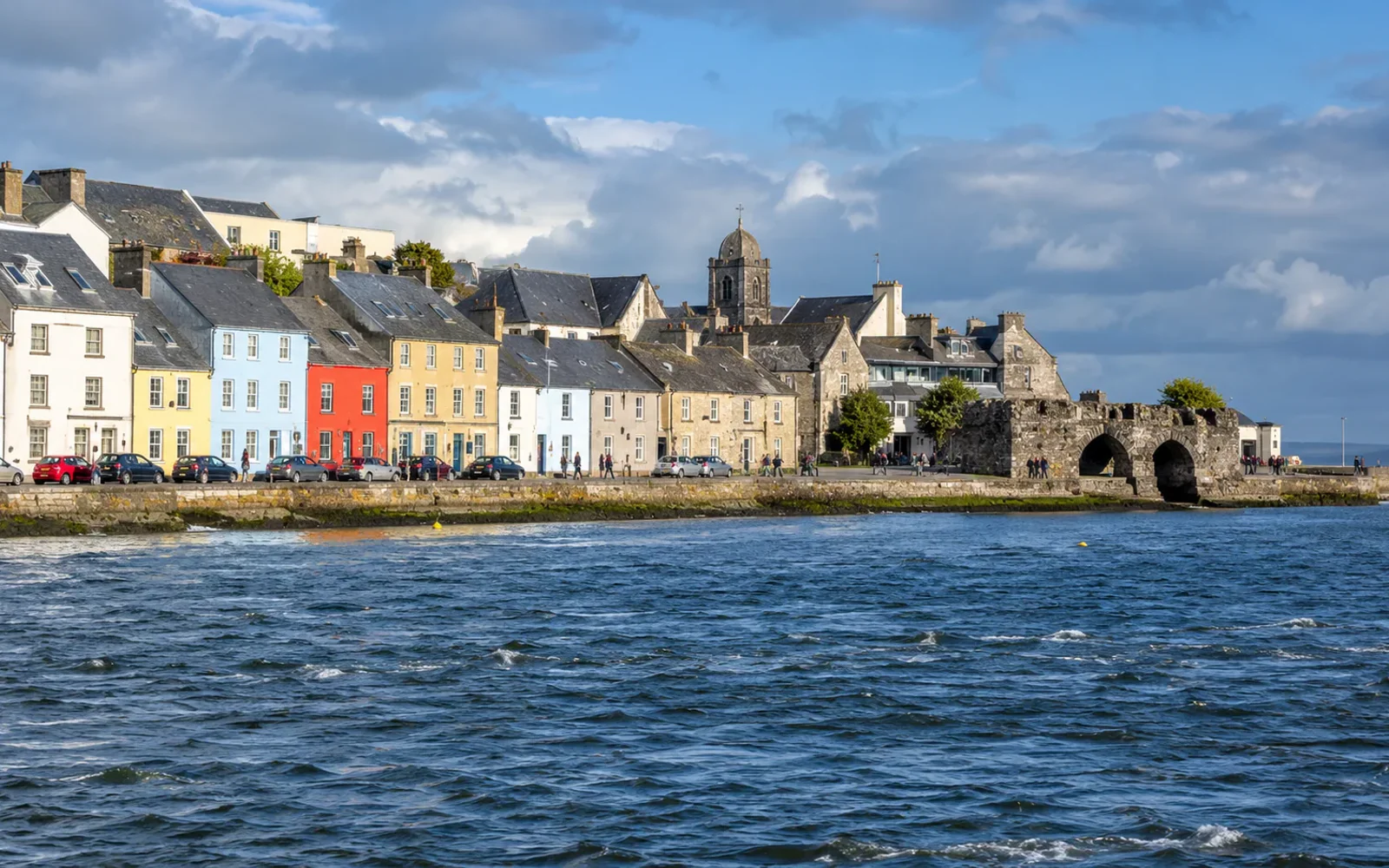
Cover: AI-generated illustration. © ANUSHKA DAHANAYAKE (PVT) LTD.
Galway was a medieval trading port run by fourteen merchant families, and the city still carries their name for it: the City of the Tribes. Mayoral status was granted in December 1484, with Peirce Lynch Fitzjohn elected the first mayor in 1485. Today it is a university town, a harbor at the mouth of the Corrib and the gateway to Connemara and the Aran Islands, and for many people in the west it is the place the region's culture gathers.
The Tribes and the streets they built
The Lynch family's town house is a sixteenth-century building on Shop Street, now a bank branch, and the Spanish Arch beside the river was built during the mayoralty of Wylliam Martin in 1519 and 1520, a surviving piece of the old quay wall. The Collegiate Church of St Nicholas, established around 1320, is described as the largest medieval parish church in Ireland still in continuous use, and its 700th anniversary was marked in 2020. Local tradition says Christopher Columbus visited the city in 1477, possibly on a voyage north, and that Cromwell's troops later stabled horses in the nave; both stories are told as tradition, not settled history. The names of the fourteen families, Lynch, Blake, Joyce, Kirwan and the rest, still turn up on streets and shopfronts, which makes the compact center a place where the medieval story is easy to follow on foot.
Claddagh: a ring from a fishing village
The Claddagh, once an enclave of fishermen with an elected "King" and the oldest part of Galway, gave its name to the ring of two hands clasping a crowned heart: the heart for love, the crown for loyalty and the hands for friendship. Its modern form was first produced in the seventeenth century, and Galway goldsmiths have made it continuously since at least 1700. A popular story credits the silversmith Richard Joyce, captured by corsairs around 1675, but the account is legend. The oldest surviving examples came from the workshops of Bartholomew Fallon and Thomas Meade. The ring's clasped-hands motif descends from the ancient Roman fede ring.
A city of film and festivals
Galway shared the title of European Capital of Culture with Rijeka in 2020 and was designated a UNESCO City of Film on 1 December 2014. The Galway Arts Festival has run every July since 1978. Salthill, the seaside promenade to the west, is the usual evening walk, and the swans at the mouth of the Corrib are part of the scene.
Getting in and picking a base
Irish Rail runs services between Dublin Heuston and Galway Ceannt Station; its official journey planner is more reliable than a copied timetable. The Latin Quarter is central and lively but noisy; the West End gives access to restaurants and the river; Salthill suits a coastal stay with regular city buses. Ask about late music, stairs and the real distance from a stop. You do not need a car for the city. A car adds flexibility in Connemara, but narrow roads, livestock and cyclists demand patience, and organized day trips are a useful alternative.
One day in the center
Begin at Eyre Square and walk to Shop Street, then leave the main route for quieter lanes. Lynch's Castle, St Nicholas and the Spanish Arch are the main historical stops; check entry hours, since some are active institutions. Galway City Museum covers archaeology, maritime life and local history, which makes it a good indoor block. The Salthill promenade is exposed and can be cold and windy; tradition does not require anyone to kick the wall or swim.
For evening music, choose a venue that publishes its sessions and arrive before the room fills. A session is not a concert: keep voices low, skip the flash and never crowd a musician's hands with a phone.
Connemara or the Aran Islands, not both
Connemara suits road stops: Clifden, Kylemore and the National Park, with two or three places chosen rather than a window-seat marathon. If you hike, check official conditions, carry waterproof layers and keep to marked routes. For the Aran Islands, confirm the ferry departure port and any Galway-to-Rossaveel shuttle, plus check-in and return times, because operators adjust sailings by season and sea state. Inis Mór has the broadest visitor services. Irish is a community language here, not decoration, so listen to the pronunciation and do not treat speakers as performers. Keep well back from unfenced cliff edges in wind.
A day for market, river and the table
Keep one day flexible. If the island or Connemara trip was canceled, use it for the excursion; otherwise explore the Saturday market when it operates, the Corrib river walk and the university grounds open to visitors, and check event schedules because festivals transform accommodation demand and traffic. A food-led day can include a bakery, a seafood lunch and locally produced cheese or preserves. Ask about origin instead of assuming every "Irish" menu is local, tell kitchens plainly about shellfish allergies, and buy oysters only from businesses that keep them cold. For a short rail outing, Athenry offers medieval heritage on the Dublin line; for a bus trip, pick one nearby place through the Transport for Ireland planner and confirm the return service, especially on Sundays.
Weather, roads and respect
Western Ireland can move through sun, rain and strong wind in one day, so wear layers and a waterproof shell. Boat cancellations are safety decisions: keep a city alternative ready. Ireland drives on the left, Connemara roads have stone walls and blind bends, and a speed limit is a maximum, not a target. Stop only in a real lay-by, never at a gateway. Festival weeks and weekends push up prices and train demand, so reserve the bed and one priority excursion and keep the rest flexible. Use registered accommodation, keep late-night noise away from homes and carry litter off the coast and islands.
Read what makes Ireland special, head south along the coast with our Limerick guide, continue through our Ireland destination hub, pair the trip with our Dublin first-time guide, or browse more practical country guides.
Questions and answers
How many days should first-time visitors spend in Galway?
Three days allow one city day, one excursion and one flexible day for weather or a second neighborhood. Two days work if you choose either Connemara or the Aran Islands, not both.
Can you reach Galway from Dublin by train?
Yes. Intercity trains run from Dublin Heuston to Galway Ceannt Station. Use Irish Rail's journey planner for current times, fares, engineering work and seat booking.
Should you choose Connemara or the Aran Islands?
Choose Connemara for mountains, bog, villages and road-based stops; choose the Aran Islands for an offshore community, Irish language and a slower walking or cycling day. Weather can decide for you.
Sources
Dublin · 53.3498° N, 6.2603° W
This story belongs to Galway, Ireland. A country that runs on deep time, precise craft and stories told well, from a tomb older than the pyramids to a literature honoured four times.