Delft for First-Time Visitors: Vermeer, Blue Pottery and a Calm One-Day Plan
A carefully paced Delft day covering the Markt, Vermeer, canal streets and Royal Delft, with practical transport, booking and accessibility advice.
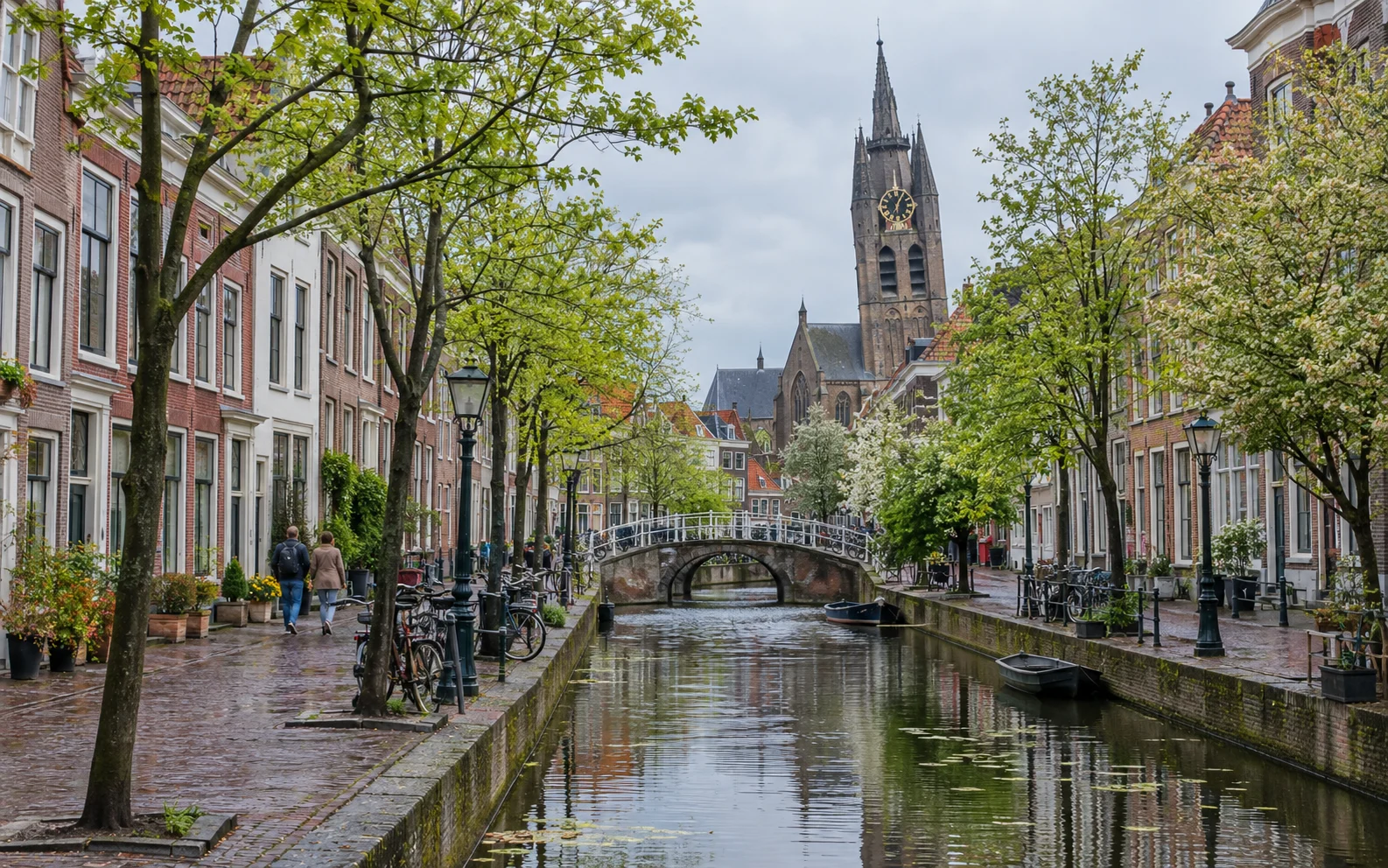
Cover: AI-generated illustration. © ANUSHKA DAHANAYAKE (PVT) LTD.
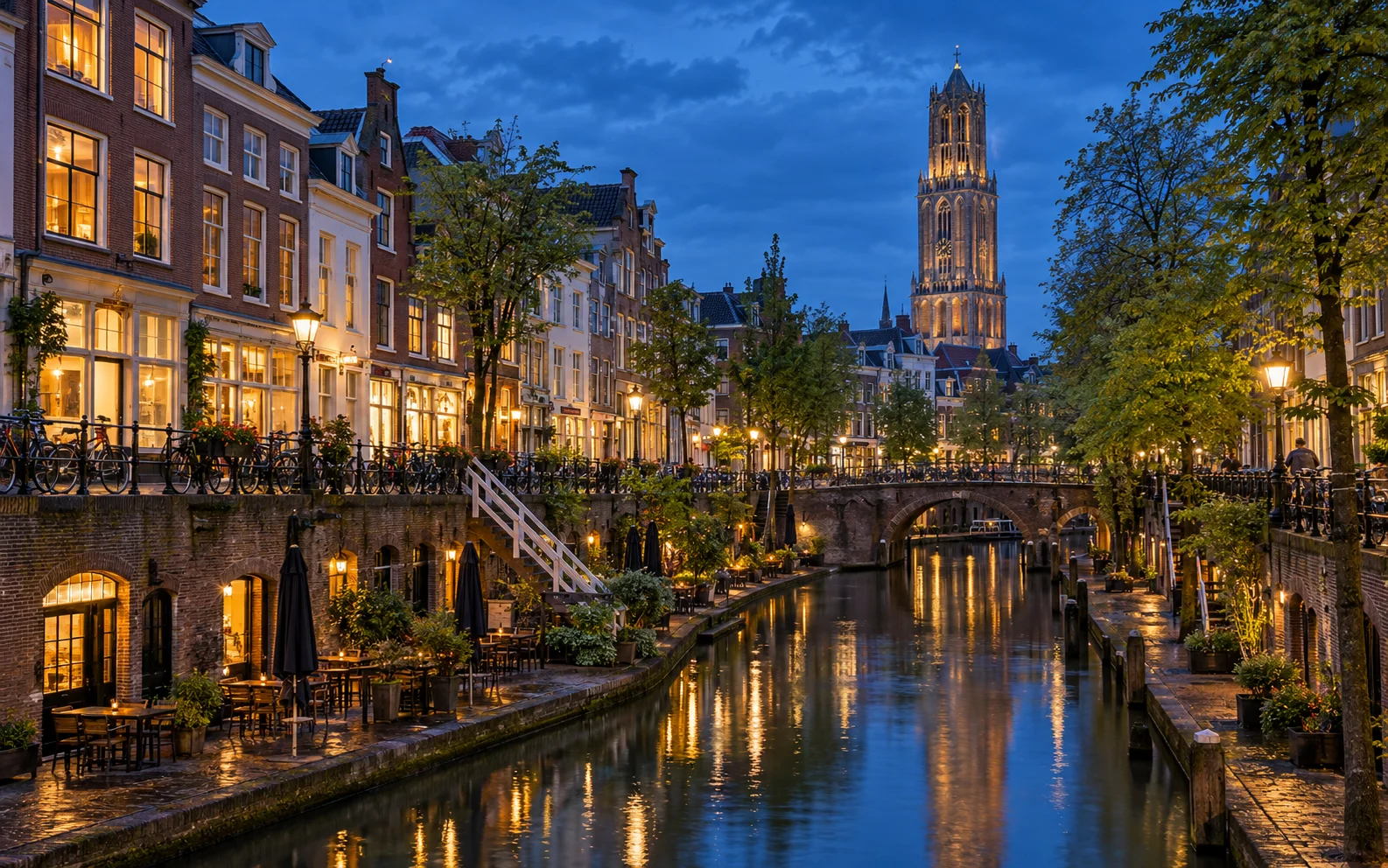
Delft is compact enough to be treated as a day trip, yet layered enough to punish a rushed checklist. Its market square holds the Nieuwe Kerk and ornate town hall; narrow canals lead to the leaning Oude Kerk; Johannes Vermeer's biography is embedded in local streets; and Delft Blue pottery connects global trade with present-day craft. The best visit chooses a few of these stories and leaves time to walk.
This plan suits a first visit from Rotterdam, The Hague or Amsterdam. It distinguishes interpretation from original artworks, explains the extra journey to Royal Delft and keeps practical details visible. Verify opening days because churches, museums and workshops do not all follow the same calendar.
Arrive by train, not by car
Delft station sits close to the historic centre and has regular rail connections. Check NS for current schedules and engineering works. From the station, the Markt is reached on foot through canals and shopping streets. Contactless rail payment can be convenient, but each person must use their own accepted card or device and tap out correctly.
A car offers little benefit inside the old centre. Streets are constrained, parking costs money and pedestrians and cyclists dominate useful routes. If driving is unavoidable, choose an official garage and walk from there. Never follow navigation into restricted streets simply because the screen suggests a shorter line.
Morning: Markt, Nieuwe Kerk and city scale
Start on the Markt before day-trip groups peak. The square's size becomes clearer when stalls and events are absent, while market days bring local energy but reduce unobstructed views. The Nieuwe Kerk contains royal tombs and offers a tower climb when conditions permit. Church and tower tickets, hours and physical requirements can differ, so read the current visitor information.
The tower involves a demanding historic staircase and should not be presented as accessible sightseeing. Visitors who do not climb still gain a strong understanding from the church interior and square. Across the Markt, the town hall rewards an exterior look; public access varies with civic use.
Walk toward the Oude Kerk, whose visibly leaning tower reflects difficult building ground. The route along Oude Delft is more important than the number of monuments ticked off. Bridges, narrow pavements and bicycles require attention. Step aside before taking a photograph rather than blocking a resident's doorway or the cycle flow.
Understand Vermeer without false expectations
Johannes Vermeer was born, worked and died in Delft. The Vermeer Centrum interprets his life, optical choices, working methods and relationship with the city. It uses reproductions and educational displays. Visitors should know that this is not a collection of original Vermeer paintings; honesty about that distinction prevents disappointment and lets the centre succeed at what it actually does.
Use the visit to look differently at Delft's streets: controlled light, domestic thresholds, courtyards and views framed by architecture. Locations associated with his life can be incorporated into a walk, but exact viewpoints and seventeenth-century buildings have changed. Avoid turning private homes into props.
Museum Prinsenhof Delft is closed for renovation, with its current museum materials looking toward spring 2028. Do not plan an interior visit. Check the museum's off-site programme for temporary exhibitions or choose another open institution.
Afternoon choice: Royal Delft or slow canals
Royal Delft traces ceramic production and the continuing craft behind Delft Blue. It lies beyond the tight historic core, so reserve enough time to reach it and complete the visit. Factory elements, demonstrations and workshops depend on the day's programme. Book a specific activity instead of assuming every process operates continuously.
Look carefully at labels in souvenir shops. “Delft Blue” can describe a visual tradition, while hand-painted local production, transfer decoration and imported mass-market items are different products at different prices. Ask where and how an object was made, and request secure packing if it must travel.
Travellers less interested in ceramics should stay central. Follow Oude Delft and Nieuwe Delft, stop for lunch, visit a courtyard where public access is clearly allowed and take a canal cruise if seasonal schedules suit. A guided walk can add more value than another shop because Delft's scale hides stories in short distances.
A balanced one-day timetable
Arrive around 09:30, walk to the Markt and visit the Nieuwe Kerk or tower. Spend late morning on the Oude Kerk and canals. After lunch, choose the Vermeer Centrum. Use mid-afternoon for Royal Delft if pre-booked, otherwise an open museum or a canal route. Museum Prinsenhof Delft is currently closed for renovation. Return to the Markt after day groups leave and eat before the train home.
Do not schedule a church tower, two museums, Royal Delft, a workshop and a cruise in one day. Opening hours and transfers will turn the plan into continuous clock-watching. Two paid interiors plus the city itself provide a more memorable visit.
Costs, food and booking
Delft can be economical because its streets, canals and Markt are free. Budget for rail, one combined church product or tower admission, one museum and food. Compare current combination tickets only after deciding what you want to enter. A pass has no value when one component is closed or physically unsuitable.
Reserve pottery workshops, guided Royal Delft experiences and tower access in busy seasons. Ordinary museum admission may be more flexible, but holiday weekends still deserve planning. For lunch, move a street away from the Markt and compare posted prices. Try local baking or a simple café meal, and do not make every stop a branded souvenir opportunity.
Accessibility and comfort
The modern station is accessible, but the historic centre includes brick paving, narrow bridges, thresholds and stairs. Church towers are not step-free. Major museums publish their own access arrangements; contact them about the exact entrance, toilet, lift and companion policy; a city-wide assumption is not enough.
Wheelchair users and travellers with limited stamina should plot bridge crossings and choose a direct route to Royal Delft. Canal cruises have different boarding designs, so ask about the actual vessel. On wet days, bricks and metal bridge edges become slippery. Shoes with grip are useful even though distances are short.
Safety and etiquette
The main recurring risks are bicycle conflict, theft from parked bikes and unattended belongings in busy cafés or trains. Look both ways before crossing cycle lanes, lock rentals properly and keep bags controlled. The canals often lack barriers; give the water's edge attention, especially with children and after rain.
Churches remain places of worship and remembrance. Lower voices, follow photography signs and do not cross closures for a better angle. In residential canal streets, avoid photographing through windows or occupying stoops. Ask before making close portraits of craftspeople.
Seasons and a rain plan
Spring brings blossom and longer light, summer adds canal activity, and autumn provides quieter streets. Winter can be atmospheric but has shorter opening hours. Rain is not a failed Delft day: the muted light suits the brick streets, while churches, Vermeer interpretation and ceramics provide indoor anchors.
If heavy weather cancels a cruise or makes the tower uncomfortable, replace it with a museum and a shorter covered walk. Keep Royal Delft only if the transfer remains sensible. The destination is small enough to adjust without losing its essential story.
Continue through the Netherlands destination hub, read what makes the Netherlands special, or use the countries index to build a wider itinerary.
Questions and answers
Is one day enough for Delft?
Yes. One well-planned day covers the Markt, one church, a Vermeer-focused visit and either Royal Delft or a slow canal walk. Stay overnight if you want quieter evenings or several museums.
Can visitors see original Vermeer paintings in Delft?
The Vermeer Centrum explains his life, techniques and Delft setting, but it should not be confused with a gallery of original Vermeer paintings. Check current exhibitions in Dutch museums separately.
Is Royal Delft in the historic centre?
Royal Delft is outside the tight Markt area but can be reached on foot, by bicycle or local transport. Allow travel time and check tour or workshop schedules before building a day around it.
Sources
Amsterdam · 52.3676° N, 4.9041° E
This story belongs to Delft, Netherlands. A country that exists in its present shape because people kept the water out, then chose to live beside it on their own terms.