Geneva Beyond the Jet d'Eau: Lake and Neighbourhood Guide
A practical Geneva plan connecting the lake, old town, Carouge and international district without reducing the city to one fountain.
Cover: AI-generated illustration. © ANUSHKA DAHANAYAKE (PVT) LTD.
Geneva is both smaller and more layered than its international reputation suggests. The airport is close, the centre is walkable and the lake provides immediate orientation, yet the city changes between Pâquis, the old town, Plainpalais, Carouge and the institutional district. Two days let you see those differences without using the Jet d'Eau as a substitute for understanding the place.
Use the airport railway, then choose the right bank
Geneva Airport has a railway station with direct trains to Geneva-Cornavin. The ride itself is short; the relevant questions are ticket validity, waiting time and the final walk or tram to your accommodation. Check the official airport and SBB information close to travel. An airport taxi may help a group with mobility needs or unusual luggage, but it is not necessary for most visitors.
Cornavin sits between the lake and several lively streets. Staying nearby is practical for a short visit, though street character and nighttime noise vary block by block. The old-town side of the Rhône offers easier access to historic sights but can involve slopes and older buildings. Carouge feels distinct and is connected by tram, making it suitable for travellers who accept a short daily ride. Ask hotels whether local transport benefits are currently provided and what they cover rather than relying on old posts.
Day one: lake, Rhône and old town
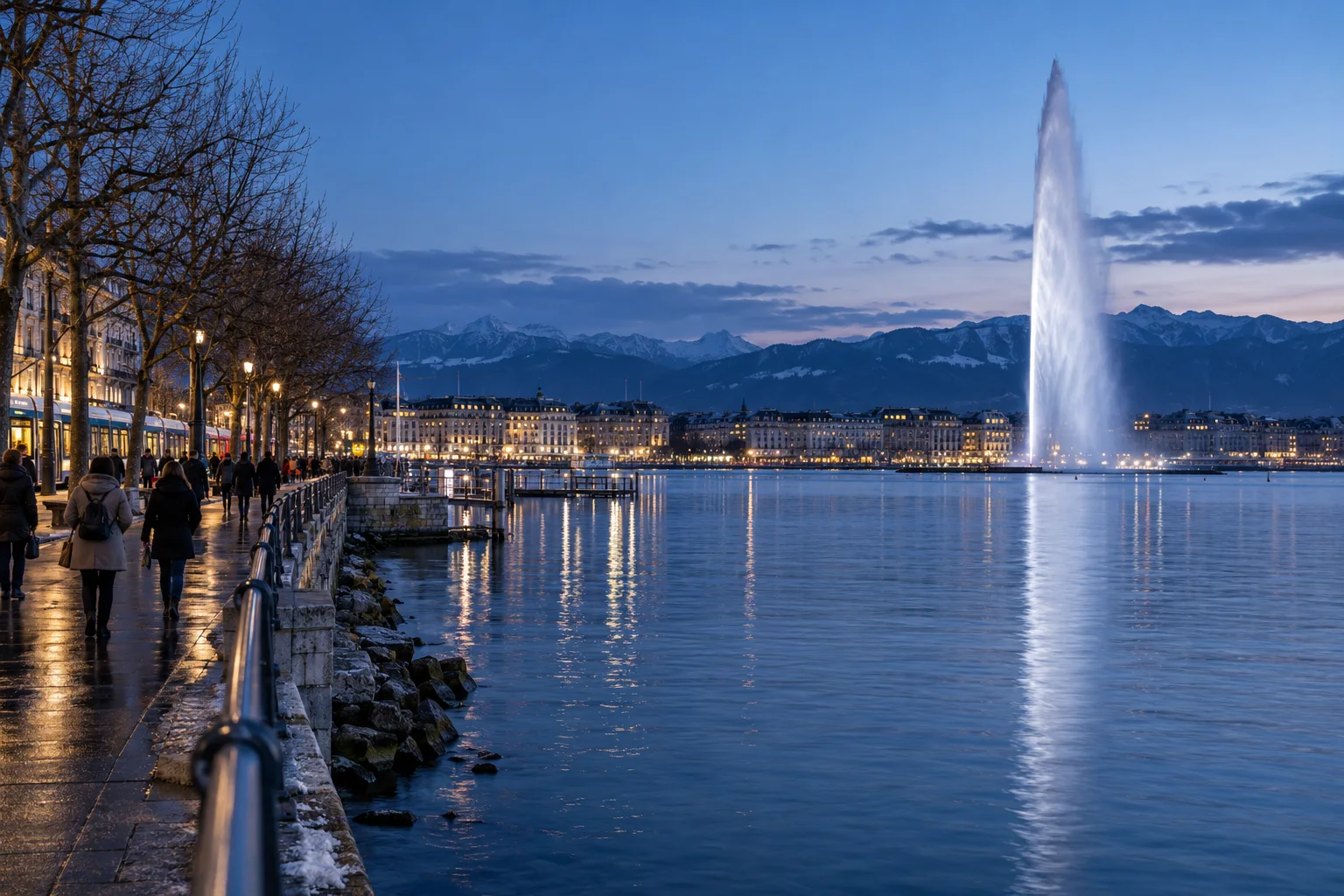
Begin at the lake edge and walk toward the point where the Rhône leaves the lake. The Jet d'Eau began in 1886 as a pressure-release valve for a hydraulic power network and took its present form, pumping lake water about 140 metres high, in 1951. Its operation depends on weather and maintenance; never promise yourself or a child that it will run at a specific moment. Wind can carry spray across the pier, making the surface wet and the temperature feel lower. Respect barriers and turn back if conditions are uncomfortable.
Cross toward the old town and climb gradually to St Pierre Cathedral and surrounding lanes. The area has slopes, cobbles and steps. Travellers needing step-free access should use public transport to reduce elevation and confirm individual entrances. Churches remain active spaces, so follow service schedules and photography rules.
Continue to the Reformation Wall, inaugurated in 1909 for the 400th anniversary of John Calvin's birth, if the historical subject interests you, then move toward Plainpalais instead of returning repeatedly to the waterfront. A museum makes a useful late-afternoon choice, but check its closed day and final admission. Geneva's cultural institutions can have different schedules even when they are geographically close.
Day two: international district or Carouge first
Choose the international district if you have a confirmed institutional tour or a serious interest in diplomacy and humanitarian history. That story begins in February 1863, when a Geneva committee with Henry Dunant as its secretary first met; it grew into the International Committee of the Red Cross. United Nations Geneva tours require booking and security screening; its visitor page asks guests to reach the meeting point 30 minutes before the tour. Bring the required identity documents and follow the current instructions. Rules can change with operations. Read the institution's own instructions and do not build the rest of the day around an unconfirmed expectation of entry.
The area around Place des Nations and the Ariana Museum can still be visited as a public-space and museum route, but organisation logos and memorials deserve contextual attention, not a sequence of posed photographs. Avoid blocking staff entrances or demonstrations.
Alternatively, start in Carouge. Its street grid, squares, workshops and cafés make a useful contrast to the lakefront. Browse with attention to named makers and opening hours; many independent businesses close on particular days or around lunch. Return through Plainpalais or along a tram route and avoid forcing a long walk when weather deteriorates.
Lake journeys and border awareness
Lake boats range from practical cross-harbour services to longer trips toward Lausanne and other shore towns. Confirm departure pier, destination, return time and ticket coverage. A place name across the water may be in France, so carry the travel documents required for your nationality and understand roaming or ticket implications. Switzerland participates in the Schengen area but is not an EU member; customs and mobile-service assumptions can still matter.
Do not treat a boat excursion as guaranteed mountain viewing. Haze, winter cloud and summer storms change visibility. A short crossing can still be worthwhile as transport and city perspective, while a long cruise should earn its place in the itinerary.
Costs, language and ordinary etiquette
French is Geneva's main local language. English is common in visitor settings, but beginning with a greeting and asking politely is better than assuming. German place names may appear elsewhere in Swiss systems, while Geneva's own public information is often French and English.
Budget for meals, coffee and admission using actual menus. Bakeries, markets and supermarkets help control costs, but picnics belong in appropriate spaces, not on private steps or crowded memorial areas. Drinking water fountains should be used only where indicated as potable. Restaurant service is included; rounding modestly for good service is enough.
The city is generally manageable, but apply normal urban care around a major station and crowded transport. Keep phones and wallets secure, decline unsolicited help at machines and use licensed transport. Save emergency and hotel details offline.
Watches, chocolate and what “local” means
Geneva's luxury reputation can make shopping feel like an attraction. Decide your budget before entering high-value retail, compare warranties and understand tax and customs consequences. A watch brand's Geneva association does not mean every item was made entirely in the city, and counterfeit goods create legal and quality problems.
For a more personal object, seek a named artist, neighbourhood print, independent book, food producer or small workshop. Ask who made the piece. Avoid copied institutional emblems, cantonal heraldry and unlicensed luxury logos. Original visual work based on the lake, Rhône or street plan can carry Geneva without borrowing protected identity.
Check these details before departure
Confirm airport trains, any institutional booking, museum opening days, the lake forecast and boat timetable. In winter, pack for cold wind beside the water; in summer, carry shade and water while watching storm alerts. If mobility is limited, map slopes and accessible tram stops instead of relying on straight-line walking distance.
Allow margin before an evening flight. The airport is close, but security queues, platform changes and the walk from a lakeside neighbourhood still require real time.
Annecy is a short trip south across the border; see our Annecy guide. Continue with the Geneva place page and wider Switzerland collection. For a mountain-base trip where weather controls expensive decisions, use the Interlaken guide.
Questions and answers
How do visitors travel from Geneva Airport to the centre?
Direct trains run from the airport station to Geneva-Cornavin in a short journey; check the current timetable and ticket conditions on official sites.
Is Geneva worth two days?
Yes. Two days allow the lake and old town, one neighbourhood such as Carouge, and either a museum or a properly booked international-institution visit.
Can anyone tour the United Nations in Geneva?
Access depends on current tours, security rules, identification and reservations. Check the institution's own visitor information before building the day around it.
Sources
Bern · 46.9480° N, 7.4474° E
This story belongs to Geneva, Switzerland. A multilingual country where lakefront cities, alpine railways and strongly local identities sit within one remarkably connected landscape.