Gotland: Viking Silver, Hanseatic Visby and Rauks on a Baltic Island
A Viking hoard found in 1999, Visby's 3.4 km wall, about 94 medieval churches and the limestone rauks of Fårö give Gotland a story far older than its summer season.
Cover: AI-generated illustration. © ANUSHKA DAHANAYAKE (PVT) LTD.
Gotland is Sweden's largest island, and for much of its history it was a power in its own right. People have lived here since about 7200 BCE, and the Iron Age Gutes, whose own law and saga survive, controlled the Baltic trade routes. The Gutasaga describes the Gutes' submission to the Swedish king, and their law code, Gutalagen, dates to about 1220 and remained in use until 1645. The island's unusual wealth in Viking-age silver, including a large number of Arab dirhams, shows how far those routes reached.
Viking silver and the Gutes
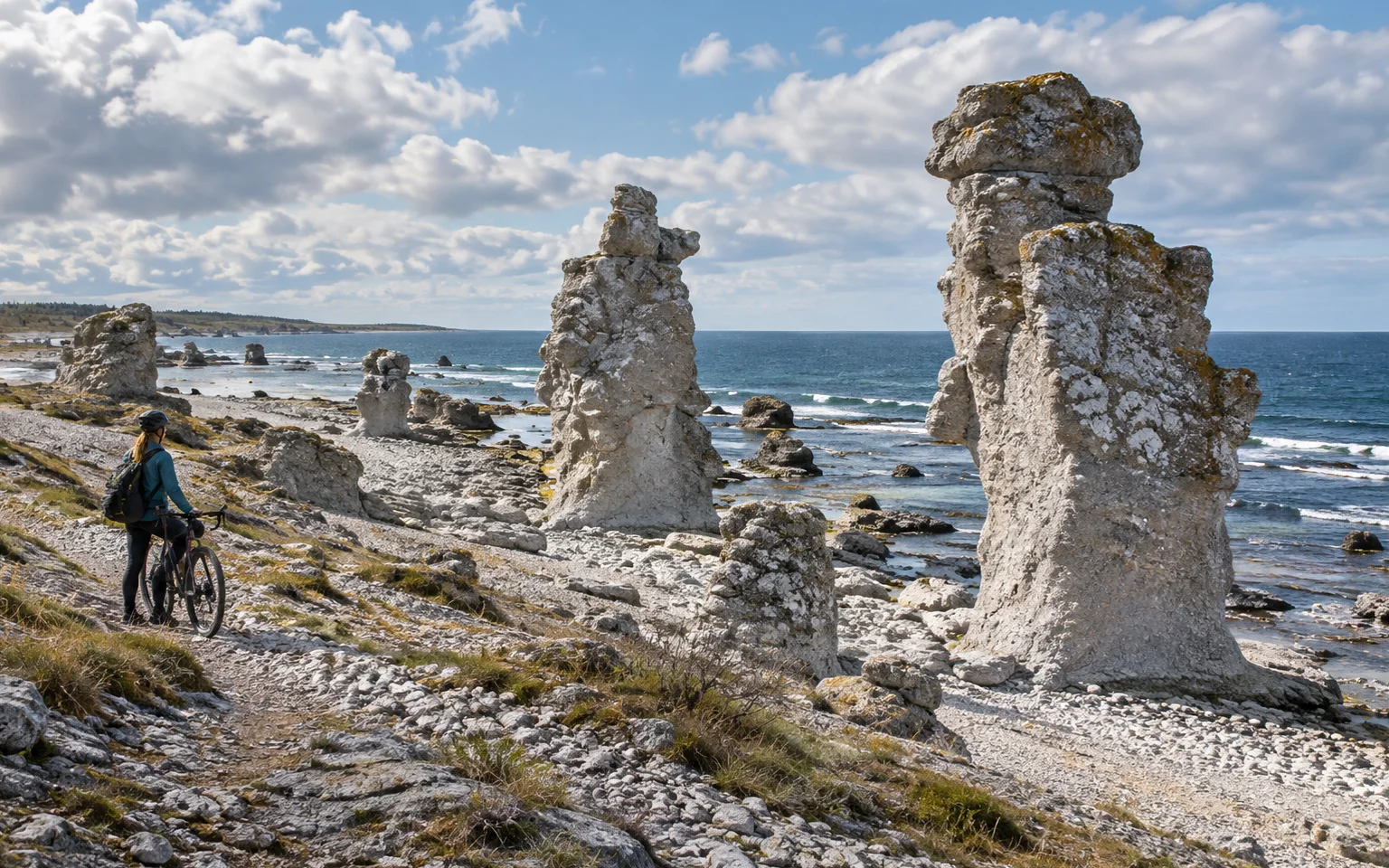
The Spillings Hoard, found in 1999, is described as the largest Viking silver treasure in the world. The hoard is one find among many on an island where farms and trading sites have been continuously occupied for thousands of years. The Gutnish language was spoken here before Swedish took over, and a Gutnish-influenced Swedish dialect is still heard. The limestone itself is part of the identity: Silurian limestone eroded into the karst stacks called rauks, which stand along the coast of Fårö and at Langhammars.
Visby, the Hanseatic capital
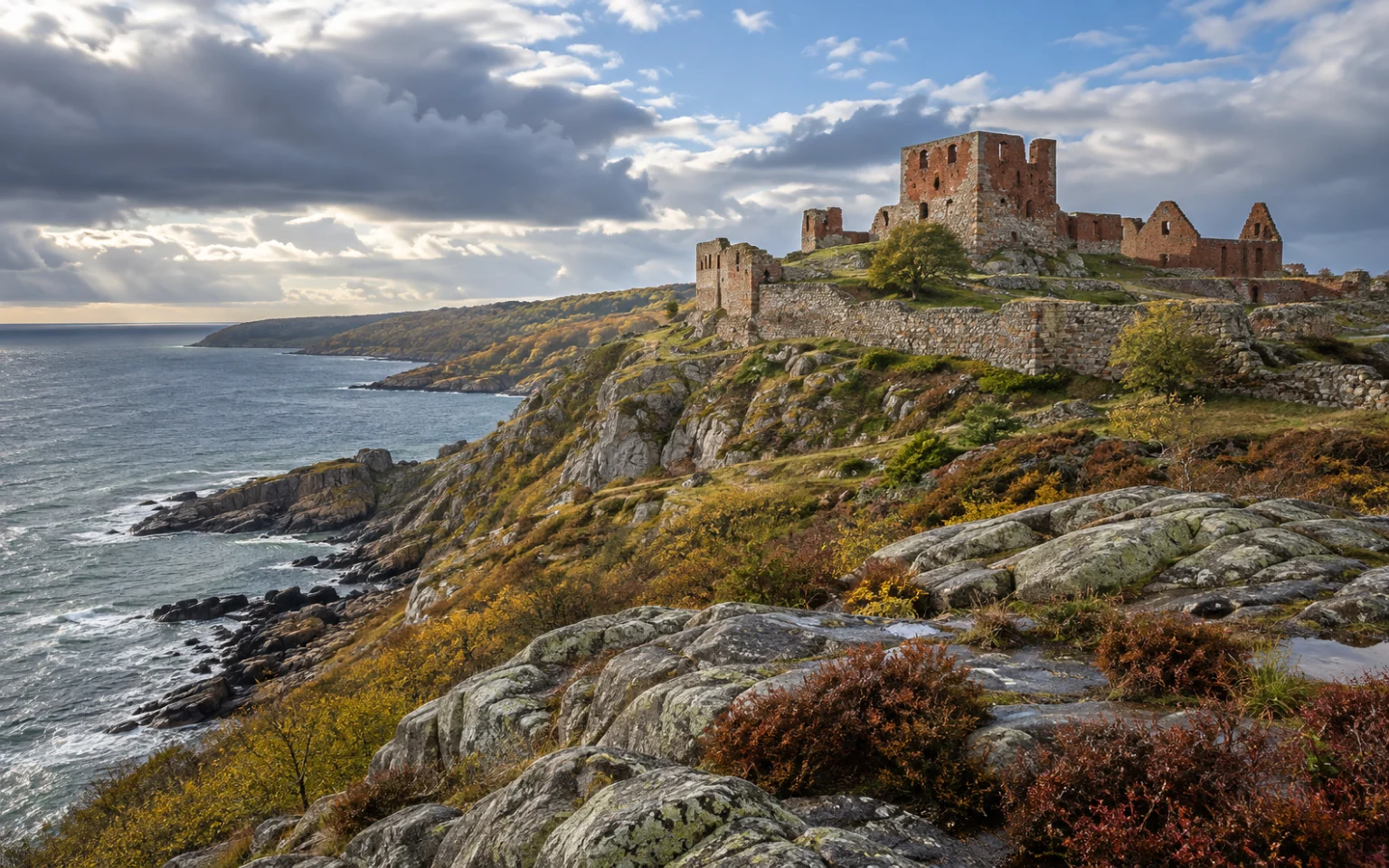
Visby was the most important Hanseatic city in the Baltic. Its trading centre dates to around AD 900, and the ring wall, 3.4 kilometres long, was begun in the twelfth century and rebuilt around 1300, with some towers added as late as the fifteenth. UNESCO listed the medieval centre in 1995. The prosperity ended in blood: in 1361 King Valdemar IV of Denmark invaded and about 1,800 Gotlanders died in battle in front of the city. Visby lost its Hanseatic status in 1470 and was burned by forces from Lübeck in 1525. Gotland returned to Sweden in 1645. That decline left many medieval stone buildings and the street pattern intact, so ruined churches, old merchants' houses and the lanes between them still read as a Hanseatic town.
Across the island, about 94 medieval churches, mostly Romanesque or Gothic, stand in villages and farmland, and most are restored and in use. Visby is also the only Swedish county seat reachable from the mainland only by boat or air. Our Visby guide covers the town in more depth.
Fårö, Bergman and the weather
Ingmar Bergman first saw Fårö in 1960 while scouting locations for Through a Glass Darkly, settled on the island in the 1960s and lived there until his death in 2007. Bergman Week, an annual festival on Fårö, now screens his films and holds lectures; the 2025 edition ran from 23 to 27 June. The bare coast, wind and big sky explain what drew him. Stay on durable paths in the rauk fields, avoid disturbing nesting birds, and never remove fossils.
Arriving and getting around
Most visitors take Destination Gotland ferries from Nynäshamn south of Stockholm or from Oskarshamn. Destination Gotland describes the crossing as about three hours, but check-in deadlines vary, so use the sailing you booked. Reserve vehicles, cabins and bicycles early for summer. Visby is walkable; regional buses reach larger settlements but run less often outside peak summer. A car gives flexibility, while cyclists face wind, narrow roads and long gaps between services, so carry repair supplies, water and lights. Fårö is reached by a short road ferry from the north, and queues build in summer.
Four days, ordered by history
Day one: Visby's wall, cathedral, ruins and Gotlands Museum, inside the old town. Day two: outside the wall, the botanical garden and Galgberget, then the harbour. Day three: north to Fårö for one rauk field, one beach and an unhurried lunch. Day four: southern Gotland, a cycling loop or the village churches east of Visby. In wind or rain, shorten distances and keep the museum and sheltered woodland in reserve.
Late May and June bring long days; July has the warmest water and the highest prices. Visby hosts Almedalen Week, a political forum, and then Medieval Week, a festival that began in 1984 and is very crowded. September is quieter. From October to April, many rural businesses close.
A road day that respects the island
Choose a loop of no more than three meaningful stops; Visby to Fårö, then southern Gotland and back, is possible on a map but poor in practice. Start with fuel and food, download directions and note toilets, because rural cafés close unpredictably. Slow around blind bends, where cyclists, farm vehicles and wildlife share narrow roads, and never stop in the carriageway for a photograph.
On a bicycle, reduce daily distances because headwinds persist; carry two tubes, a pump, lights and food, and reserve bicycle space on the ferry separately. E-bikes extend range but need confirmed charging. The coast also includes homes, farms and protected habitat. At fishing settlements, park in signed areas and keep private slipways clear. Swimming from an empty beach still requires attention to wind, currents, cold water and algae notices. Ferry disruption is uncommon but consequential, so leave generous margins for any onward flight or train.
Costs, food, access and respect
Compare accommodation for your actual dates, since summer demand makes Gotland expensive; stay inside the wall for atmosphere or outside for easier parking and value. Look for smoked fish, saffron pancake with dewberry jam, lamb and seasonal asparagus, and reserve dinner or buy picnic supplies before leaving Visby, because rural opening hours are short.
Visby's cobbles and wall stairs make access uneven; ask accommodation about thresholds and lifts rather than accepting a generic label. Medieval churches are active community buildings, so wait outside if a service is under way. Sweden's right of access requires distance from houses, closed gates, controlled dogs and removed rubbish. Park only where permitted. Check for ticks after walking in grass, wear helmets and visible clothing when cycling, and avoid open flames in dry weather, since limestone landscapes dry quickly. Spend beyond Visby where possible; it helps island communities keep year-round services.
If travelling with children, separate beach days from heritage days so cobbles and museum attention do not become a battle, and carry wind layers even on bright mornings. Travellers with limited mobility gain more from a private adapted tour or a carefully chosen taxi than from an ambitious bus itinerary, and should confirm return transport before leaving Visby.
Continue with our Sweden guide and browse the Sweden places page.
Questions and answers
How many days do you need on Gotland?
Four days allow two days around Visby and two for the coast. Without a car, add time or choose fewer rural targets.
Do you need a car on Gotland?
Not for Visby, but a car or carefully planned cycle and bus combination makes Fårö, rauk fields and rural churches easier.
When is Gotland busiest?
July is busiest, while Medieval Week in August also fills ferries and rooms. Late May, June and early September are calmer.
Can you take a bicycle on the ferry?
Usually yes with the correct booking, but space and procedures vary. Reserve the bicycle and arrive within the operator's stated check-in time.
Sources
Stockholm · 59.3293° N, 18.0686° E
This story belongs to Gotland, Sweden. Bronze Age carvings, a walled Hanseatic town, a prize founded by an inventor's will and a public right to walk through the forest.