Visby Travel Guide: Medieval Walls, Ruins and Island Life
A practical guide to UNESCO-listed Visby's walls, ruins, museum, coastal paths and life beyond the busiest medieval lanes.
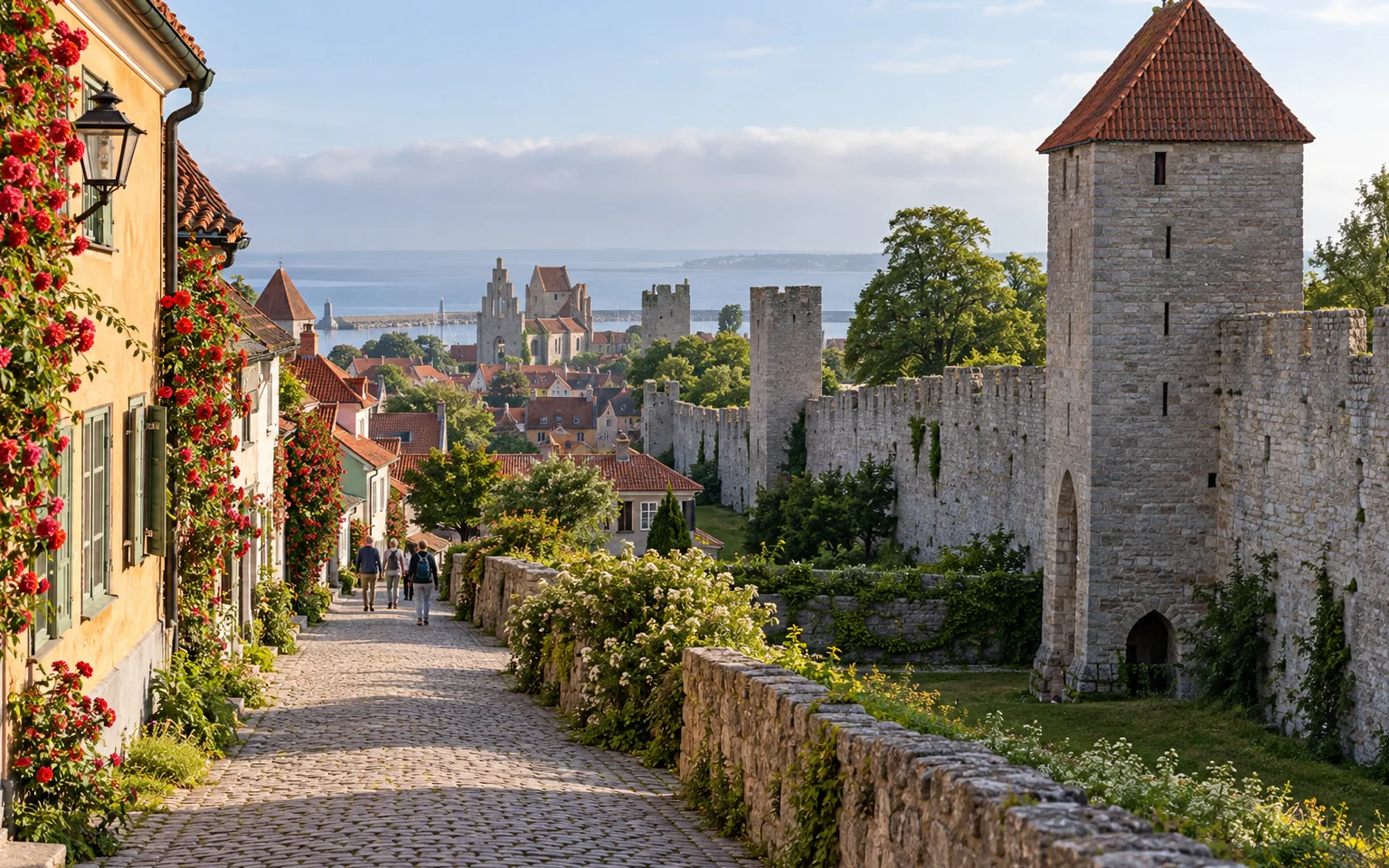
Cover: AI-generated illustration. © ANUSHKA DAHANAYAKE (PVT) LTD.
Visby is not simply a picturesque medieval backdrop. Its defensive wall, ruined churches and warehouses record the Baltic trading power of the Hanseatic era, while homes, schools and shops continue inside that inherited street pattern. The best visit combines serious historical context with respect for residents who live behind the roses and limestone façades.
Reading the World Heritage town
Inscribed by UNESCO in 1995 as the Hanseatic Town of Visby, the fortified town preserves about 3.4 kilometres of wall, built chiefly in the thirteenth and fourteenth centuries, along with its towers and medieval street structure. Walk outside a section first to understand its scale, then enter through a gate and follow lanes rather than trying to remain on the wall. Access to towers and elevated stretches is restricted; never climb masonry or cross barriers.
Gotlands Museum gives the clearest introduction to the island's picture stones, Viking-age material and medieval trade. Visit early in the trip so ruined churches acquire meaning. Visby Cathedral remains active, unlike many roofless ruins; services and ceremonies take priority. St Karin and other ruins may host events, so gates and opening times change.
The Botanical Garden and northern shore provide quieter space. Galgberget outside the wall offers broad views and context, though its name and history are sombre. So is the field east of the wall where, on 27 July 1361, the Danish king Valdemar Atterdag's army destroyed a largely untrained Gotlandic peasant force; the dead were buried in mass graves, and a stone cross from around 1375 still marks the site. Sunset draws crowds along the western wall; morning supplies better light, cooler lanes and less pressure on residents' doorways.
Arriving and getting around
Destination Gotland ferries generally arrive from Nynäshamn or Oskarshamn. Crossings take roughly three hours, with seasonal variation. Book early in summer, reserve bicycles or vehicles explicitly and meet check-in deadlines. The terminal is within walking distance of the old town for light luggage, but cobbles make wheeled cases tiring. Taxis should be reserved during event weeks.
Flights connect Visby seasonally and year-round on selected routes. Airport buses vary; confirm the connection. Within Visby, walk or use local buses. A car is a liability inside the walls, where parking and access are controlled, but useful for wider Gotland. Pick it up only when leaving town if possible.
When to visit
Late May and June offer long days, roses and relatively manageable crowds. July is warmest and busiest. Medieval Week in August transforms the town with markets, performances and costumes; it is valuable when chosen intentionally but poor for quiet architectural study. Early September remains pleasant with fewer visitors. Winter brings dark, wind and reduced hours but gives the inhabited town back its everyday pace.
Sea weather changes quickly. Pack a rain shell and warm layer even in summer, plus shoes with tread for polished limestone. Cruise or ferry arrivals create temporary crowd waves; visit the museum at opening and eat outside conventional lunch times.
A two-day itinerary
Day one: walk an exterior wall section from the northern side, enter the old town and visit Gotlands Museum. Continue through selected ruins to the cathedral, stopping to read instead of collecting every building. Finish in the Botanical Garden and along the shore.
Day two: start with empty morning lanes, then walk towards Galgberget for a wider view. Choose a guided history walk or return to the museum's sections you missed. Explore residential eastern streets respectfully and leave time for a café. If Visby is a base for Gotland, save a separate full day for Fårö or the south and do not attach a rushed bus ride; the Gotland first-time visitor guide covers the wider island.
Rain does not ruin Visby, but wet cobbles change route choice. Use the museum and cathedral as anchors, avoid slippery wall steps and reduce the number of ruins. With children, alternate historical interiors with the park and shore.
Costs, food and where to stay
Build the budget from a ferry or flight, mainland transfer, room, meals and one main paid interior. Rates vary sharply with Medieval Week, school holidays, room type and sailing, so compare actual bookable totals and not a fixed daily figure. Destination Gotland lists onward bus connections at Nynäshamn and Oskarshamn; include that mainland leg and its timing when comparing the ferry with a flight.
Try saffron pancake with dewberry jam, smoked fish, lamb and Gotland produce. Restaurants inside the busiest lanes charge for location, while streets east of the centre may offer better value. Reserve dinner during events. Cards dominate, but a backup payment method is sensible.
Inside-wall lodging gives atmosphere but involves cobbles, parking limits and possible nightlife noise. Just outside the gates often provides easier access and value. Harbour accommodation suits ferry times but not always quiet. Ask about stairs: many historic properties cannot add lifts easily.
Accessibility, safety and local etiquette
Visby's slopes, cobbles, steps and narrow entrances are the main accessibility challenge. Gotlands Museum and newer facilities publish specific information; ask hotels for doorway widths, lift reach and the distance from accessible parking. A companion may help, but visitors deserve precise facts, not assumptions.
The town is generally safe. Watch footing on wet limestone, keep valuables closed in festival crowds and stay back from unguarded coastal edges. Summer sun and wind dehydrate quickly. Cycling inside crowded lanes demands very low speed; walking the bicycle is often kinder.
Most photogenic houses are private. Do not sit on steps, lean bicycles against doors, peer through windows or arrange portraits in entrances. Keep late-night noise low and follow event waste rules. Church ruins are vulnerable archaeological fabric. Respectful distance allows Visby to remain both a World Heritage property and a viable home.
Travellers continuing across Gotland should buy water and food before rural travel, check the last bus and avoid illegal verge parking. A town-base day and island-road day have different demands; separating them prevents fatigue and protects the medieval core from unnecessary vehicles.
Visiting during major events
Medieval Week is not ordinary Visby with costumes: street access, restaurant demand, noise and transport change. Reserve ferry and room first, then ticketed events. Costumes are optional, and visitors should avoid copying sacred or marginalised identities. Fire performances, markets and crowded lanes need particular care with children. Agree a meeting point because mobile reception can strain.
Outside event week, cruise calls and summer weekends create shorter peaks. Use mornings for the wall and late afternoon for the museum when its schedule permits. Carry only a small bag in narrow ruins. Residents need doorways and delivery access, so move aside so they are not forced into the road.
On ferry day, reach the terminal within the operator's check-in period. Walking time expands with luggage and cobbles. A taxi booked the previous evening may suit mobility needs, but vehicles cannot reach every old-town door. Confirm the pickup point and keep travel documents with you.
Read what makes Sweden special, plan the ferry approach from the capital with the Stockholm first-time visitor guide, and browse the Sweden places page.
Questions and answers
How many days do you need in Visby?
Two full days allow the wall, cathedral, ruins and museum without rushing. Add more nights if Visby is also your base for rural Gotland.
Can you walk around Visby?
Yes. The old town is compact, but cobbles, steep lanes and wall stairs require supportive footwear and can challenge limited mobility.
When is Medieval Week in Visby?
It is normally held in August, but dates vary. Ferries and rooms sell early, so check the official programme before booking.
Is Visby open in winter?
Visby remains inhabited year-round, but some attractions, restaurants and island transport reduce hours. Confirm every priority venue.
Sources
Stockholm · 59.3293° N, 18.0686° E
This story belongs to Visby, Sweden. Bronze Age carvings, a walled Hanseatic town, a prize founded by an inventor's will and a public right to walk through the forest.