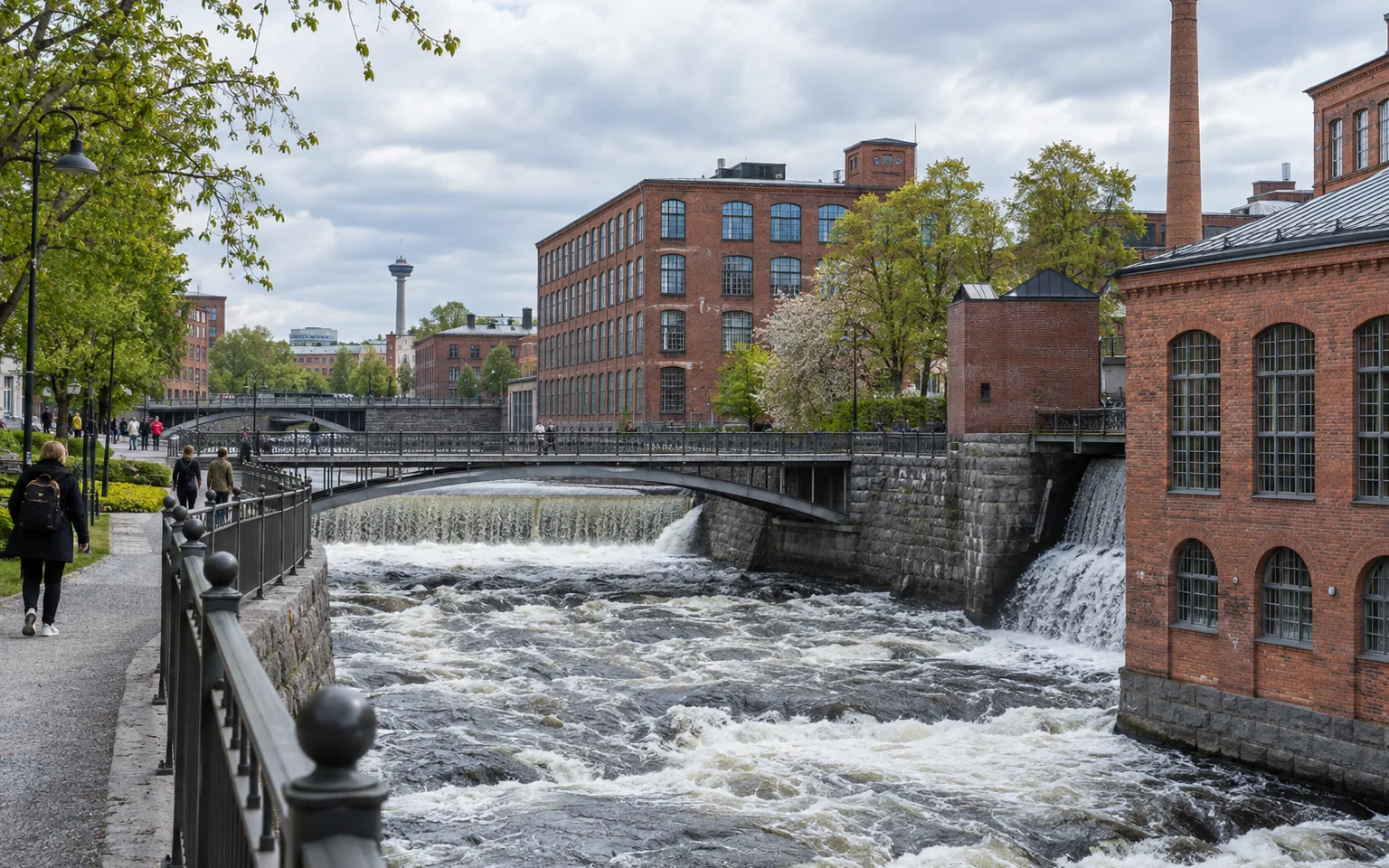
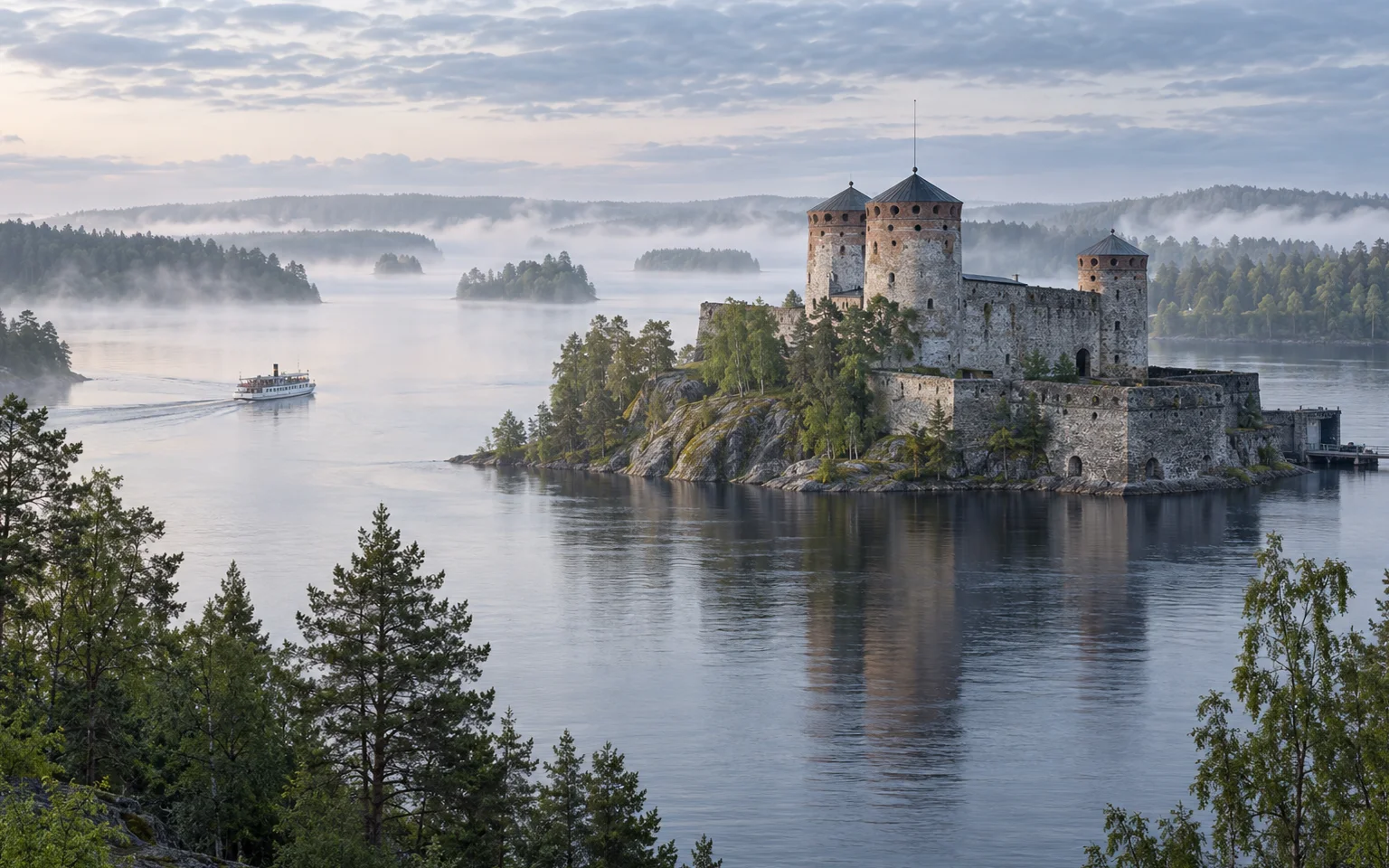
Turku for First-Time Visitors: Castle, River and Islands
Turku was Finland's capital until 1812, home to its oldest cathedral and castle, and a city that rebuilt after the great 1827 fire. Heritage first, then route.
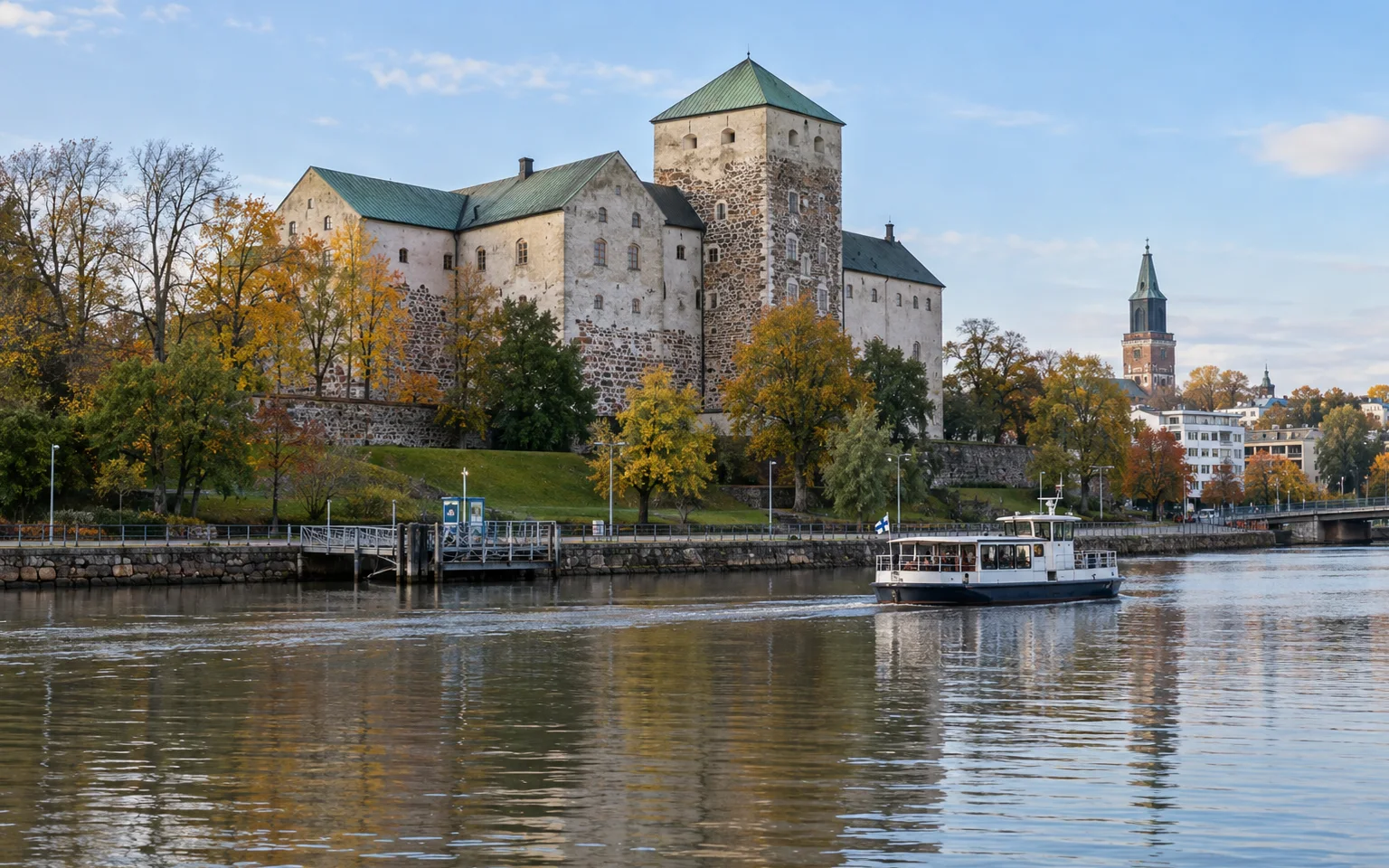
Cover: AI-generated illustration. © ANUSHKA DAHANAYAKE (PVT) LTD.
Turku is the place where Finland's recorded urban history begins. A Pope mentioned the settlement in 1229, a cathedral stood by 1300, and for centuries it was the most important city in the Swedish-ruled east. Then a fire in 1827 ended the era, and the capital function had already moved to Helsinki. Locals carry that history lightly but with obvious pride, and a visit makes the most sense when it follows the river from cathedral to castle with that sequence in mind.
The oldest city in Finland
Pope Gregory IX first mentioned the settlement at the mouth of the Aura river in 1229, the year used as the city's founding date, which makes Turku Finland's oldest city. Under Swedish rule it was the country's most important city. Turku Cathedral was consecrated in 1300 and is regarded as Finland's national shrine and the mother church of the Evangelical Lutheran Church of Finland. The Royal Academy of Turku, founded in 1640, later became the University of Helsinki; the city's own universities, Åbo Akademi and the University of Turku, were founded in 1918 and 1920.
Turku became capital of the Russian-ruled Grand Duchy in 1809 but lost that status to Helsinki in 1812. The fire that began on 4 September 1827 was the largest urban fire in Nordic history, and afterwards most government institutions moved away. Both universities are still based in the city, which keeps the old academic tradition of 1640 alive in a modern form. The city is officially bilingual in Finnish and Swedish, and Åbo is its Swedish name.
Turku Castle: a fortress that became a palace
Turku Castle was begun in the 1280s as a Swedish fortress and outpost. Between 1395 and 1398 it may have served as a base for the Victual Brothers, privateers turned pirates. The medieval keep was completed in the early fifteenth century, and work began on the Renaissance bailey in the late fifteenth century, finished in the sixteenth. The castle reached its peak in the middle of the sixteenth century under Duke John and Catherine Jagiellon, when a Renaissance floor and new royal halls were added. From 1573 to 1577 the deposed Swedish Queen Karin Månsdotter was held prisoner there.
A great fire in 1614 destroyed most of the older wooden structures, and the main building was largely abandoned. The bailey served as an administrative centre in the 1700s, and the castle was used as a prison from the 1700s to the late 1800s. The Turku Historical Museum took control in 1881. Soviet incendiary bombing damaged it during the Continuation War, and it was fully restored in 1987, so what visitors see is a restored building, not an unbroken survival.
Luostarinmäki and the wooden city
Luostarinmäki preserves the only continuous wooden district to survive the 1827 fire. It now serves as a handicrafts museum, with workshops and homes that show how townspeople lived in the early nineteenth century. Visit with the 1827 fire in mind: because so much of the town burned, the surviving district works as a deliberate window onto the Turku that existed before it. Port Arthur and the university quarter have wooden houses of their own, but those streets remain lived-in neighbourhoods, not exhibits.
Christmas Peace, food and a Capital of Culture
Each year the Christmas Peace is declared in the Old Great Square at Turku on 24 December, a tradition that locals and visitors gather for. Turku was European Capital of Culture in 2011, shared with Tallinn, and it is nicknamed the "Paris of Finland" and the Food Capital of Finland. The Market Hall is the right place to sample bread, fish and local produce, with weekday lunches usually better value than dinner. Maritime heritage has its own museum, Forum Marinum, beside the river, which suits travellers who want the ship side of the story before boarding an archipelago boat. Turku is also a working port: the Port of Turku is a major passenger and commercial harbour, and Meyer Turku shipyard is one of the city's leading industrial employers.
One route along the river
Begin at Turku Cathedral. Religious services take priority, so enter quietly and confirm visitor hours. Follow the Aura downstream and choose one museum instead of collecting entrances: Aboa Vetus reveals archaeological remains beneath the city and pairs them with contemporary art, while Luostarinmäki shows the wooden city. Continue on foot, by bus or seasonally by river boat to Turku Castle, and allow at least two hours; the medieval rooms and Renaissance history unfold best with a guide or trail. The city confirms that the Föri ferry crossing is free. It is part of everyday transport, so do not monopolise boarding space for sightseeing.
The second day suits Ruissalo island, with oak woodland, villas and beaches by local bus or bicycle, or the botanical garden. Trails can be muddy and ticks occur in grassy areas, so use repellent, check skin and stay on marked paths. An archipelago cruise is worthwhile in the main season, and ferries continue west to the islands described in the Åland Islands guide, but a short harbour circuit is not the same as travelling through the Archipelago Sea; read the route carefully.
Practical notes for a river city
Long-distance trains and coaches connect Turku with Helsinki and Tampere. Turku has more than one rail stop, and construction can change which station a service uses, so read the live VR itinerary rather than assuming every train ends beside the centre. Föli operates the regional bus network and the tiny Föri river ferry; check the ticket's valid area before boarding. The riverside is flat enough for cycling, but cobbles, winter ice and busy shared paths require slower speeds.
The castle has thick walls, changing floor levels and many stairs, so ask staff which exhibitions suit your mobility. Families should use the museum's trail or guided activity. Cards are widely used, though payment rules vary by business; carry a backup. Photograph wooden streets from public ground, keep doorways private and respect sauna and swimming rules at public venues.
Turku rewards a simple structure: history upstream, maritime life downstream and one well-planned encounter with the surrounding water. Continue through the Finland destination hub, read what makes Finland special, plan winter separately with the Finnish Lapland guide, or begin in Helsinki.
Questions and answers
How many days are enough for Turku?
Two full days cover the cathedral-to-castle river walk, one major museum and a relaxed food or sauna stop. Add a third day for an archipelago excursion.
Can Turku be visited without a car?
Yes. The centre is walkable, Föli buses reach the castle and nearby districts, and trains and coaches connect Turku with Helsinki and Tampere. Archipelago journeys need more timetable planning.
Is Turku Castle accessible?
Some principal spaces have accessible routes, but the medieval building contains stairs, uneven surfaces and narrow passages. Check the museum's current accessibility details before choosing a tour.
When is the best time for the Turku archipelago?
June to August offers the broadest ferry and visitor-service schedules. Spring and autumn are quieter, but reduced connections make a same-day island plan less flexible.
Sources
Helsinki · 60.1699° N, 24.9384° E
This story belongs to Turku, Finland. A country that built its identity from stories and language before it had a state, now known for sauna, lakes, light and Lapland.