Helsinki for First-Time Visitors: White City, Sea Fortress and Sauna
Helsinki's neoclassical centre, the sea fortress of Suomenlinna, a sauna culture recognized by UNESCO and its design record, followed by tickets, ferries and winter advice.
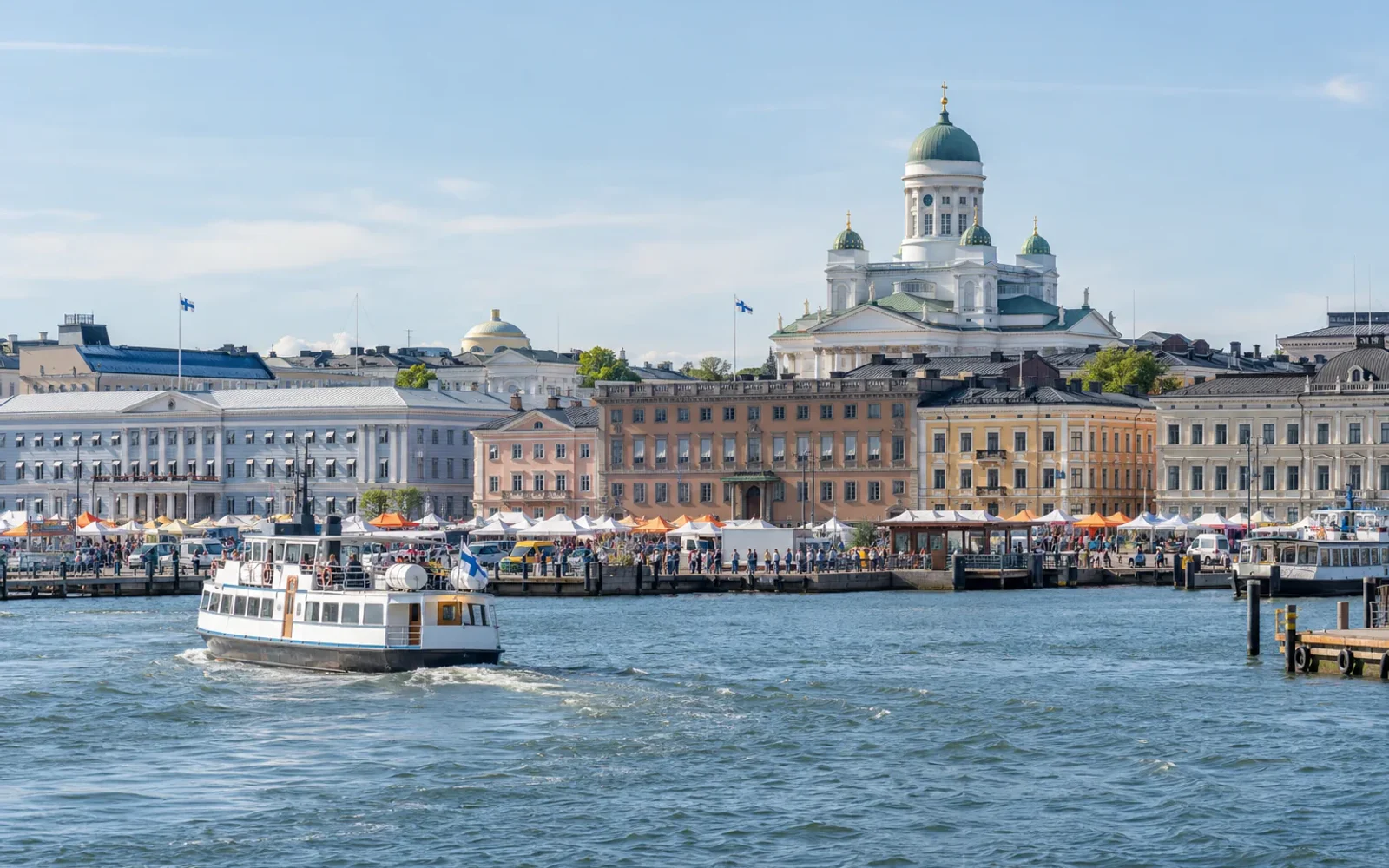
Cover: AI-generated illustration. © ANUSHKA DAHANAYAKE (PVT) LTD.
Helsinki was founded by order of King Gustav I of Sweden on 12 June 1550 as a trading town meant to rival Reval, now Tallinn. It stayed small for two and a half centuries, until Emperor Alexander I moved Finland's capital from Turku to Helsinki on 8 April 1812, partly to bring it closer to St Petersburg and away from Swedish influence. The architect Carl Ludvig Engel then planned the neoclassical center that earned it the nickname the White City of the North.
Engel's Senate Square
Engel's plan is focused on Senate Square, and Helsinki Cathedral rises above its steps; it was completed in 1852, twelve years after his death. Walk on to Market Square and the harbor, and to the red-brick Uspenski Cathedral, which belongs to the Russian chapter of the story. The steps are dramatic but inaccessible to some visitors and slippery in winter, so use designated accessible approaches where available.
Suomenlinna, the fortress on the islands
Construction of the sea fortress began in 1748 under the Swedish Crown and was directed by Augustin Ehrensvärd, as a defense against Russia. Russian forces besieged it, and it surrendered on 3 May 1808 after about two months, paving the way for Russia's takeover of Finland in 1809. During the Crimean War an Anglo-French fleet bombarded it for 47 hours in 1855. It was renamed Suomenlinna, "Fortress of Finland", in 1918, after independence, and UNESCO designated it a World Heritage Site in 1991. About 800 people live on the islands today.
A culture of the sauna
Finland's sauna culture was inscribed on UNESCO's Intangible Cultural Heritage list on 17 December 2020, the first Finnish element on it. The Finnish Heritage Agency counts around 3.2 million saunas in the country and says nearly 90 percent of Finns go once a week. In Helsinki that means neighborhood saunas, waterfront ones and open-air pools; each has its own swimwear, washing and locker rules, so read the instructions and shower first.
Design, Oodi and the library as a public room
Helsinki held the title of World Design Capital in 2012. The central library Oodi opened on 5 December 2018, the eve of Finnish Independence Day, in the Töölönlahti district beside the Music Centre and the Kiasma museum, and was welcoming its millionth visitor by March 2019. Its quiet and activity zones make it a public room more than a photograph.
Choosing a base and buying tickets
The center around the railway station suits airport trains and major museums. Kruununhaka is quiet and sits by Senate Square, Kamppi has transport and restaurants, Kallio has nightlife and sauna culture, and Punavuori suits design walks. HSL tickets cover buses, trams, metro, commuter trains and the Suomenlinna ferry; buy before boarding and check the planner for the correct zones, as the airport needs a wider combination than the AB zone used for most central trips. Inspections are real, and a ticket bought after boarding may be too late.
Three days around the story
Day one: Senate Square, the cathedral and Market Square, then one museum: Ateneum for Finnish art, Kiasma for contemporary work, Amos Rex for rotating exhibitions or Helsinki City Museum for local history. Day two: take the year-round HSL ferry from Market Square to Suomenlinna, buying a suitable ticket before boarding. The crossing is short but exposed to Baltic wind. Follow marked visitor routes, stay out of restricted structures and keep home entrances clear. The Suomenlinna Museum gives the best broad context for the Swedish, Russian and Finnish periods, and seasonal opening means cafés and small museums may close outside summer. Day three: walk the shoreline through Kaivopuisto or explore Töölö, visit Oodi, and reserve a sauna for the afternoon or evening.
Sauna manners, ice and the seasons
Sauna is about comfort, not endurance: sit lower if the heat is intense, hydrate with water and ask before adding steam if sharing a small room. Do not enter cold open water unless the venue manages access and you are medically comfortable, and avoid mixing alcohol with cold-water swimming. Rules on nudity differ, with gender-separated saunas often nude and mixed public sessions often needing swimwear.
Summer brings very long days and busy parks, and sunscreen matters even in cool air. Autumn is wet and windy. Winter has short daylight, snow and ice, so wear insulated waterproof boots with traction. Never assume harbor ice is safe to walk on; use marked routes and official guidance.
Food, markets and the harbor
Helsinki food ranges from market soup and rye bread to contemporary Nordic cooking and cuisines shaped by migration. Market Hall and waterfront stalls sell seasonal produce; compare prices, and keep meals away from bold gulls without feeding them. Lunch menus can offer better value than dinner, and reserving a popular restaurant or sauna ahead is wise in summer. Several boats leave the harbor from nearby but different piers, so check the departure point before choosing a view. After a museum afternoon, a tram ride through Töölö or a walk in Punavuori is an easy way to see more of the city, and trams are public transport, so give seats to those who need them.
Money, access and manners
The Helsinki Card comes in versions: CITY and REGION include specified transport zones, while the digital card without transport does not, and the airport requires the REGION version if you intend to use the card as your transit ticket. Compare the museums you will enter with separate HSL tickets before buying. Low-floor trams, buses, metro and trains make many journeys accessible, though snow and stop design affect boarding; churches and fortress routes have constraints, so confirm lifts and accessible toilets with the venue. Finnish public behavior values personal space and a modest volume, and silence is not hostility. Tap water is excellent; carry a bottle.
Read what makes Finland special, continue through the Finland destination hub, prepare for the north with our Finnish Lapland winter guide, or compare Nordic city life in the Stockholm first-time visitor guide.
Questions and answers
How many days are enough for Helsinki?
Three full days allow central architecture, Suomenlinna, one major museum, neighbourhoods and a sauna without rushing. Two days can cover essentials outside the quietest winter schedules.
Can you visit Helsinki without a car?
Yes. Trams, metro, buses, commuter trains, ferries, walking and cycling provide excellent coverage. The airport train connects directly with the central station.
Is Suomenlinna open in winter?
The sea fortress can be visited year-round and the HSL ferry generally runs throughout the year, but individual museums, cafés and routes have seasonal hours. Ice and wind can affect comfort.
Do visitors have to be nude in a Finnish sauna?
Rules differ. Gender-separated saunas may commonly be nude, while mixed public sessions often require swimwear. A towel is acceptable in many places; read the venue's instructions and ask staff.
Sources
Helsinki · 60.1699° N, 24.9384° E
This story belongs to Helsinki, Finland. A country that built its identity from stories and language before it had a state, now known for sauna, lakes, light and Lapland.