Jurong Lake Gardens: A Practical Three-Garden Guide
A practical Jurong Lake Gardens plan that treats its three major landscapes as distinct zones instead of forcing the entire lake into one rushed walk.
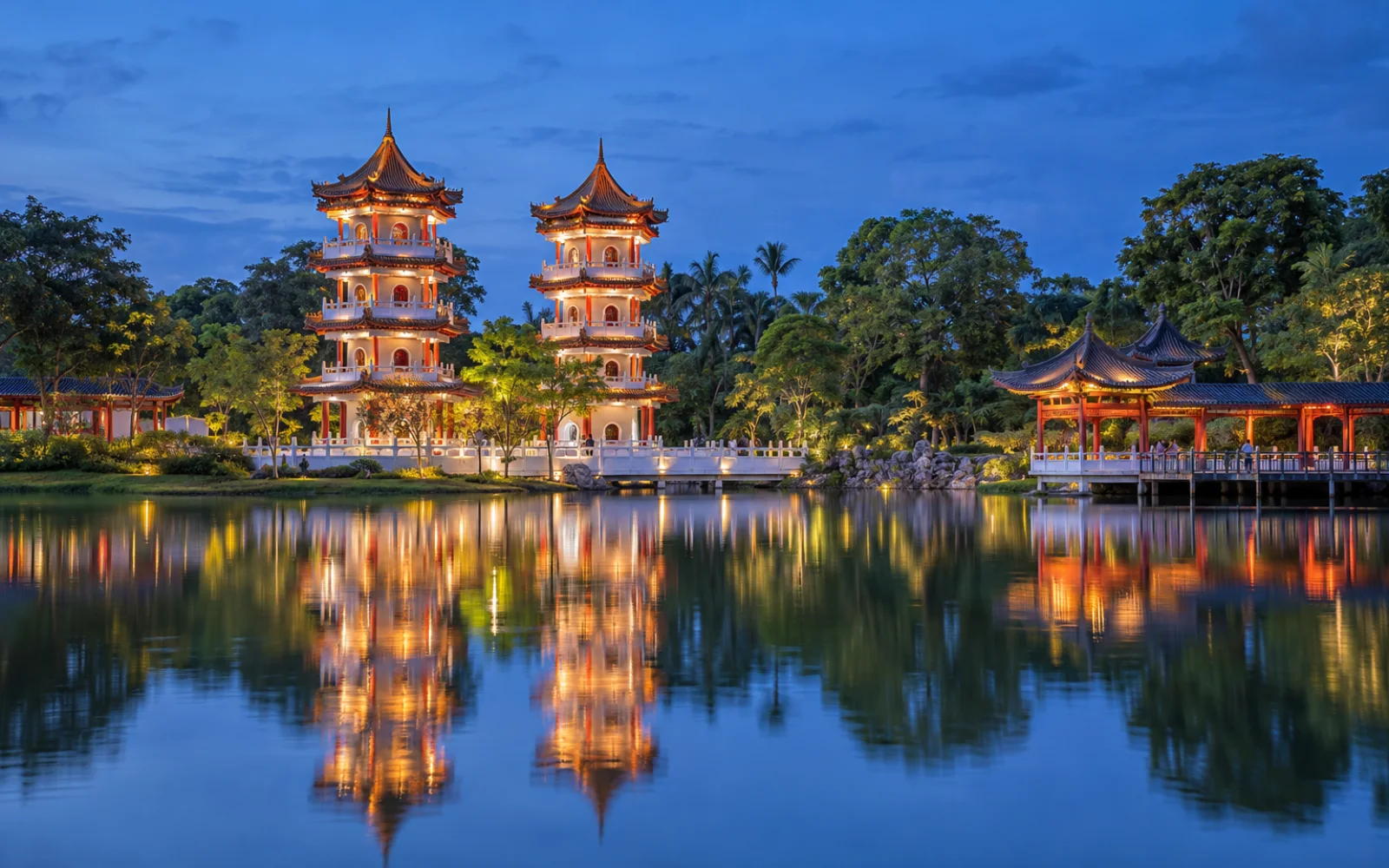
Cover: AI-generated illustration. © ANUSHKA DAHANAYAKE (PVT) LTD.
Jurong Lake Gardens is Singapore's national garden landscape in the west, comprising Lakeside Garden, Chinese Garden and Japanese Garden. The map may suggest one continuous attraction, but each zone has different entrances, facilities and reasons to visit. The strongest plan selects one or two sections and matches the MRT station to them.
Understand the three parts first
The gardens are older than their combined name. The Japanese Garden was completed in 1973 and the Chinese Garden followed in 1975, making them two of the older public gardens in the west of Singapore. Lakeside Garden opened in April 2019 as the first phase of the new national garden, and the rejuvenated Chinese and Japanese gardens reopened in September 2024 after several years of redevelopment.
Lakeside Garden is closely associated with community recreation, nature play, grasslands, wetland planting and the lake edge. It suits families, runners and visitors interested in contemporary landscape design.
Chinese Garden uses architectural, horticultural and cultural references across bridges, pavilions, courtyards and water. Japanese Garden provides a different designed landscape and should not be described as an extension of the same style. Read official interpretation rather than labelling every structure “Asian”.
Moving between zones adds distance. A visitor who wants children's play and wetland habitat may not need the pagodas on the same morning. A photographer seeking Chinese Garden at blue hour should preserve energy for evening and avoid crossing Lakeside twice.
Choose the MRT by the first destination
NParks lists Lakeside MRT as about three minutes from Lakeside Plaza and Chinese Garden MRT as about five minutes from the Chinese Garden Bridge. Jurong East reaches the Japanese Garden Bridge in about 20 minutes on foot, so it is a different starting choice.
Use the official getting-here page because entrances and shuttle operations change. A station named for the garden does not place every attraction beside the platform. Save the correct exit and first landmark before travelling.
Bus routes and car parks serve different sides. Drivers should choose the car park nearest the priority zone instead of circling after arrival. Accessible lots do not guarantee that every distant feature has a short step-free route.
For a point-to-point walk, plan a different departure station. Confirm that the connecting bridge or path is open; maintenance can force a long diversion.
A Lakeside family morning
Arrive early to use cooler weather and quieter play spaces. Families should identify the chosen play area, toilet and meeting point before children begin exploring. Water-play facilities, opening times or maintenance conditions vary, so check official notices.
Children need direct supervision near the lake, climbing structures and bicycles. A shallow-looking edge can still be dangerous. Follow age guidance and use appropriate footwear; wet surfaces become slippery.
Nature areas are not collection zones. Do not pick flowers, chase birds, catch insects or release pets. Keep snacks controlled and never feed wildlife. A picnic should leave no crumbs or packaging.
The garden's broad lawns and paths can feel exposed by late morning. Carry water, hats and sun protection, while keeping a lightning alternative. A café is useful only if its current hours and seating meet the group's needs.
Chinese Garden with cultural attention
Chinese Garden's pagodas, bridges, pavilions and planting create strong compositions, especially in softer morning or evening light. Architectural form deserves specific interpretation. Avoid calling a structure a temple unless official information identifies it as one, and do not assign religious meaning to decorative elements by guesswork.
Stay out of planted beds and closed pavilions. Railings, rocks and roof edges are not portrait platforms. Wedding, fashion and commercial shoots may require approval; check before bringing equipment or a team.
Blue hour can be beautiful, but NParks lists the Twin Pagoda separately from the longer garden-ground hours. Verify current closing times and the route to the MRT. Walkways beside water need extra care after dark, and a phone screen can destroy night vision.
Event lighting and festival installations are temporary creative works, often by named Singapore artists. Check the programme for their names and the dates the installations run, because a lantern display seen in one season may not return the next.
Japanese Garden without mixing traditions
Use the official garden map and interpretation to understand spatial principles, planting and structures. Do not describe every bridge, stone or clipped plant through a stereotype learned elsewhere. Singapore's garden is a designed local public space, not a substitute for travel in Japan.
Move quietly through contemplative areas and allow other visitors to experience them without a prolonged photo setup. Do not rearrange stones, touch trained plants or enter water edges for reflection shots.
The route may include sun, rain and limited seating between features. Visitors with mobility needs should check current bridge, lift, slope and toilet access for the exact section. A general park accessibility statement is not enough.
Weather can divide the day
Singapore heat and humidity make a full circuit tiring. Use early morning for open landscapes, a long midday rest and late afternoon for the second zone. There is no prize for walking every path in one continuous loop.
During thunderstorms, leave open lawns, bridges, water edges and isolated shelters according to official advice. Enter a substantial building or designated safe space. Rain may stop while lightning risk remains.
Paths can flood temporarily or collect slick leaf litter. Obey barriers and do not wade across a low section. After strong wind, avoid forested or tree-lined areas until authorities consider them safe.
Haze and poor air quality affect strenuous exercise. Travellers with respiratory or heart conditions should check government guidance and move activity indoors when advised.
Wildlife and wetland etiquette
Jurong Lake supports birds, reptiles, insects and aquatic life. Observe from paths and use a long lens and never approach a nest. Playback calls and food bait disrupt behaviour and can attract crowds.
Monitor lizards and snakes need space. Keep children and pets away, do not surround the animal and allow it an escape route. Report a wildlife conflict to staff instead of attempting capture.
Fishing and water access are controlled by designated rules. A person fishing in one area does not mean every bank is open. Do not launch a drone, boat or recreational device without the required permission.
Take litter home when bins are full. Fishing line, balloon ribbon and food packaging are especially hazardous to wildlife. “Biodegradable” leftovers still change animal behaviour.
Accessibility and older visitors
The gardens include modern paths and facilities, but the overall scale is the main barrier. Choose a single zone, locate the nearest drop-off and confirm mobility-equipment options before arrival. Rest points may be far apart in exposed sections.
Wheelchair users should check the current condition of bridges and any maintenance diversion. A route that is step-free can still have slope, crossfall or long distance. Accessible toilets should be identified on the official map.
Older visitors may prefer a taxi between two garden entrances over walking the entire connecting route. This is sensible planning, not a failed visit. Carry necessary medication and avoid using heat tolerance from another climate as a guide.
Food, picnics and event days
Dining choices are distributed, not guaranteed beside every attraction. Check current operators and hours. Bring enough water and a simple backup snack, while controlling food around wildlife.
Picnic groups should use appropriate areas, keep paths clear and avoid amplified sound that affects other visitors. Alcohol, smoking, barbecues and tents are subject to specific rules; do not infer permission from another park.
Major festivals and community events alter transport, lighting and crowd levels. Book required programmes, expect bag or road controls and agree on a family meeting point. If the garden is crowded, choose a quieter zone instead of forcing the headline installation.
Two useful itineraries
For a family half-day, enter from Lakeside MRT, choose one nature-play or water-play area, walk a short lake section and finish before midday heat. Do not promise the pagodas unless transport and energy remain.
For an architecture and photography visit, enter near Chinese Garden in late afternoon, read the interpretation while daylight remains, include Japanese Garden only if the connecting route is open, and settle at one authorised blue-hour viewpoint. Leave by the nearest operating station.
A full-day version combines these plans with a long indoor break. It should not become an uninterrupted march around the lake.
Finish with a manageable route
If you want to compare the gardens, use the official interpretation: NParks describes the Twin Pagoda as two three-storey structures with different forms. It is one feature within Chinese Garden, while the Lakeside and Japanese gardens have different routes and reasons to visit. Leave time to return to the correct MRT station, since the entire lake edge is a long walk after dark.
Use the Jurong Lake place page for a short orientation and the Singapore collection for the rest of the island. The Marina Bay waterfront guide covers another reclaimed-water landscape in a much more urban setting, the MacRitchie Reservoir trail guide offers rainforest in place of designed gardens, and the Pulau Ubin island guide shows the kampong-era coast that survives offshore.
Jurong Lake Gardens succeeds when the group leaves with one zone understood well. Its scale is an invitation to return, not an instruction to finish everything.
Questions and answers
How much time is needed for Jurong Lake Gardens?
Allow three to five hours for one or two garden zones. A comfortable visit to Lakeside, Chinese and Japanese gardens can require most of a day.
Which MRT station should visitors use?
Lakeside serves Lakeside Garden, while Chinese Garden station is closer to Chinese Garden. Choose according to the first zone and current entrances.
Is Jurong Lake Gardens free?
General garden admission is free, but programmes, dining or special activities may cost money and some facilities require booking. Verify current details.
Sources
Singapore · 1.3521° N, 103.8198° E
This story belongs to Jurong Lake, Singapore. An island city of Malay, Chinese, Indian, Peranakan and global communities, where dense neighbourhoods and protected nature keep distinct identities.