Little India, Singapore: Lime Pits, Temples and Tekka
Lime pits, convict-built Serangoon Road, a temple from 1855 and a market since 1915 explain Little India's streets, temples and food.
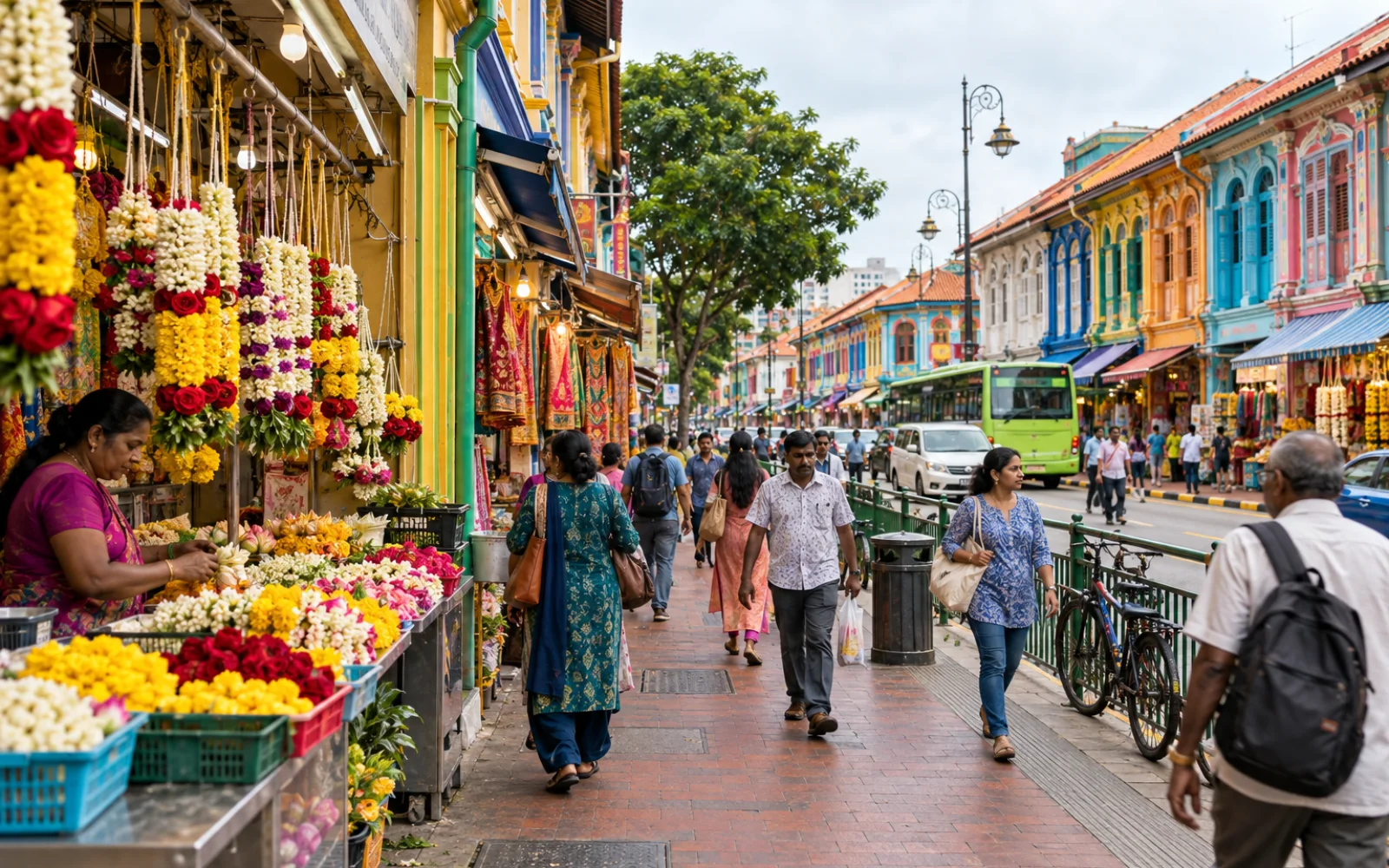
Cover: AI-generated illustration. © ANUSHKA DAHANAYAKE (PVT) LTD.
Little India began as a place of lime and bricks. Tamil speakers called the area Soonambu Kambam, "village of lime", and by the 1820s the British had set up lime pits and brick kilns along Serangoon Road, where many Indians found employment. Serangoon Road itself is one of Singapore's earliest roads, laid by convicts the British had brought to Singapore for labour. Its shophouse streets have been protected since 7 July 1989, when the government gazetted the area as a conservation district. Nothing about today's flower stalls and temples is a stage set: they grew from labour, trade and worship.
From lime pits to cattle and markets
After the kilns came cattle. Kandang Kerbau, "buffalo pen", became the centre of cattle-related business, with traders such as Raphael Belilios and Moona Kader Sultan among the major figures. In 1936 the government banned the keeping of livestock there, which effectively ended the trade in Serangoon. The original Tekka Market, first known as the Kandang Kerbau Market, was built in 1915 and demolished in 1982 before the market moved to its present site, which is why Tekka Centre is still the district's food and trade heart.
Sri Veeramakaliamman and living worship
Sri Veeramakaliamman Temple is an active Hindu place of worship with deep roots. According to the National Heritage Board, Tamil workers from the nearby lime pits set up a shrine to the goddess here as early as 1855, and a fuller temple followed in 1881. Visitor access, ceremonies and photography rules change, so read signs and follow staff. Remove footwear at the proper place, dress modestly, avoid leather items where prohibited, and never step in front of someone praying or touch an altar or offering.
The entrance tower holds complex sacred imagery that is not a decorative pattern library. During a procession or festival, stand where marshals direct, keep emergency routes open, avoid flash in faces and ask before photographing anyone carrying an offering. Worshippers are not guides, so use an official programme for deeper questions.
The Indian Heritage Centre
The Indian Heritage Centre opened in May 2015 in a four-storey building at Campbell Lane whose facade is influenced by the baoli, a stepwell. Its permanent galleries trace links between South Asia and Southeast Asia, migration to Singapore and the contributions of different communities. Check its official visitor page for opening days and admission; it is usually closed on Mondays. Starting here shows why Little India cannot be described through a single language, religion, region or cuisine. Tamil history is central, but the area's stories also involve people from other parts of India and the wider region.
Read the labels and listen to the community voices, because a ticket allows access, not automatic permission to reproduce images commercially. Little India and Rochor MRT stations serve different sides of the district, so choose the station for your first stop and save the route offline.
Garlands, textiles and consent
Garland makers work with perishable materials, religious orders and deadlines, and a stall is a workplace. Ask before taking a close portrait or filming hands for long, buy something if you take significant time, and do not handle flowers without invitation. Textile and jewellery shops range from community businesses to visitor-oriented retail, so clarify fibre, origin, care and price, and understand the weight, workmanship and rate calculation before paying for gold.
Henna should come from a practitioner who states ingredients and hygiene. Singapore's Health Sciences Authority notes that temporary "black henna" tattoos may increase allergy risk. Decline any skin product whose composition is unclear, especially for children. Textile patterns, kolam and temple sculptures have authorship and cultural meaning, so buying an item does not grant the right to copy its design.
Eating at Tekka
Tekka Centre combines market and food functions and can be humid and disorienting. Walk one short circuit first, note the table area and agree on a meeting point. South Indian, North Indian, Malay, Chinese and other Singaporean foods may be available, but stalls and hours vary, so choose what is cooking well that day. Ask about vegetarian preparation, ghee, egg, fish sauce, shellfish, nuts and shared oil; "no meat" does not always mean vegan, and a serious allergy cannot be managed by appearance. Return trays, share tables when expected and avoid close-range photographs of diners. Wet-market floors are slippery and raw-food areas need good hygiene.
A half-day route and festival crowds
Start at the Indian Heritage Centre or nearby Campbell Lane, continue toward Serangoon Road and visit one temple only when access is appropriate, then reach Tekka before the lunch peak. The former House of Tan Teng Niah is a popular photograph, but it sits within a working neighbourhood, so keep entrances and roads clear and do not climb or lean on private property. Mustafa Centre offers a very different retail experience and can consume hours, so add it only if shopping is part of the day.
Festival periods such as Deepavali attract major crowds, road closures and security measures, so check official information instead of last year's map. Deepavali is a religious and family celebration, not only a light installation: support legitimate businesses, ask before photographing children or private ceremonies, and never cross crowd barriers for a better angle. Visitors who dislike dense crowds can see preparations earlier in the day or outside the main weekend.
Heat, access and safety
Singapore's humidity can make a short route tiring. Carry water, use covered walkways without blocking them and schedule an air-conditioned stop. In heavy rain, kerbs and tiled corridors become slippery, and during lightning visitors should enter a proper building. Older shophouses and worship spaces may have steps and limited turning space, so contact the venue about step-free entry. Little India is straightforward with normal city awareness: protect valuables, use licensed transport and call emergency services when necessary.
Continue through Singapore
For more context, the Little India place page and Singapore collection connect this visit with other neighbourhoods, and the National Heritage Board's Little India Heritage Trail provides routes for a return visit. Compare other conserved quarters in the Kampong Gelam culture guide and the Chinatown heritage guide, or continue with the Sentosa island planning guide for a change of pace.
Questions and answers
How long does Singapore's Little India need?
Allow at least half a day for the heritage centre, one respectful worship visit, Tekka Centre and slow street exploration. Festival periods need more transport margin.
What is appropriate clothing for a temple visit?
Cover shoulders and knees, remove shoes where directed and follow the exact site's rules. Carry socks if hot paving or shared shoe areas are a concern.
Is Little India suitable for visitors with food allergies?
Yes with preparation, but shared kitchens and complex spice mixes require direct questions. Carry translated allergy details and choose a vendor able to answer confidently.
Sources
Singapore · 1.3521° N, 103.8198° E
This story belongs to Little India, Singapore. An island city of Malay, Chinese, Indian, Peranakan and global communities, where dense neighbourhoods and protected nature keep distinct identities.