Lofoten Islands: Roads, Ferries and Responsible Hiking
A practical Lofoten guide that treats the archipelago as working islands with real distances, fragile paths and weather—not one roadside photograph.
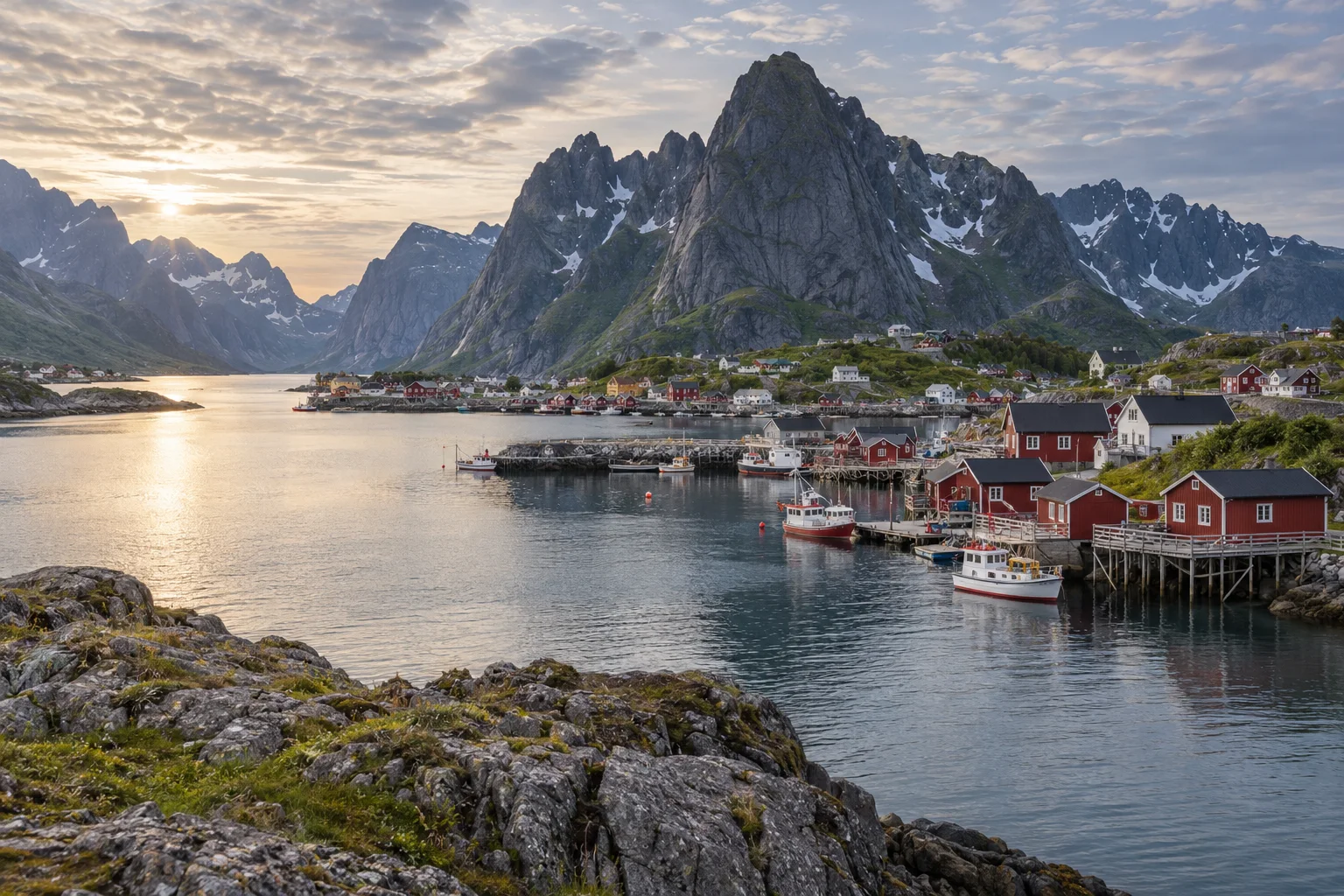
Cover: AI-generated illustration. © ANUSHKA DAHANAYAKE (PVT) LTD.
Lofoten stretches across islands and municipalities, not around one central resort. The E10, local roads, bridges, tunnels, buses and ferries join settlements where fishing and ordinary life continue beside famous views. Five to seven days allow two bases and weather choices. A compressed weekend often becomes a sequence of illegal stops, tired driving and fragile paths walked in poor conditions.
Choose entry and bases before individual photographs
Flights serve Leknes and Svolvær through regional connections, while Evenes connects to long-distance bus and rental-car options. Ferries and express boats link Bodø with Moskenes, Svolvær and other islands on particular routes. Timetables change by season, and reservations or vehicle queues differ by service.
Svolvær works for eastern Lofoten and boat activities. Leknes sits centrally for Vestvågøy. Reine, Sørvågen and nearby villages place travellers close to western landscapes but far from eastern departures. Use at least two bases only if moving them genuinely reduces driving; a daily hotel change wastes time and burdens small roads.
Without a car, use the Reis system and inspect “from-to” timetable dates. Official Lofoten guidance notes that regional buses and ferries vary seasonally. Book accommodation near confirmed stops and ask the host about the exact walk, especially in winter or with luggage.
Driving distance is not map distance
Roads can be narrow, exposed, wet or icy, with bridges, bends and local traffic. A thirty-kilometre journey may take longer than expected. Add time for legal parking and weather, but never use a passing place, driveway, tunnel mouth or carriageway as a viewpoint.
If a car park is full, continue to another plan. Do not create a new verge space or block emergency and resident access. Camper travellers must use lawful facilities and manage waste correctly. The right to roam does not create a right to park, empty wastewater or occupy private yards.
In winter, darkness, wind and sudden snow require experience and properly equipped vehicles. Check road alerts and ferry status before leaving. Do not follow a navigation app onto an unmaintained road because it appears shorter.
Build days by island cluster
An eastern day can combine Svolvær, Kabelvåg and one suitable low-level walk. Kabelvåg grew from Vágar, the first medieval town in northern Norway, built around the catch and drying of stockfish from about 1100; its yellow timber Vågan Church, completed in 1898 and seating about 1,200, is the largest wooden building in northern Norway and is known locally as the Lofoten Cathedral. Henningsvær deserves time for its working harbour and galleries, but parking and road access need patience. A central day may focus on Vestvågøy beaches, museums and food producers. The western islands include Reine, Hamnøy, Sørvågen and Å, with travel bottlenecks in high season.
Do not schedule sunrise on one end and an evening boat at the other without calculating sleep. Midnight sun changes light, not human fatigue. Quiet hours still apply in villages, and private rorbuer are accommodation rather than public props.
Match the hike to conditions, not popularity
Official guidance stresses rapid shifts from sun to fog, wind and rain. Carry warm layers, waterproofs, food, water, navigation and first aid even on a short route. Hat and gloves can be useful year-round. Check the route's terrain and current status; one photograph is not a guide.
Visit Lofoten's Reinebringen guidance describes steep, exposed sections and says local guides do not recommend the hike for small children. Its constructed steps reduce some erosion but do not remove steepness, crowding or exposure. Check current path notices before setting out; the route has closed during step works. Other popular routes cross muddy ground, slabs or narrow ridges. Turn around when fog removes navigation or wind affects balance.
Use a qualified guide for exposed objectives or when your group lacks local mountain judgement. Tell someone the route and return. Emergency response is not an itinerary backup and may endanger rescuers.
Protect Lofotodden and other fragile ground
The right to roam includes duties. Stay on paths where requested, carry out all waste and handle toilet needs so they do not affect water, residents or other walkers. Lofotodden, established in June 2018 as Norway's youngest national park, covers the mountains and beaches at the islands' western tip, and official guidance prohibits drones there and restricts cycling on vulnerable trails.
Camping rules depend on distance from occupied buildings, duration, local restrictions and land type. Popular zones may have special measures. Check current municipal and park guidance instead of treating a general national principle as permission everywhere.
Avoid disturbing nesting birds, livestock and drying fish structures; the wooden racks of winter skrei cod are the same craft that once filled the Hanseatic warehouses described in the Bergen and Bryggen guide. Close gates and keep dogs controlled according to current seasonal rules.
Sea travel requires another safety mindset
Kayaking, RIB trips, fishing and ferries operate in cold water and fast-changing conditions. Choose operators with safety equipment, clear limits and realistic cancellation policies. For independent paddling, local knowledge, immersion protection and rescue capability are essential.
On ferries, arrive within the operator's required time and understand whether a reservation guarantees a space. Foot passengers and vehicles can follow different rules. Keep a backup if the crossing is cancelled by weather.
Seasons change the trip completely
Summer provides long light and the widest services but also crowding. Autumn brings colour, rain and shorter days. Winter offers polar conditions, storms and limited access; it is not simply summer with snow. Spring can leave mountain snow while lower roads look clear.
The northern lights are possible in dark seasons but never guaranteed. Midnight sun does not mean clear skies. Build the trip around places and activities that remain valuable when the sky does not perform.
Spend within the community
Use local accommodation, guides, cafés, fisheries, galleries and shops, and do not treat villages as free backgrounds. Ask who made an object and whether fish or wool has traceable regional origin. Respect business hours and the fact that tourism workers also need quiet homes.
Avoid copied destination logos, fishing-company marks and uncredited photographs. Original design can use island contours, harbour geometry and cabin forms without turning an individual property into a commercial illustration.
Every evening, check the next day's road, ferry, wind and trail. Reduce the plan when conditions demand it. Visit the Lofoten place page and Norway collection, then return to an urban river scale with the Trondheim guide or compare Arctic winter light in the Tromsø northern lights guide.
Departure needs its own weather margin
Do not place a ferry, regional flight or Evenes bus directly before an unprotected long-distance connection. Wind can alter ferries, and short internal flights can be disrupted. Stay near the relevant departure point on the final night when the international flight matters. Refuel rental vehicles before the last morning where possible, photograph existing damage and allow time for winter de-icing or vehicle inspection. Keep medication, documents and one warm layer outside checked luggage.
Questions and answers
How many days does Lofoten need?
Five to seven days allow two bases, weather flexibility and realistic road times. Two rushed days encourage unsafe parking and constant driving.
Can Lofoten be visited without a car?
Yes with careful seasonal bus, ferry and accommodation planning, but frequencies can be limited and some trailheads remain difficult to reach.
Are popular Lofoten hikes easy because they are short?
No. Several short routes are steep, eroded or exposed. Weather, footwear, fitness and route-specific guidance matter more than distance alone.
Sources
Oslo · 59.9139° N, 10.7522° E
This story belongs to Lofoten, Norway. A long coastal country where Viking-age towns, Hanseatic wharves, fishing islands and Arctic cities each hold a different history.