Maui Responsible Visitor Guide: Regions, Reservations and Road Choices
A practical Maui framework for selecting regions, handling Haleakalā and state-park bookings, driving carefully and spending with local communities.
Responsible Maui planning begins before choosing beaches. Decide which region reduces repeated driving, check current county and community guidance, reserve regulated places through official systems, and leave recovery or residential areas alone when access is restricted. A slower itinerary is better for both visitors and the island.
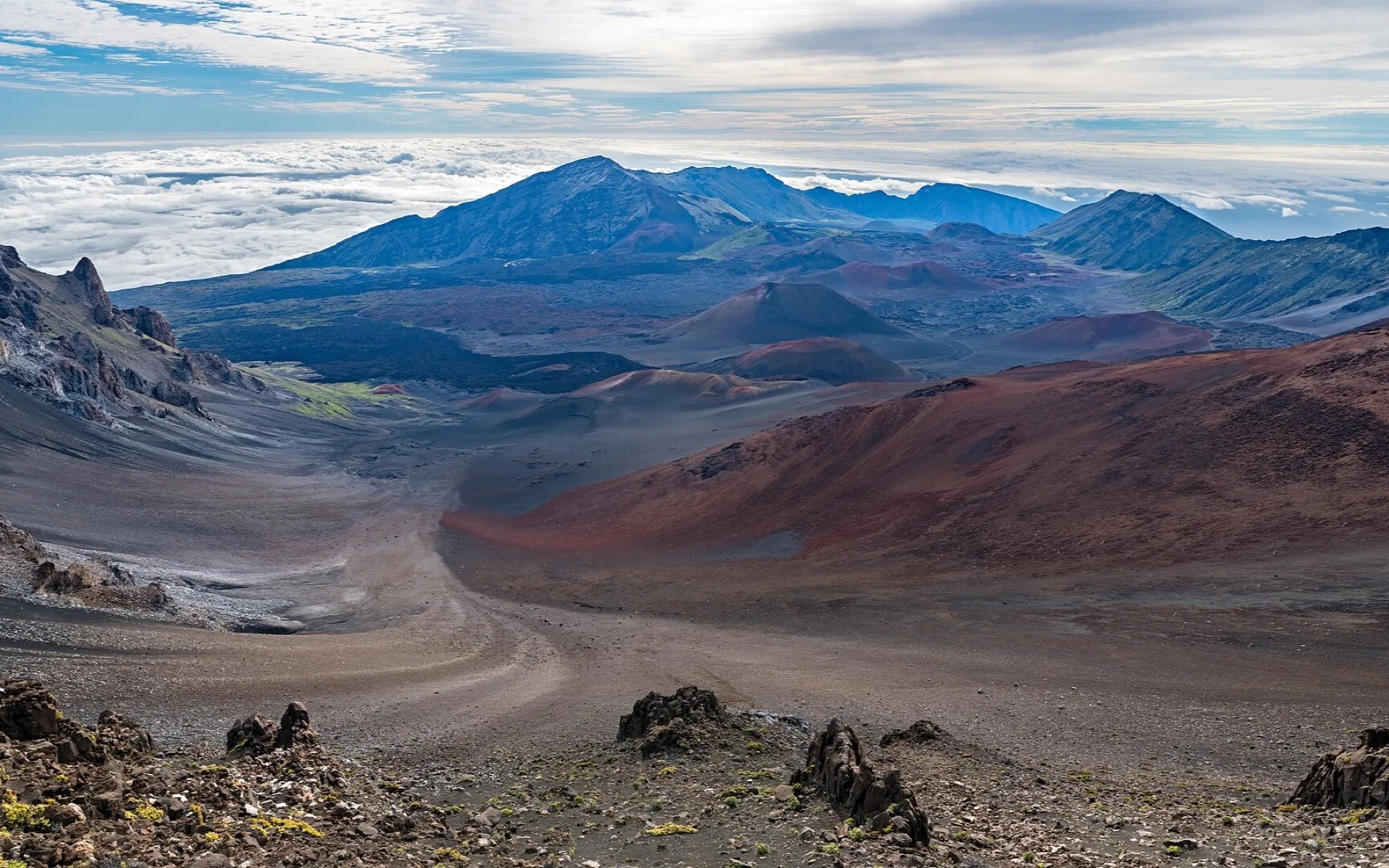
Cover photograph: Haleakalā crater, Maui, by Christoph Strässler via Wikimedia Commons, CC BY-SA 2.0. Cropped and converted to WebP.
Why Maui matters: the house of the sun and a royal capital
Native Hawaiians have lived on Maui and cared for, or mālama, its land for more than 1,000 years, and many places on the island appear in Hawaiian mele, the songs and chants that carry its history. The mountain that dominates the island takes its name from one of those stories. In the moʻolelo told in Hawaiʻi, the demigod Māui snared the sun so that it would move more slowly across the sky, giving his mother Hina enough daylight to dry her kapa cloth. The mountain became Haleakalā, the house of the sun. The National Park Service notes that the park's rocks are also understood as the physical form of Pele, one of the most respected goddesses in Hawaiian culture.
Haleakalā National Park was established in 1916, and it protects both the high volcanic summit and the green coast at Kīpahulu. Its 24,719-acre wilderness area is managed under the Wilderness Act of 1964.
On the west side, Lahaina served as the capital of the Kingdom of Hawaiʻi from 1820 to 1845, before the capital moved to Honolulu. The first American whaling ships reached Lahaina in 1819, and by the 1850s more than 400 whaling ships a year were making port there. The Lahaina Historic District was designated a National Historic Landmark in 1962. Much of that history was lost to wildfire, and West Maui's recovery belongs first to the people who live there.
What people on Maui are proud of runs through all of this: the stories tied to the land, the ʻōlelo Hawaiʻi place names that carry them, the farms of Upcountry and the work of caring for the island through hard years. Visitors honour that most by how they move around it, which starts with where they stay.
Choose a region before choosing a resort
South Maui can suit beach time and services around Kīhei and Wailea. West Maui has its own communities and access considerations; consult current official guidance before booking or visiting. Upcountry places visitors closer to farms and the Haleakalā approach, while central Maui is practical for the airport and road connections. Hāna is remote enough to deserve an overnight if the trip aims to experience it beyond a rushed turnaround.
Compare total driving for the actual itinerary, not the room price alone. Switching accommodation once may reduce road time on a longer trip, but moving every two nights creates luggage and check-in pressure.
Check current access without relying on old travel posts
Conditions and community needs shift. Use Maui County information, park alerts and accommodation messages close to arrival. Never enter a closed area, photograph disaster damage as an attraction or treat a reopening date as permission to ignore local requests.
Spend with locally owned food, guides and shops when possible. Be patient with staffing and supply limitations. A responsible visit is shaped by behaviour and routing, not by a slogan added to an otherwise overloaded itinerary.
Decide whether sunrise is worth the early drive
The National Park Service requires a Haleakalā sunrise reservation for vehicles entering the Summit District during the controlled early-morning window. The reservation is separate from the entrance pass. The named holder needs the required confirmation and identification, and weather does not guarantee a view.
The summit is cold, windy and over 10,000 feet high. There is no fuel, food or clothing for sale in the park, and the road is dark and winding. If a pre-dawn drive would be unsafe or exhausting, visit after the sunrise-control period or choose sunset while checking current crowd and safety advice.
Treat Haleakalā as two separate park districts
The NPS basic information page explains that the Summit and Kīpahulu districts are not directly connected by an internal park road. They work as separate days, not adjacent stops. The summit day belongs with Upcountry; Kīpahulu is reached on the remote east side.
At elevation, walk slowly if affected by altitude, use sun protection and keep to marked trails. Haleakalā is sacred to Native Hawaiians. Do not interrupt cultural practice, remove rocks or cross protected habitat.
Build the Hāna road around one reservation
Non-residents should book Waiʻānapanapa State Park through the official system before setting the day’s timing. A reservation is for a defined slot, not a flexible suggestion. If none is available, use a different lawful stop instead of arriving to negotiate entry.
The road has narrow sections, bridges and resident traffic. Pull over only where legal, keep driveways clear and let faster local traffic pass at safe points. Select a few meaningful stops. Attempting every waterfall pin encourages unsafe stopping and keeps communities congested.
Refuse the risky “complete loop” promise
Rental agreements and road conditions may limit travel beyond the commonly visited paved route. Weather, rockfall and repairs can alter access. Confirm with the rental company and official road sources; a social video is no guide to whether the vehicle or driver is ready for a road.
Turn around when conditions require it. A loop is not an achievement if it violates a contract, crosses a closure or strains emergency resources. Start with a full tank and carry water, food and offline directions.
Match ocean time to current conditions
Choose lifeguarded beaches where possible and obey flags and closures. Conditions differ between shores and seasons; calm appearance from a car park proves little about currents or shore break. Keep well away from sea turtles and Hawaiian monk seals, following posted distances and volunteer instructions.
Use mineral or locally compliant sun protection as advised, never stand on coral and secure light items in wind. Keep valuables out of sight in a parked car. Take every item away from undeveloped access points.
Create a reservation ladder
First reserve the scarce, regulated experience that genuinely matters: perhaps sunrise or Waiʻānapanapa. Next secure lodging in the region that supports it. Then add one flexible activity per day. Keep two timed reservations off the same day across the island, because traffic or weather can force rushed driving.
Keep confirmation screenshots offline and recheck alerts the night before. If an official closure cancels the plan, follow refund instructions and switch regions; staff cannot make exceptions.
Treat water and energy as visitor responsibilities
Island infrastructure is not invisible. Follow accommodation requests about water use, towel changes, air conditioning and waste sorting. Turn cooling off when doors are open, report leaks and skip daily linen replacement when it is not needed. Refill bottles where potable water is provided instead of buying a new case for every road day.
Choose locally prepared food in quantities the group will finish. Takeaway packaging accumulates quickly during long drives; bring reusable utensils only when they can be cleaned hygienically. Take food waste away when beach bins are already full, and keep rubbish secured against wind.
If an accommodation or county notice asks visitors to reduce use during an infrastructure problem, comply immediately. A vacation booking does not create priority over residents. These choices are less visible than a volunteer photograph, but they are part of responsible travel every day.
Plan one day with no major road objective
A recovery day might include a nearby beach, a market, a garden with confirmed hours and an early meal. It absorbs jet lag and creates space when a weather-dependent activity must move. It also directs more spending into the chosen base, instead of using every community as a quick stop.
Visitors with mobility needs should confirm surfaces, parking and restroom access directly with each site. A scenic overlook can be accessible while an adjacent trail is not; current official descriptions matter more than general island guides.
Make community information part of the morning check
Access can change after wildfire, storm, road damage or local recovery work. Read Maui County and agency notices before leaving, and accept closures without looking for an unofficial way around them. A business being open does not mean every nearby residential street or cultural place welcomes visitor traffic.
Spend deliberately where the community has invited visitors: locally owned food businesses, farms with public programmes, guides with the necessary permits and cultural institutions able to interpret their own work. Do not photograph recovery sites, private memorials or residents dealing with loss. Responsible spending cannot cancel intrusive behaviour.
The Hawaiian island first-trip guide helps test whether Maui's regional driving and reservation structure actually suits the trip. Travellers adding a mainland coast should keep it as a separate planning problem; the California coast road-trip guide shows how another weather-exposed route requires its own closure checks.
Set the turnaround before the narrow road begins
On long road days, choose the final stop and return threshold in advance. Darkness, fatigue and rain make narrow roads harder, while navigation estimates may ignore queues at bridges or viewpoints. Let passengers handle directions and photographs so the driver can concentrate on the road.
If someone becomes carsick, tired or anxious, shorten the route. The safe achievement is returning without incident, not reaching the last pin. Never park in a travel lane or private entrance, and give emergency and local traffic room to pass.
Leave with fewer claims and better memories
Maui is poorly measured by a completed checklist. Two regions experienced thoughtfully are more valuable than a daily circuit of the island. Follow closures, listen to residents, pay for managed access and avoid pushing fragile places into social-media visibility.
The United States destination hub and the wider country guides collection can support the wider journey. On Maui, however, let the island’s geography and community needs set the pace.
Compare alternatives in the Hawaiian island first-trip guide before reserving flights.
Questions and answers
Is a reservation required for Haleakalā sunrise?
Yes. Entry to the Summit District during the sunrise window requires an advance vehicle reservation in addition to the park entrance pass. Check the NPS page for current release details.
Why is Haleakalā called the house of the sun?
The National Park Service explains that the name comes from the moʻolelo of the demigod Māui, who snared the sun so that it would cross the sky more slowly and his mother Hina's kapa cloth could dry. Haleakalā means house of the sun, and the park was established in 1916.
Does Waiʻānapanapa State Park require advance booking?
Advance reservations are required for non-Hawaiʻi residents under the current system. Select the official time slot before building the Hāna day around it.
Sources
New York City · 40.7128° N, 74.0060° W
This story belongs to United States. A country of home towns and large ideas, from Independence Hall and the first national park to jazz, skyscrapers and volcanic islands.