Sopot for First-Time Visitors: A Responsible Baltic Break
A practical Sopot guide for enjoying Poland's Baltic coast while managing crowds, cold water, transport and the needs of a lived-in resort city.
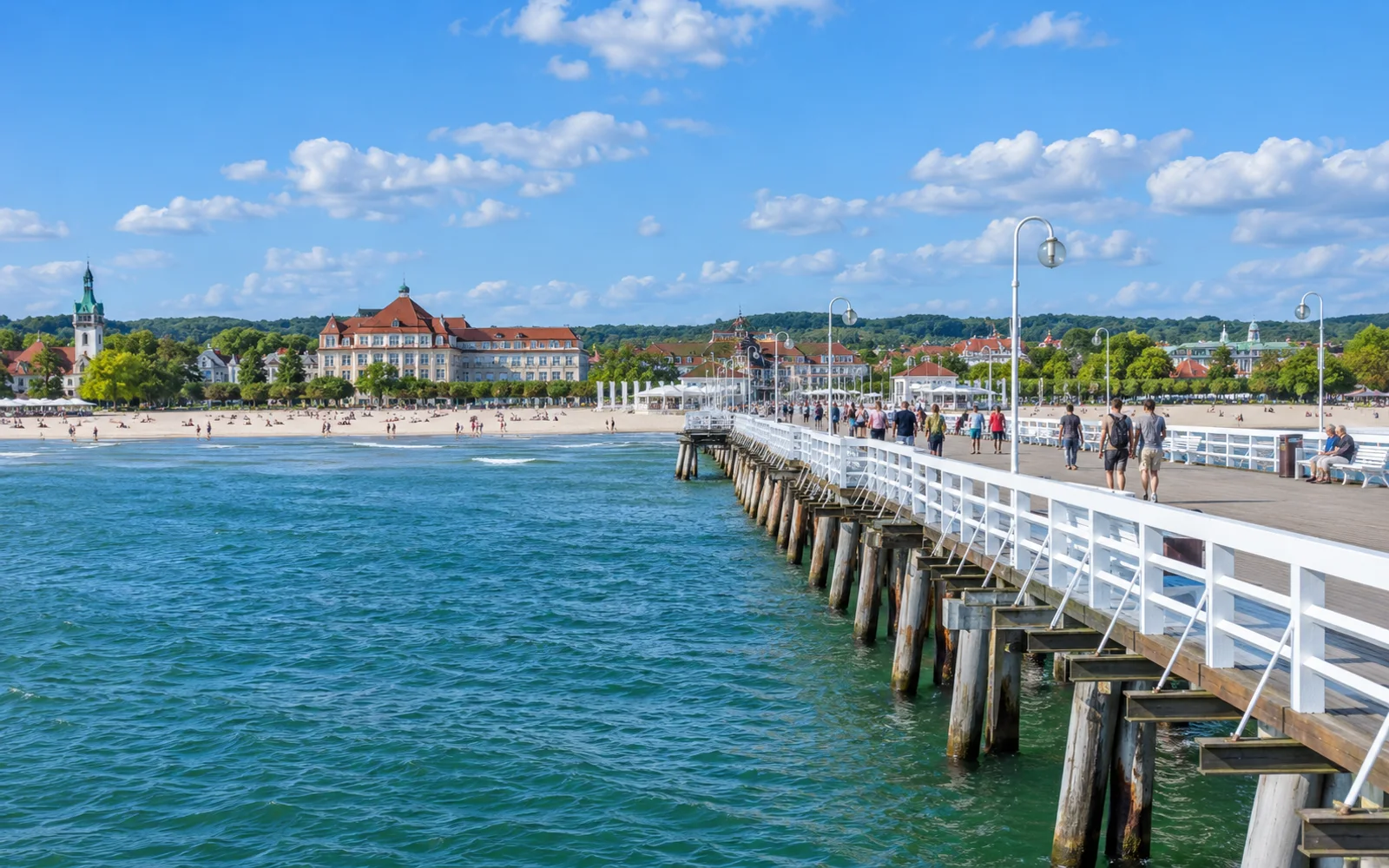
Cover: AI-generated illustration. © ANUSHKA DAHANAYAKE (PVT) LTD.
Sopot is a compact Baltic resort between Gdańsk and Gdynia, known for its long wooden pier, beach and spa history. It is easy to visit as part of the Tricity, yet summer crowds and nightlife can obscure its quieter character. One well-planned day works; two nights let you experience morning and evening after day visitors leave.
Arrival and Tricity transport
SKM commuter trains connect Sopot with Gdańsk and Gdynia; check the operator's current route and ticket information for your exact station. Regional and city operators may use different fares, so buy for the train actually boarded and validate or activate as required. The station is a short walk from the central promenade.
Driving is rarely helpful in peak season because parking is limited and roads congest. If arriving from the airport, compare current rail and bus connections; a direct service is not guaranteed. Licensed taxis and app-dispatched rides are useful late at night.
Stay near the station for connections, closer to the beach for early swims, or a few streets inland for quieter value. Central rooms around nightlife can be loud. Check air-conditioning, lift and cancellation policies because summer demand pushes prices up.
Morning: pier and resort history
Walk the beach early, when cleaning vehicles and swimmers share the shore. Sopot's pier uses seasonal admission; check the visitor office's current notice, since the fee is not year-round. Severe wind may restrict access. Wooden surfaces become slippery in rain or frost, and the exposed end feels colder than town.
At about 511.5 metres it is the longest wooden pier in Europe; the first, built in 1827, was barely 30 metres long and taken down each winter. Use it to understand the curve of Gdańsk Bay, not only as a photograph. Boats may use nearby areas, so remain behind barriers. Do not feed gulls; it changes behavior and creates conflict.
Explore the central spa and park landscape, noting that health facilities and hotels are working businesses. Some buildings restrict entry. The resort began in 1823, when Jean Georges Haffner, a former French army doctor, received Prussian permission to open a bathing establishment; rail access then turned the village into a fashionable spa, and Kaiser Wilhelm II granted town rights in 1901. A local museum or heritage route explains how borders and politics shaped its clientele.
Afternoon: beach, swimming or woodland
Choose an officially designated, guarded bathing area and read the current flag. The Baltic can be cold, with waves, currents and occasional water-quality closures. Never swim after alcohol, outside lifeguard hours or during a red flag. Children need close supervision even in shallow water.
Check Poland's official bathing-water map during the swimming season because cyanobacteria or other conditions can close sections temporarily. The map reports designated sites, current conditions and facilities; check the particular Sopot bathing area you intend to use. A closed beach is not safe simply because swimmers remain elsewhere. Shower after swimming, protect against sun and carry water.
If beach conditions are poor, walk signed routes toward the wooded hills or use cultural venues. Forest paths can be muddy and cycling routes busy. Stay on marked paths, check daylight and inspect for ticks after grass or woodland exposure.
Evening without resort excess
Monte Cassino promenade concentrates restaurants and nightlife. Compare menus, verify whether service is included and keep drinks in sight. Streets behind the main strip can offer calmer dining. Respect residents when returning to accommodation.
Performances at the Forest Opera, a wooden amphitheatre in the woods built in 1909 and home of the Sopot music festival since 1964, and other venues are seasonal. Buy through official sellers and check the route home after an evening event. Do not assume every advertised “Sopot” concert occurs near the center.
Sunset is popular on the beach, but dunes and restoration areas need protection. Use boardwalks and never remove plants or amber. After storms, amber hunting is associated with hazards from waves and cold; do not enter rough water or restricted zones.
Food, costs and responsible spending
Fish menus should identify species and price basis; ask whether weight affects the total. Try regional and contemporary Polish cooking; not every seaside stall is local. Tell staff about allergies, especially with shared fryers.
Sopot costs more than many Polish cities in summer. Save by traveling outside weekends, using trains and mixing a paid pier visit with free beach and park time. Carry a small złoty backup but use bank-affiliated cash machines and decline optional currency conversion.
Choose established lodging and local businesses. Buying shells, plants or questionable amber from informal sellers can support damaging collection or misrepresentation. Ask about origin and request a receipt.
Accessibility and family needs
The central promenade and parts of the seafront are relatively level, but sand, wooden transitions and seasonal crowding create barriers. Ask the visitor office about beach access mats, adapted toilets and current pier arrangements. Elevators in historic hotels are not guaranteed.
Families should establish a beach meeting point and photograph the nearest lifeguard marker. Use shade, sun protection and warm layers because children cool quickly after Baltic swimming. Inflatable toys can drift offshore and are not safety devices.
Travelers with sensory sensitivities may prefer early mornings and beaches farther from central entrances. Event weekends bring amplified music and dense platforms. Check the calendar before booking.
Weather, safety and etiquette
June through August offers the best chance of beach weather but no guarantee of warm water. Spring and autumn suit walks with windproof layers. Winter is quiet and dramatic, with ice possible on the pier and paths.
Use ordinary precautions around the station and nightlife, secure phones on the beach and leave valuables in accommodation storage. Emergency number 112 works nationwide. Never walk onto sea ice.
Ask before photographing identifiable people in swimwear. Keep music low, use bins and follow smoking and dog-zone rules. The beach is shared public space, not a private hotel amenity.
Continue through the Poland destination hub, read what makes Poland special, spend a day in the neighbouring Hanseatic port with what makes Gdańsk special, or add urban history with our Warsaw guide.
A sensible Tricity plan
Do not force Gdańsk, Sopot and Gdynia into one superficial day. Pair a morning in Sopot with one focused neighboring district, then return. Gdańsk's museums need their own day; Gdynia's modernism and maritime collections deserve a half-day.
Before departure, check the platform and train operator. Event crowds can fill services, so allow a buffer. One extra beach walk before breakfast is safer than gambling on a distant attraction before a fixed train.
If poor weather lasts, use museums and cafés but avoid spending the day hopping between malls. Resort history, woodland and the rail-linked urban region still give Sopot purpose beyond sunbathing.
Cycling and coastal walking
The Tricity's coastal routes are popular with bicycles, scooters, runners and families. Keep right, signal before passing and do not stop across the path for a sea photograph. Rental riders should test brakes and lights and learn where parking is permitted. Sand on pavement can reduce grip.
A long beach walk needs an exit plan: entrances may be widely spaced and evening transport thinner outside the center. Carry shoes, a wind layer and water. Avoid dunes and fenced restoration zones. Dogs may be restricted to designated sections seasonally, so check signs and do not just follow another owner.
Health and weather alternatives
Strong sun reflects from sand and water even when the air feels cool. Use sun protection, hydrate and reapply after swimming. Seek help from lifeguards for cuts or marine hazards and do not handle unfamiliar material. Pharmacies serve the center, but after-hours arrangements rotate.
In rain, choose a local heritage interior, a named performance or an unhurried meal. During lightning, leave the pier, beach and exposed water immediately. Strong wind can fell branches in wooded areas, so official closures apply there too.
Visitors using medication that affects heat tolerance or balance should ask a clinician about swimming and sauna plans. Alcohol and cold water are a dangerous combination. Spa treatments are not substitutes for medical care; verify practitioner credentials and disclose relevant conditions.
These practical choices protect the relaxed atmosphere visitors came to find. Sopot is most enjoyable when the beach, residents, wildlife and other travelers are treated as a shared coastal community and not as scenery supplied by a resort.
Questions and answers
How many days do you need in Sopot?
One full day covers the pier, beach and central resort, while two nights allow an unhurried swim or woodland walk and an easy Tricity connection.
Is the Baltic Sea warm enough to swim in Sopot?
Summer swimming can be enjoyable, but water remains cool and conditions change. Use guarded bathing areas and obey flags and lifeguards.
Can you stay in Sopot and visit Gdańsk?
Yes. Frequent SKM trains connect Sopot with Gdańsk and Gdynia, but buy the correct rail ticket rather than assuming a city bus fare applies.
Sources
Warsaw · 52.2297° N, 21.0122° E
This story belongs to Sopot, Poland. A country often overrun by its neighbours that kept changing how the world thinks, and rebuilt its cities from fragments.