Warsaw First-Time Visitor Guide: A Capital Rebuilt
More than 85 percent of the historic centre was destroyed in 1944 and rebuilt from paintings and fragments: Warsaw's story, with a practical plan for three days.
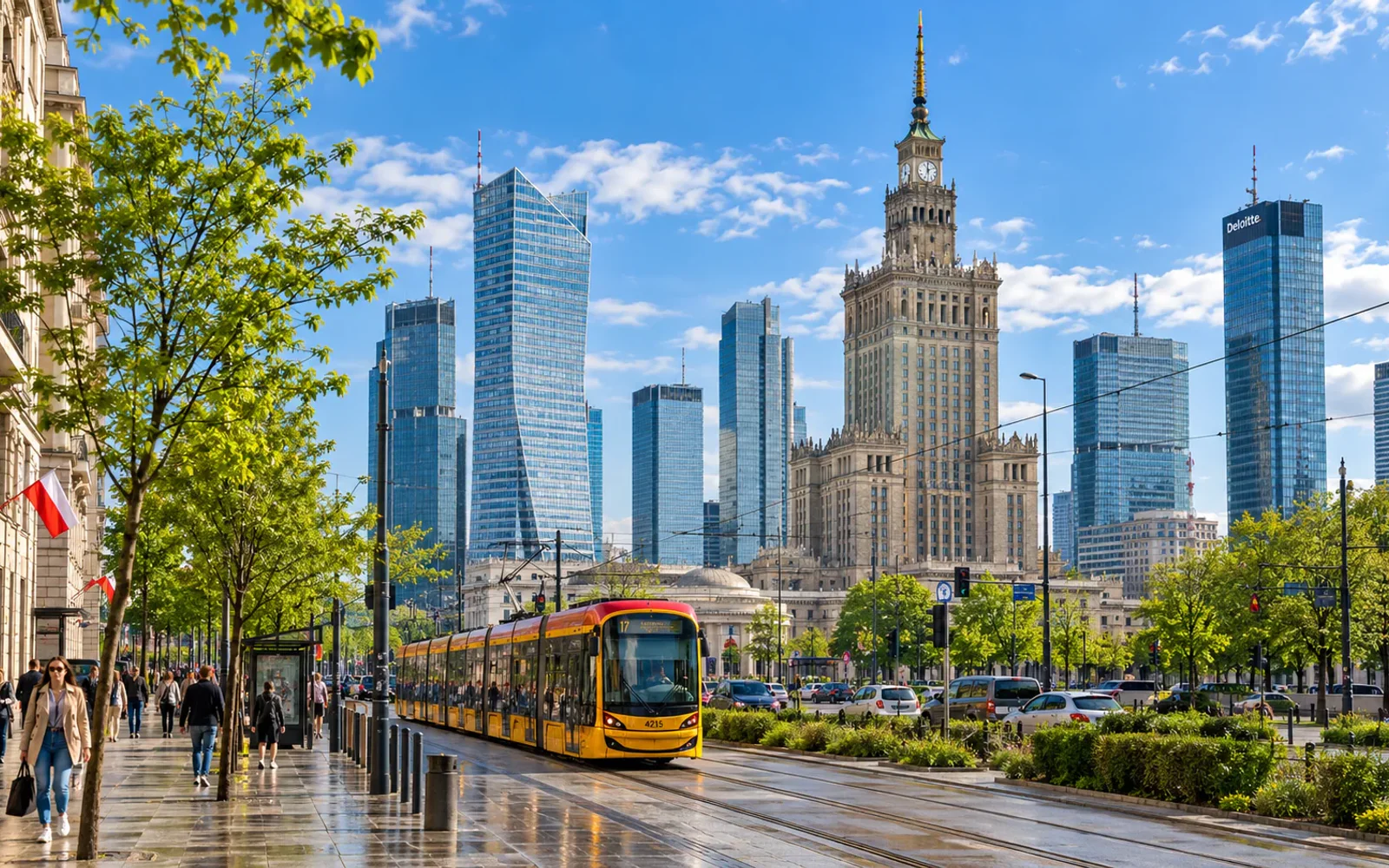
Cover: AI-generated illustration. © ANUSHKA DAHANAYAKE (PVT) LTD.
Warsaw is not a less picturesque substitute for Kraków. It is a capital that was rebuilt after near destruction, shaped by Jewish life and loss, communist planning, migration and rapid contemporary growth. Three days allow visitors to read those layers without reducing the city to either the Old Town or the Palace of Culture.
The centre that was rebuilt
UNESCO says more than 85 per cent of Warsaw's historic centre was destroyed during the August 1944 uprising, and inscribed what stands there now in 1980, as its listing says, as an outstanding example of near-total reconstruction of a span of history from the thirteenth to the twentieth century. Architects used salvaged fragments and, above all, the views painted in the eighteenth century by Bernardo Bellotto, called Canaletto, sometimes as the only evidence for buildings that had vanished; the canvases survived the war and now hang in the Canaletto Room of the Royal Castle. Reconstruction of the Old Town ran mainly from 1949 to 1955, and the Royal Castle was rebuilt between 1971 and 1984. Begin at Castle Square before peak groups arrive, and use the Museum of Warsaw or the heritage interpretation centre to understand the decisions, since colourful façades without context can suggest untouched age.
The 63 days of 1944
The Warsaw Uprising began at 5 pm on 1 August 1944 and lasted 63 days, until 3 October. Every year at that hour sirens sound and the city stops for a minute, and visitors are expected to pause too. Distinguish this citywide uprising from the Warsaw Ghetto Uprising of 1943: confusing them erases different people and events. The Warsaw Rising Museum is dense and emotionally intense, with loud sound and imagery that may overwhelm younger visitors, so check timed entry and sensory guidance and choose it or another major history museum for the day, not both.
Jewish Warsaw and a day for POLIN
POLIN, the Museum of the History of Polish Jews, presents a thousand years of Jewish life in Poland, not only the Holocaust; reserve a substantial block and use its interpretive route, which covers far more than the war years. Nearby memorials and fragments of the ghetto call for quiet attention, so do not climb monuments or use them for fashion photographs.
Chopin, Łazienki and Wilanów
Fryderyk Chopin grew up in Warsaw and is buried in Paris, but his heart is kept in a pillar of the Holy Cross Church on Krakowskie Przedmieście along the Royal Route. Choose a concert with a named pianist and programme from a credible venue, since claims of daily performances do not guarantee quality; the museum may require timed entry, and free summer recitals in Łazienki Park depend on weather. Wilanów Palace was begun in 1677 for King Jan III Sobieski and finished in 1696, and he died there. It deserves half a day, not a taxi stop. In Łazienki stay on the paths, do not feed peacocks or squirrels and check museum opening days.
Praga, the river and modern towers
Across the Vistula, Praga survived the war differently from the left bank. Use the Praga Museum, local venues and established businesses, and avoid tours that turn residents into scenery. The river boulevards are good in fine weather, but the Vistula has currents and commercial traffic, so swim only where officially permitted and never walk onto ice. The Palace of Culture and Science stands among glass towers: Warsaw's identity lies in the coexistence. Observation terraces depend on weather, and low cloud erases the value. A specialist architecture walk can explain displacement and planning without labelling every postwar building communist; enter courtyards only where access is public.
Three days and where to stay
Day one: Old Town, the Royal Route and the Chopin Museum, ending near the Palace of Culture. Day two: POLIN plus one major history museum, with a concert or contemporary dinner in the evening. Day three: Łazienki and Wilanów, or Praga and the river. With two days, drop one museum rather than rush. Stay near Śródmieście for connections, around the Royal Route for atmosphere, or in Powiśle for the river; proximity to metro or tram matters more than a romantic district label because Warsaw is large. Pair the capital with our Kraków first-time guide, and note that Łódź and Treblinka are not spare half-days, since Treblinka is a memorial that needs preparation and careful transport.
Seasons on the Vistula
May to September is warm, with concerts, recitals in Łazienki and life on the river, and thunderstorms can follow hot days. Spring and autumn suit long walks. December brings illuminations and a Christmas market in the Old Town, while winters are cold, dark and often grey, so wear grip on slick pavements and allow longer transfers. Carry water across broad open squares in summer and a warm layer beside the river. Cycling works well on designated riverside and park routes, but tram tracks can trap narrow tyres.
Transport, food and access
Chopin Airport connects to the city by train and bus; Modlin is farther with separate transfers. Intercity trains may use Warszawa Centralna, Gdańska, Zachodnia or Wschodnia depending on works, so check the ticket on the day. Warsaw Public Transport uses time-based tickets on metro, tram, bus and specified urban rail, and tickets must be validated or activated when required. The SKM operator says app tickets on its trains are activated by scanning the QR code near the doors, so buying a ticket is not the same as starting its validity. Most central sights fall in zone 1.
Try pierogi, soups and cakes, then Warsaw's Vietnamese, Georgian and vegan scenes. Milk bars, the bar mleczny tradition, serve inexpensive Polish meals; menus may be in Polish, so learn a few words and watch the queue. Many museums have a weekly free day, which can mean larger crowds. Modern metro stations are accessible, but vehicles and lifts vary, and Old Town cobbles are not step-free friendly, so contact museums about quiet hours and seating. Keep belongings secure on crowded transport and use licensed or app-dispatched taxis.
Continue through our Poland destination hub, or compare Gdańsk, Poznań, Toruń and Wrocław for other Polish cities with their own stories. Lublin's Old Town guide covers shared history, and our practical country guides cover further trips.
Questions and answers
How many days are enough for Warsaw?
Three full days allow Old Town and the Royal Route, two major museums, a park and time in Praga or another district. Two days require choosing one major history museum.
Was Warsaw Old Town rebuilt?
Yes. It was deliberately reconstructed after its destruction in World War II using historical evidence and surviving fragments, an exceptional process recognized by UNESCO.
Do visitors need a car in Warsaw?
No. Metro, trams, buses and urban rail cover the city well. A time-based public transport ticket is usually easier than parking.
Sources
Warsaw · 52.2297° N, 21.0122° E
This story belongs to Warsaw, Poland. A country often overrun by its neighbours that kept changing how the world thinks, and rebuilt its cities from fragments.