Lublin: Union of 1569, Jewish Learning and Old Town
The city of the 1569 Union, a chapel of 1418 frescoes, a centre of Jewish learning and the home of cebularz, with Majdanek approached carefully.
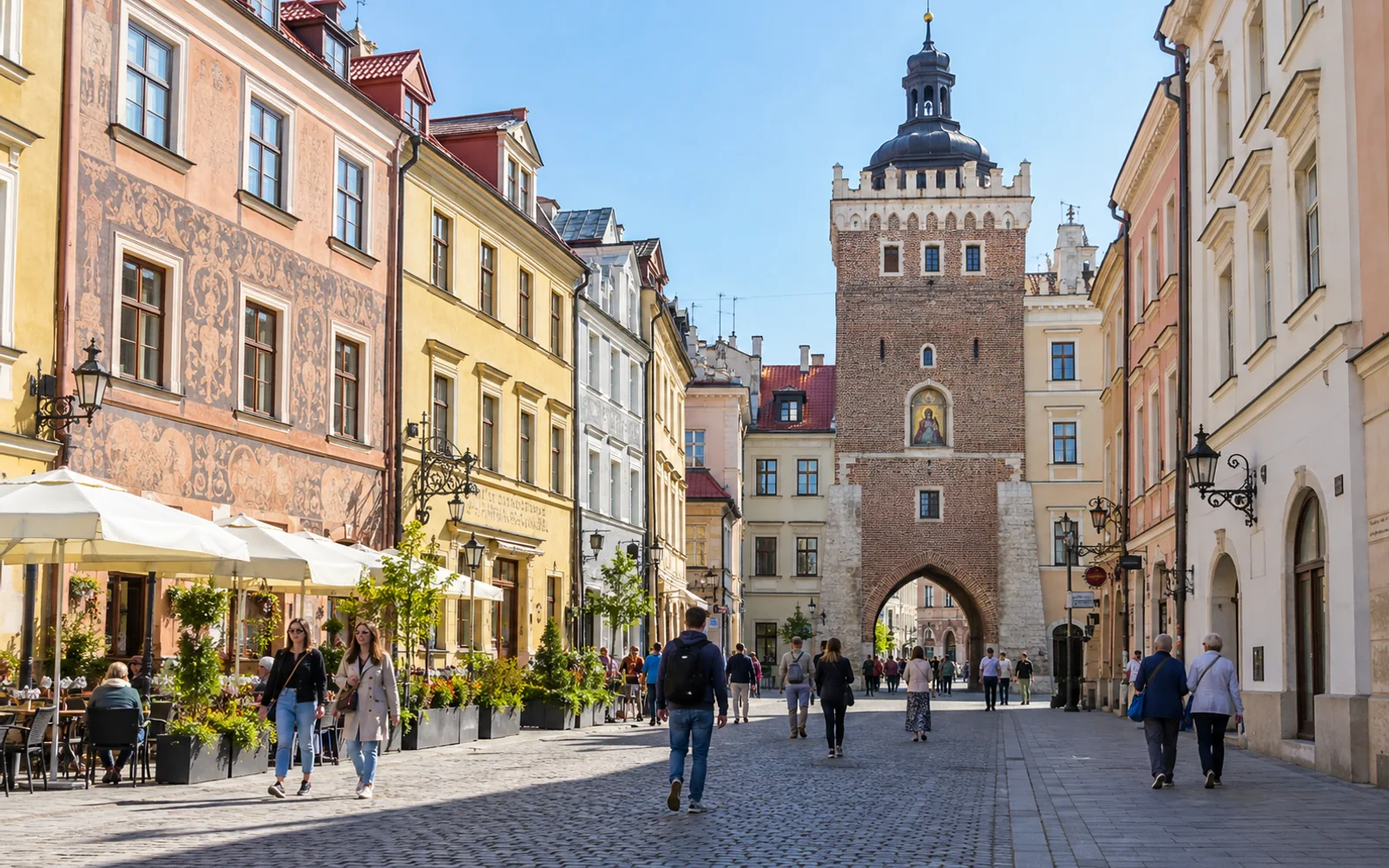
Cover: AI-generated illustration. © ANUSHKA DAHANAYAKE (PVT) LTD.
Lublin's best-known date is 1 July 1569, when the Union of Lublin was signed at the castle and Poland and Lithuania became a single commonwealth that lasted more than two centuries. During the parliamentary sessions a mass was held in the castle's Holy Trinity Chapel to ask for successful deliberations, and some participants left graffiti commemorating the union on its walls. That chapel is the city's most unusual treasure, and it sets the tone for a place built where Polish, Ruthenian, Jewish and other worlds met.
Frescoes that crossed a border
The Chapel of the Holy Trinity is a Gothic room with a Renaissance gable, and its interior is covered in Byzantine-style frescoes dated to 1418 and attributed to Ruthenian painters working for King Władysław II Jagiełło. The paintings were plastered over, rediscovered in 1897, and then restored over about a century. Standing under them is a clear lesson in how Latin and Orthodox traditions overlapped in this part of Europe. Photography rules apply, and the interior is small and quiet.
The city that taught the Jewish world
For roughly two centuries, from the mid-sixteenth to the mid-eighteenth, Lublin was a major centre of Jewish learning and the main meeting place of the Council of Four Lands, which gathered at the city's fairs. A synagogue named for the Maharshal, Rabbi Shlomo Luria, was built in 1566 and a yeshiva opened soon after. In 1930 the Chachmei Lublin Yeshiva, founded by Rabbi Meir Shapiro, was formally inaugurated in a large five-storey building designed by Henoch Kein; it operated until 1939, and the restored building reopened as a cultural and educational centre in 2007. Most of Jewish Lublin was destroyed in the Holocaust, and the nearby Majdanek camp is part of the same history, so the absence has to be interpreted rather than guessed at from empty streets. Use a reputable museum, archive or guide, and avoid anyone who tells the story only through ghosts and tragedy.
Bread, learning and Old Town
Cebularz lubelski, a small round flatbread topped with onion and poppy seed, has roots in the nineteenth century, and Poland's Ministry of Agriculture records Jewish bakers in the Lublin Old Town among its first makers. It entered the national list of traditional products in 2007 and the European Commission registered it as a Protected Geographical Indication in 2014; the name covers production in the Lubelskie voivodeship. Ask a baker to describe how theirs is made instead of assuming every onion roll is the regional original, and tell staff about poppy, dairy or gluten allergies. Eaten warm from a bakery, it is the simplest way to taste the city's mixed history, and the bread links two of the communities that built it.
The Catholic University of Lublin was founded in 1918 by Father Idzi Radziszewski and has carried John Paul II's name since 2005, and with other universities it keeps the old town young during term. The Kraków Gate and the lanes behind it show the rebuilt merchant city; decorated facades reflect prosperity and later restoration, and a guide or the city museum helps explain the fires, the courts and the religious buildings, so the centre is understood as a working city, not a stage set. Markets still serve residents, so ask before photographing vendors.
One careful day in Lublin
Enter the Old Town through the Kraków Gate before groups arrive and walk to the castle. Combine the chapel with the museum collections, and remember that the castle also served as a prison under different regimes; the interpretation deserves time. In the afternoon, trace the former Jewish district with a good route or a cultural institution, then leave the evening for Krakowskie Przedmieście, a meal and quiet streets.
A second day can go to the State Museum at Majdanek, the former German camp inside the modern city. Consult the museum's current opening hours and visitor guidance for closures, bags and group rules; it is normally closed on Mondays. Allow a half day, since the site is exposed to heat, cold, rain and wind. Treat the grounds as a cemetery: do not eat, joke or stage portraits, and do not plan entertainment immediately afterwards. Families can substitute age-appropriate interpretation in the city instead of treating the memorial as compulsory.
Pace matters in a city where several layers of history sit within a few hundred metres. Two heavy subjects back to back numb the visitor, so alternate the castle prison and the Jewish district with a coffee, a park or a stretch of ordinary shopping street. Rain suits the castle interiors, while dry weather is better for the Old Town lanes and the long walk at Majdanek. Immersive exhibitions can use darkness, testimony and sudden sound, so ask the museum about quiet hours and seating in advance, and bring any prescribed medication.
Getting around, tickets and respect
Trains and coaches link Lublin with Warsaw and other cities, but the station sits outside the Old Town core. Use a bus, trolleybus or licensed taxi, and check the live planner because road works can move stops. Buy a LUBIKA transport ticket or validate mobile fares correctly. If considering a TripPass tourist card, compare its Lublin partners and price against the sites you actually plan to visit.
Old Town has slopes, cobbles, steps and vehicle restrictions, so contact museums and Majdanek for step-free routes and seating. Spring and autumn suit long walks; summers can be hot and exposed at the memorial, and winter brings ice and short daylight. Lublin needs normal city precautions: secure belongings at stations, use licensed taxis and note that emergency number 112 works nationwide. Lublin is often cheaper than Poland's largest visitor cities, though central terraces charge more; keep a small złoty backup and decline dynamic currency conversion.
Religious buildings have active congregations, so dress as requested, pause tours during services and keep group explanations quiet. Do not photograph worshippers, students or market workers without consent, and do not enter residential courtyards because a doorway looks picturesque.
Continue through Poland
Continue through the Poland destination hub, read what makes Poland special, compare another major history city in the Kraków guide, or connect by rail to the rebuilt capital in the Warsaw guide. On departure day, confirm the platform because engineering can alter services, and keep passports and medication out of stored luggage. A third day is best spent on parks, contemporary culture or a carefully planned regional trip, because it lets difficult history settle instead of adding another checklist item.
Questions and answers
How many days are enough for Lublin?
Two days cover Old Town, the castle and one deeper historical visit. Add a third if visiting Majdanek so the memorial is not compressed between lighter attractions.
Can you visit Lublin without a car?
Yes. The central area is walkable and buses and trolleybuses connect the station, Majdanek and outer districts.
How should visitors approach Majdanek?
Prepare through the official museum, allow several hours, dress for exposed outdoor walking and behave as at a cemetery and site of mass murder, not an ordinary attraction.
Sources
Warsaw · 52.2297° N, 21.0122° E
This story belongs to Lublin, Poland. A country often overrun by its neighbours that kept changing how the world thinks, and rebuilt its cities from fragments.