Liège First-Time Visitor Guide: Steel, Waffles, Perron
Liège was a prince-bishopric capital for 800 years, then a continental steel pioneer from 1817, and it still celebrates folk hero Tchantchès each 15 August.
Cover: AI-generated illustration. © ANUSHKA DAHANAYAKE (PVT) LTD.
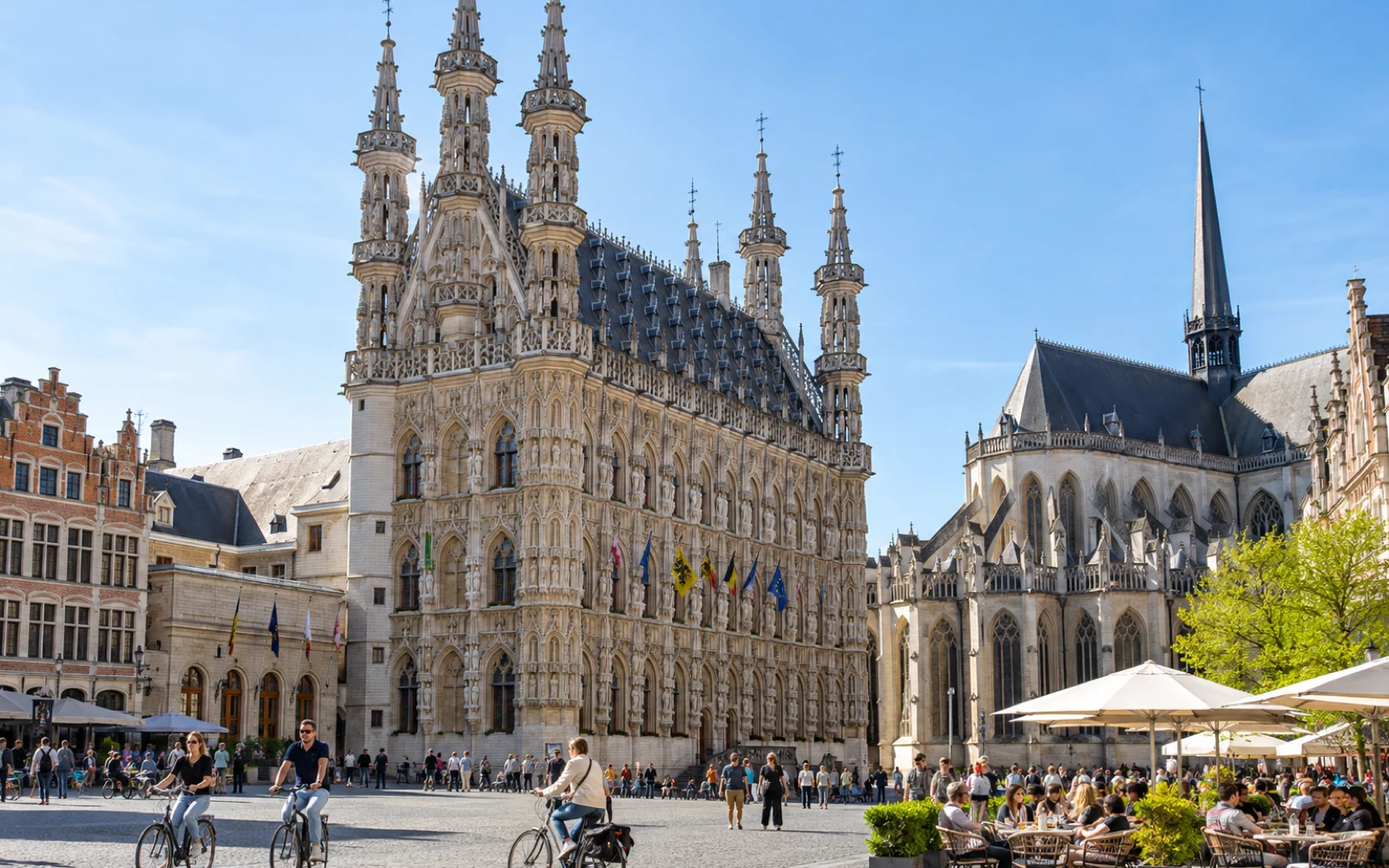
Liège was the capital of a prince-bishopric that lasted from 985 until 1794, and its first prince-bishop, Notger, turned the city into a major intellectual and ecclesiastical centre. The city's patron is Lambert of Maastricht, credited with completing the region's Christianisation around 705; he was murdered in Liège and venerated as a martyr, and his successor Hubertus built a basilica for his relics. The Palace of the Prince-Bishops now stands on Place Saint-Lambert, where Saint Lambert's Cathedral once stood, and its oldest rooms date from the sixteenth century. Beside the seventeenth-century city hall, the Perron, once a symbol of justice in the prince-bishopric, is now the city's emblem.
Liège then became an industrial pioneer. From 1817 John Cockerill greatly expanded the iron and steel industry, and the Seraing complex was once among the largest in the world, making the Liège area one of continental Europe's first large-scale steelmaking centres. The same year the University of Liège was founded. Local people of the nineteenth and twentieth centuries left their marks on the wider world: Zénobe Gramme (1826-1901) was an inventor, Georges Nagelmackers (1845-1905) founded the Compagnie Internationale des Wagons-Lits, and Georges Simenon (1903-1989) was the novelist who created Inspector Maigret. Pippin the Younger, King of the Franks, was born in nearby Jupille, and a statue of Charlemagne stands in the city centre even though his birthplace is uncertain.
Food and folklore carry the same independent spirit. The Liège waffle was invented in the eighteenth century, according to Visit Belgium, by the chef to the prince-bishop. It is made from a raised dough, described as a dense, brioche-like mixture with pearl sugar that caramelises on the iron, and it is traditionally eaten plain, hot or cold, unlike the lighter, batter-based Brussels waffle. Boulets à la liégeoise and the local spirit pékèt belong to the same table. In Outremeuse the festival of Le Quinze Août each 15 August honours the folk character Tchantchès with a religious procession, a flea market, concerts and games. On Sundays, La Batte runs along the Meuse from early morning to about 2 p.m., and it is where most locals shop.
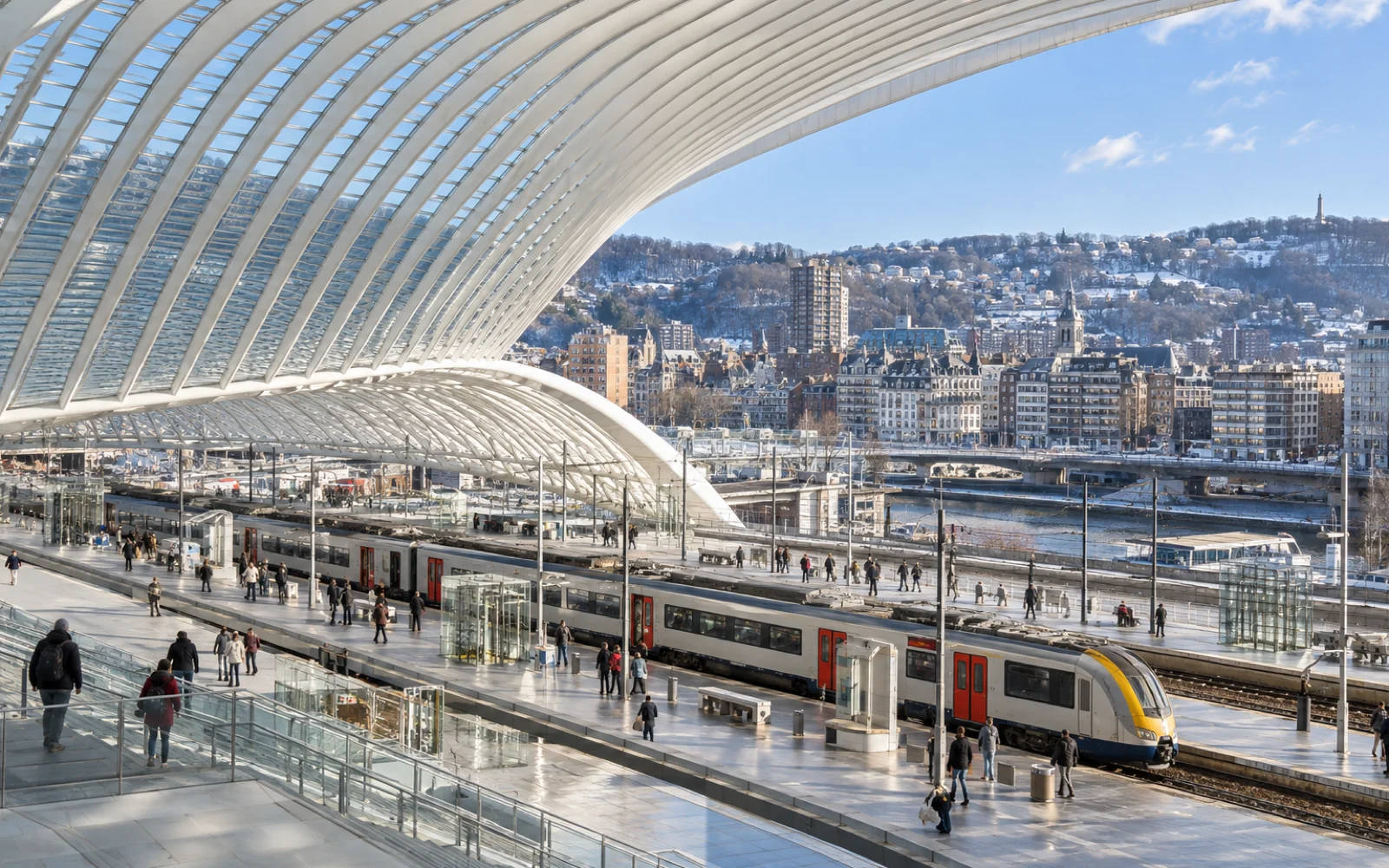
Modern Liège adds a final chapter. Santiago Calatrava's steel-and-glass vault at Liège-Guillemins station opened on 18 September 2009 after about a decade of work, and its canopy changes with viewpoint and weather. It stands south of the historic centre, so arriving at the landmark station is not arrival at Place Saint-Lambert.
Two days from station to citadel
Give Guillemins time before leaving, keeping platforms clear for travellers. Take public transport to the centre, then explore around Place Saint-Lambert and the Palace of the Prince-Bishops. Archaeoforum, beneath the square, can explain the layers beneath the square when open. Continue to Grand Curtius, choosing collections by interest. On Sunday, begin at La Batte market; the tourism office currently lists 08:00-14:30. Keep valuables controlled and avoid blocking traders. On other days, visit La Boverie for art and park space.
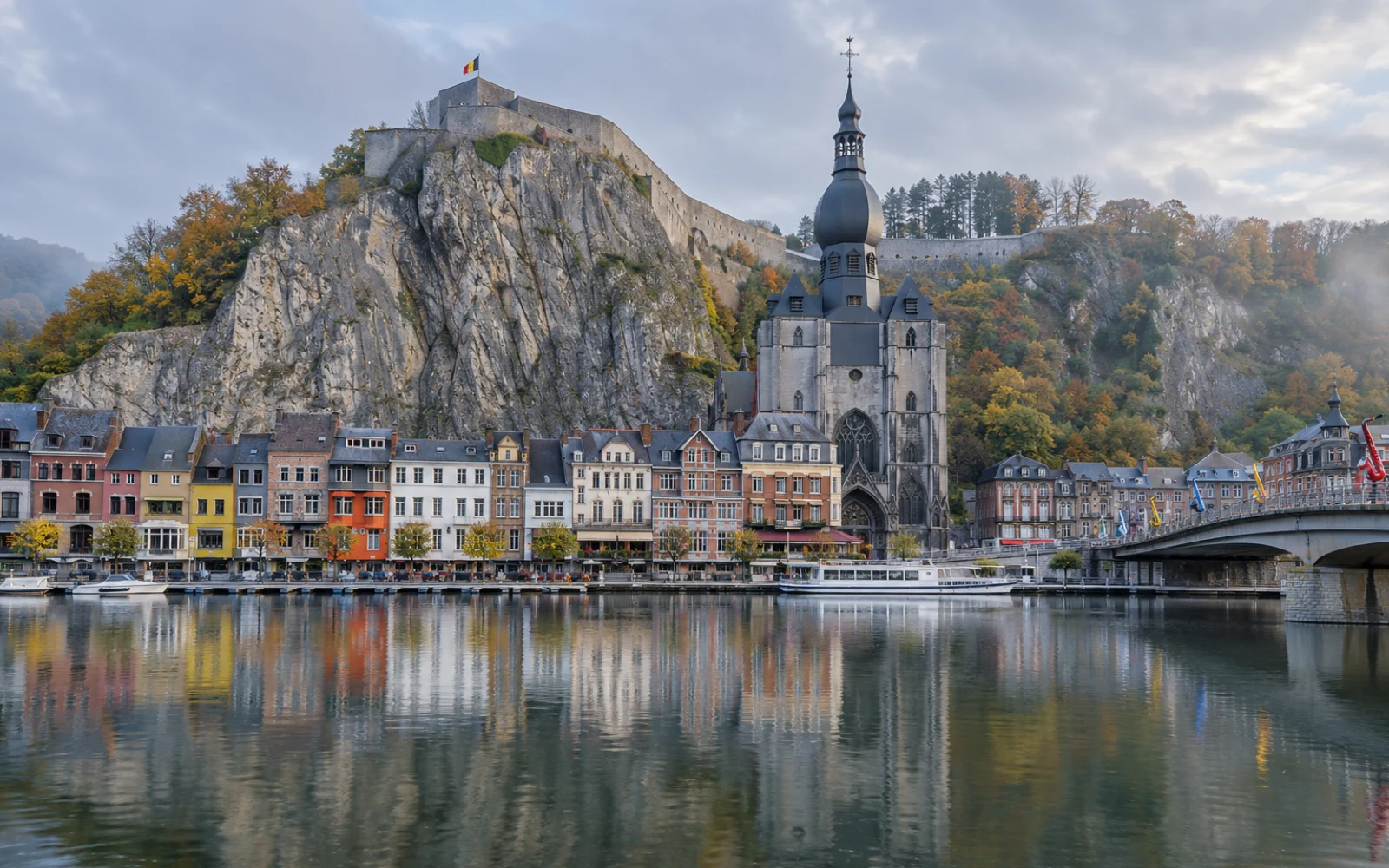
The Montagne de Bueren staircase, built in 1881 to link the citadel with the city and named after Vincent de Bueren, who defended Liège against Charles the Bold of Burgundy in the fifteenth century, has 374 steps. It is striking but not required, and a bus or taxi toward hillside viewpoints preserves energy for museums. End beside the Meuse or in Outremeuse, using lit routes after dark.
Pacing the visit
One museum plus one neighbourhood gives Liège a clearer shape than a checklist. Compare Grand Curtius, La Boverie and any specialist industrial site against the two-day route before buying a museum product, since they sit in different directions and each deserves focused time. If a museum closes, stay on the same bank for a riverside route, a church or a café instead of making an unnecessary cross-city trip. Reserve any guided or appointment-only industrial visit separately and keep a backup payment method. Outremeuse and the Meuse quays suit an evening, but event periods, including the October fair, change transport, noise and room demand. Bridges and roads complicate short-looking Meuse routes, so use marked crossings and supervise children at the river edge.
In the week before travel, confirm the Guillemins platform, TEC diversions, Grand Curtius and La Boverie hours and whether La Batte will run normally. Save tickets offline, carry water, rain protection and shoes with grip for the stairways and quays, and leave extra time to return from the centre to the station, because its scale adds walking before the platform.
Access, weather and money in one place
Check the onward SNCB/NMBS, TEC bus or walking route from Guillemins and account for river crossings. Drivers should use signed parking. Central surfaces vary, and distances between the station, historic core and La Boverie add up, so ask venues about the exact step-free entrance and reserve Belgian rail assistance if needed. The Bueren steps are a staircase, not an accessible viewpoint.
Liège generally offers value compared with Belgium's most touristed centres. Streets, markets and station architecture are free, while museum admissions form the main costs. Check Monday closures and Sunday schedules, because they can reverse a sensible itinerary. Rain makes stone stairs and quays slippery, and heat makes the Bueren climb harder. Check the Liège event calendar and the Sunday market schedule before fixing the order of days. Spring and early autumn suit river and hillside walking, summer festivals can fill rooms, and winter favours museums.
Call 112 in an emergency, use ordinary care with phones and wallets at Guillemins and La Batte, and stay behind barriers beside the Meuse. Never enter abandoned industrial property, including sites popular for street-art photographs, where unstable structures and active operations create real danger. Specialist industrial sites may need buses, appointments or seasonal opening. French is the main local language, so begin with a greeting. Outremeuse and the slopes below the citadel are lived-in neighbourhoods, not scenery.
Continue through the Belgium destination hub, read what makes Belgium special, follow the Meuse upstream to the citadel city in the Namur guide, or cross the border downstream with the Maastricht guide.
Questions and answers
How many days do you need in Liège?
Two days suit the station, old centre, one museum and a neighbourhood or market. Add time only for a separate regional excursion.
Is Liège-Guillemins station near the old centre?
It is south of the historic core. Local trains and buses make the connection, while walking takes longer than many maps initially suggest.
When is La Batte market held?
The riverside market is traditionally held on Sunday mornings, but visitors should confirm current hours and disruptions with the city.
Sources
Brussels · 50.8503° N, 4.3517° E
This story belongs to Liège, Belgium. Small, three-language and full of inventions the world knows without crediting Belgium: oil painting at its finest, the saxophone and lambic beer.