Dinant for First-Time Visitors: Citadel, River and Saxophone
A realistic Dinant guide for choosing the citadel, understanding Adolphe Sax's hometown and enjoying the Meuse without squeezing every nearby cave into one day.
Cover: AI-generated illustration. © ANUSHKA DAHANAYAKE (PVT) LTD.
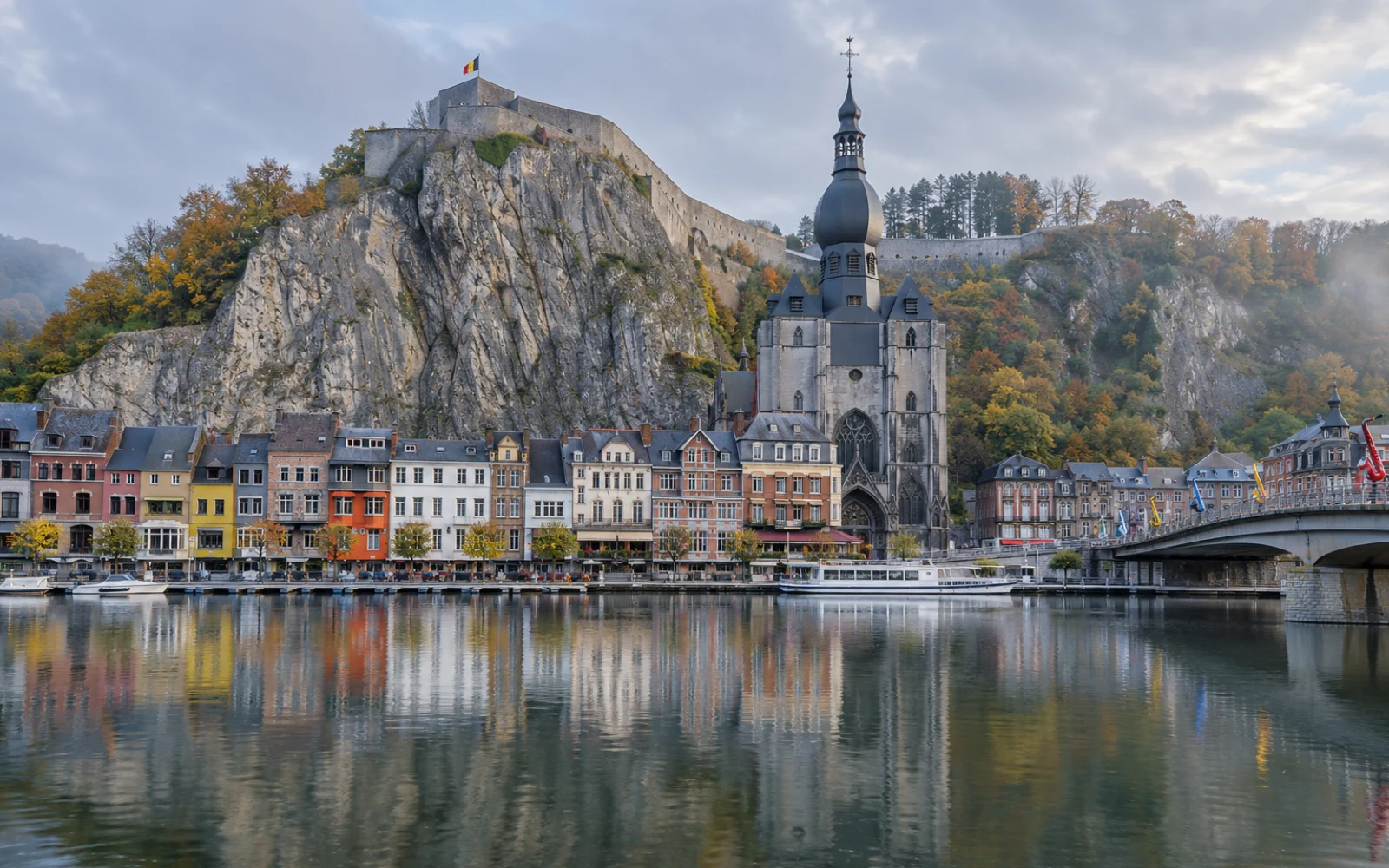
Dinant occupies one of Belgium's most dramatic settings: a narrow strip between the Meuse and a limestone cliff, with an onion-domed church below a citadel. It is also the birthplace of Adolphe Sax. The centre suits a focused day trip, but an overnight stay reveals a quieter riverfront and makes one regional excursion possible without compressing the main sights.
Arrival and realistic scope
Trains connect Dinant with Namur and onward Belgian services. Check SNCB/NMBS for current schedules, particularly on weekends. The station is across the river from the historic core, and the walk immediately provides the classic panorama. Central Dinant is small, but rail frequency may determine the last part of your day. Drivers should expect constrained streets and busy parking in summer. A car becomes useful for regional caves, gardens and castles, yet is unnecessary for the church, citadel and saxophone route.
Morning: riverfront and saxophone story
Cross Charles de Gaulle Bridge, where colourful saxophone sculptures reference Dinant's most famous inventor. These works represent different countries; treat them as an outdoor cultural route, not climbing frames. The Maison de Monsieur Sax provides an introduction to Adolphe Sax and the instrument's development. Verify opening arrangements because small interpretation spaces can operate differently from major museums.
Enter the Collegiate Church of Our Lady when worship and opening hours permit. The unusual onion-shaped tower, stained glass and cliff backdrop define Dinant's image, but the building is first a religious space. Keep quiet and avoid flash where prohibited. Walk the riverfront before lunch. Boat schedules are seasonal and depend on river conditions. A cruise can offer perspective and rest, but should not replace the central history if time is limited.
Afternoon: the citadel
The citadel says its cable car has been stopped since October 2025 for a major rebuild, with no reopening date announced. Ask about road access or the long stairway before buying a ticket. Admission packages sometimes combine transport or a cruise, so compare inclusions, because the largest bundle does not always save money.
Interpretation covers fortification and conflict, including the First World War. Some reconstructions may feel intense for young children. Historic passages, slopes and stairs limit full accessibility even when the cable car is running. Ask about the precise accessible route and toilets before purchasing. Views explain the city's constrained geography. Allow at least ninety minutes and descend with enough margin for your train.
Adding one regional experience
With a second day, choose one excursion. The Caves of Han are not in central Dinant and require meaningful travel time. Château de Freÿr, Annevoie gardens or outdoor activities on the Lesse similarly need current transport planning. One well-planned choice is better than three rushed names.
Kayaking operators work under river-level and weather rules, with different routes, age conditions and equipment. Book through a reputable operator, wear supplied flotation equipment and never enter after heavy rain or closure notices. Secure phones and bring dry clothing. Cycling on valley roads requires confidence around traffic.
Food, costs and bookings
Dinant's couque de Dinant is an extremely hard honey biscuit traditionally moulded into decorative shapes. It is often softened in coffee or broken carefully, never bitten like an ordinary biscuit. Flamiche dinantaise is a rich local tart. Check opening days because smaller bakeries and restaurants may close midweek or outside peak season.
The citadel is the main paid expense, followed by a cruise or excursion. The bridge, riverfront and saxophone trail are free. Accommodation can become scarce on summer weekends. Reserve activities that depend on a specific departure; leave ordinary walking flexible for weather. Carry a backup payment method for small businesses.
Accessibility and family planning
The riverfront and bridge are manageable for many travellers, but gradients, cobbles and the citadel's historic construction create obstacles. Do not plan on a cable-car ascent while it is closed. Contact the attraction about its current road approach, internal barriers and transfer needs. Accessible rail assistance may require advance booking through SNCB/NMBS.
Families should supervise closely beside the Meuse and on viewpoints. Divide the citadel visit with breaks and explain military displays in an age-appropriate way. A short boat trip can restore energy, provided boarding suits everyone. Pushchairs should use the gentler central routes and avoid steep lanes.
Safety, etiquette and weather
In Dinant, keep belongings close and do not leave valuables visible in parked cars. River conditions are the distinctive risk. Respect barriers, operator decisions and flood warnings; the Meuse and Lesse are working waterways, not controlled pools. Call 112 in an emergency.
Spring and early autumn suit walking, while summer offers the fullest activity schedule and largest crowds. Autumn mist can be beautiful but reduces visibility. Winter has limited hours and early darkness. Check citadel, boat and regional-attraction calendars shortly before travel.
French is the local language. A greeting before asking in English is polite. Keep noise low in the church, do not fly drones without checking Belgian and local rules, and avoid photographing residents as decorative foreground. At war memorials or historical interpretation, behave with restraint.
Dinant does not need a crowded checklist. The river, church, citadel and story of Sax form a coherent day; a second day should deepen the valley rather than multiply transfers. Continue through the Belgium destination hub, read what makes Belgium special, explore the wider region with the Belgian Ardennes guide, or browse all country guides.
Final planning details
Staying near the station simplifies an early train, while the opposite bank gives quicker access to the church and citadel. A river view can also mean road, rail or terrace noise, so ask before booking. Cyclists should confirm secure storage, and drivers should distinguish reserved parking from merely nearby spaces.
Before arrival, check citadel access, church hours, cruises and the final train. Kayakers should confirm water-level decisions that morning and bring secure footwear and dry clothes. Never combine alcohol with paddling. Download tickets because signal may weaken inside stone structures. A balanced day gives morning to Sax and the church, afternoon to the citadel and evening to the river. Queues, steep surfaces and cable-car waits make short map distances deceptive.
Questions and answers
Can Dinant be visited as a day trip?
Yes. A day allows the riverfront, collegiate church, citadel and saxophone trail. Staying overnight creates a calmer evening and room for one regional activity.
Is the Dinant citadel accessible without climbing the stairs?
The citadel cable car has been stopped since October 2025 for a major rebuild, with no reopening date announced. Check the citadel for current stair or road access before booking.
Do you need a car in Dinant?
No for the central sights, which are close to the railway station. A car or organised transfer helps with caves, castles and rural Meuse Valley locations.
Sources
Brussels · 50.8503° N, 4.3517° E
This story belongs to Dinant, Belgium. Small, three-language and full of inventions the world knows without crediting Belgium: oil painting at its finest, the saxophone and lambic beer.