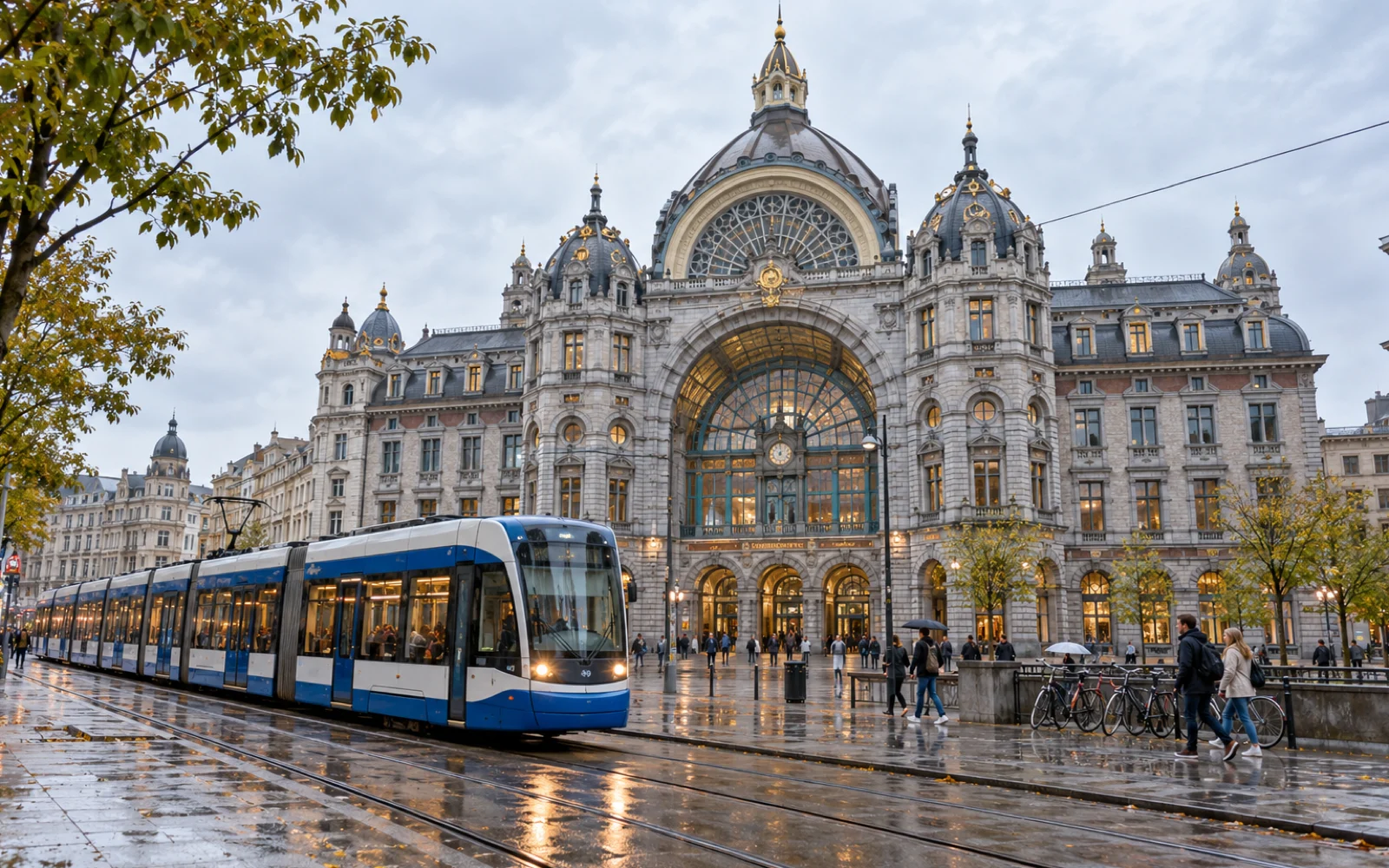
Belgian Ardennes Guide: Spa, Bouillon and Bastogne
The Belgian Ardennes holds the original spa town, a castle first recorded in 988 and the Bastogne battlefield, all within walking reach of forest trails.

Cover: AI-generated illustration. © ANUSHKA DAHANAYAKE (PVT) LTD.
The Belgian Ardennes is a broad forested region of river valleys, ridges, castles and memorial landscapes across Wallonia, and its three best-known places are three different kinds of heritage. Spa gave its name to mineral-water resorts everywhere. The Romans called it Aquae Spadanae, and more than 300 cold mineral springs rise in and around the town. Pliny the Elder wrote about a local spring, and the future Charles II of England stayed in 1654. Casinos have operated there since the 18th century, the world's first beauty pageant, the Concours de Beauté, was held there on 19 September 1888, and in July 1920 the town hosted the Spa Conference on war reparations. In 2021 Spa became part of the transnational UNESCO site The Great Spa Towns of Europe.
Bouillon is the medieval anchor. Its castle sits on a rocky spur inside a sharp bend of the Semois and was first mentioned in 988, although a castle stood on the site for much longer. In 1082 Godfrey of Bouillon inherited it, and he sold it to Otbert, Bishop of Liège, to finance the First Crusade. Vauban, Louis XIV's military architect, later fitted the castle for heavy artillery in the late seventeenth century, so the stones record two different ages of warfare.
The Ardennes also carries the heaviest modern memory in Belgium. The Battle of the Bulge began on 16 December 1944 in these forests. At Bastogne, on 22 December, when German emissaries demanded surrender, Brigadier General Anthony McAuliffe answered "Nuts!", and on 26 December Patton's Third US Army arrived and broke the siege. The Mardasson Memorial, erected near Bastogne in 1950, honours American soldiers wounded or killed, and the Bastogne War Museum uses artefacts and film to tell the story. Memorial sites across the region recall soldiers and civilians alike, and visitors should treat them with context and restraint, not as dramatic backdrops.
The land between those places is the real draw. Spa-Francorchamps hosts the Belgian Grand Prix and the 24 Hours of Spa, though the track lies in Stavelot, not Spa itself. Quieter towns such as La Roche-en-Ardenne, Malmedy and Durbuy offer riverside walks and a very different pace.
Choosing a base and a first walk
Choose the base before buying rail tickets. Spa, reached via Liège, has direct rail advantages, while Bouillon, La Roche and smaller valleys may require TEC buses or a car after the train. Bouillon suits the Semois and castle history, La Roche supports Ourthe walks, Spa combines woodland with rail access, and Malmedy opens the eastern landscapes. Verify accommodation, food and transport outside summer, and check the last Sunday connection as carefully as the outward journey.
Choose a route from Wallonia's Ardennes visitor information or a recognised walking network, matching distance, ascent and surface to the least confident person. On arrival, use a short signed walk to understand trail markings and daylight before attempting the longest route. Castles and caves have seasonal timetables, stairs and fixed guided departures, and kayaking depends on water levels, so a cancellation is a safety and conservation decision, not poor service. Winter snow is inconsistent, so never plan as though alpine conditions are guaranteed.
A three-day shape
Day one belongs to the base town and a short signed walk. In Spa, the springs and the old thermal quarter fill a gentle morning, and the funicular to the thermal leisure centre, which opened in 2005 after the old Thermal Baths closed in 2004, gives an easy introduction to the hill above town. Day two is the main route, whether a Semois loop from Bouillon, an Ourthe walk from La Roche or a heritage morning at Bastogne with the Mardasson Memorial and the War Museum. Day three keeps margin for weather and transport, with a second castle, a cave or a river activity booked first and forest walks left flexible.
Stay multiple nights in one base to reduce driving and gain weather flexibility, since distances on the map understate narrow roads and village traffic. Use marked trailhead parking, keep forestry access clear and never leave luggage visible. Travellers without a car should build the trip around rail gateway schedules. Families should shorten routes and carry food, layers and a basic first-aid kit, and anyone with mobility needs should ask whether an adapted trail remains open after storms or forestry work. A castle courtyard, a cave and a forest boardwalk each present different barriers.
Before booking an isolated village room, check the arrival day against the final bus and restaurant hours. A nearby station on a map may still be several steep kilometres from the door, so ask the accommodation whether it can arrange a licensed taxi and get a realistic price in advance.
Weather, hunting, access and money in one place
Rain turns roots, rock and boardwalks slippery, and river levels rise quickly, so a waterside route is not automatically easy. Late spring and early autumn often suit walking, but recent rain matters more than the month. Hunting is managed in parts of the Ardennes in autumn and winter. Obey temporary signs even when an app displays the route, close gates, keep dogs under control, take rubbish out and never enter signed private or restoration areas.
Mobile coverage weakens in valleys. Carry an offline map, a charged phone and power reserve, water, a waterproof layer and a torch, tell someone the route and turn back before dark. Call 112 and give the nearest trail marker, road or village. Hire a guide for caves, technical terrain and paddling.
Small-town restaurants may close midweek or stop serving early, so reserve dinner or self-cater. Regional game appears in season, and vegetarian options require more planning. Price each castle, cave or memorial individually, carry a second payment method and fill fuel tanks before remote drives. Accessible nature experiences exist, but the region cannot be called uniformly accessible, so ask tourism offices for current surfaced routes, gradients and toilets, and confirm the last bus or taxi because Sunday service can be sparse.
French is the main language across much of the Belgian Ardennes, and a greeting is appreciated. The Meuse valley towns on the region's western edge are covered in our Dinant guide and Namur guide. Continue through the Belgium destination hub, read what makes Belgium special, or browse all country guides.
Questions and answers
How many days do you need in the Belgian Ardennes?
Three or four days suit one base and several walks. A weekend works when the base and transport are chosen before arrival.
Can you visit the Ardennes without a car?
Yes, but only with careful planning. Rail reaches gateway towns and some buses continue, while trailheads and Sunday services may be limited.
When is the best time to hike in the Ardennes?
Late spring and early autumn often provide comfortable conditions, but rain is possible year-round. Hunting notices and trail closures must always be respected.
Sources
Brussels · 50.8503° N, 4.3517° E
This story belongs to Ardennes, Belgium. Small, three-language and full of inventions the world knows without crediting Belgium: oil painting at its finest, the saxophone and lambic beer.