Namur First-Time Visitor Guide: Citadel and Stilt Jousting
Namur sits where the Sambre meets the Meuse, with a citadel rebuilt by Vauban, the Walloon parliament and a stilt-jousting tradition dating to 1411.
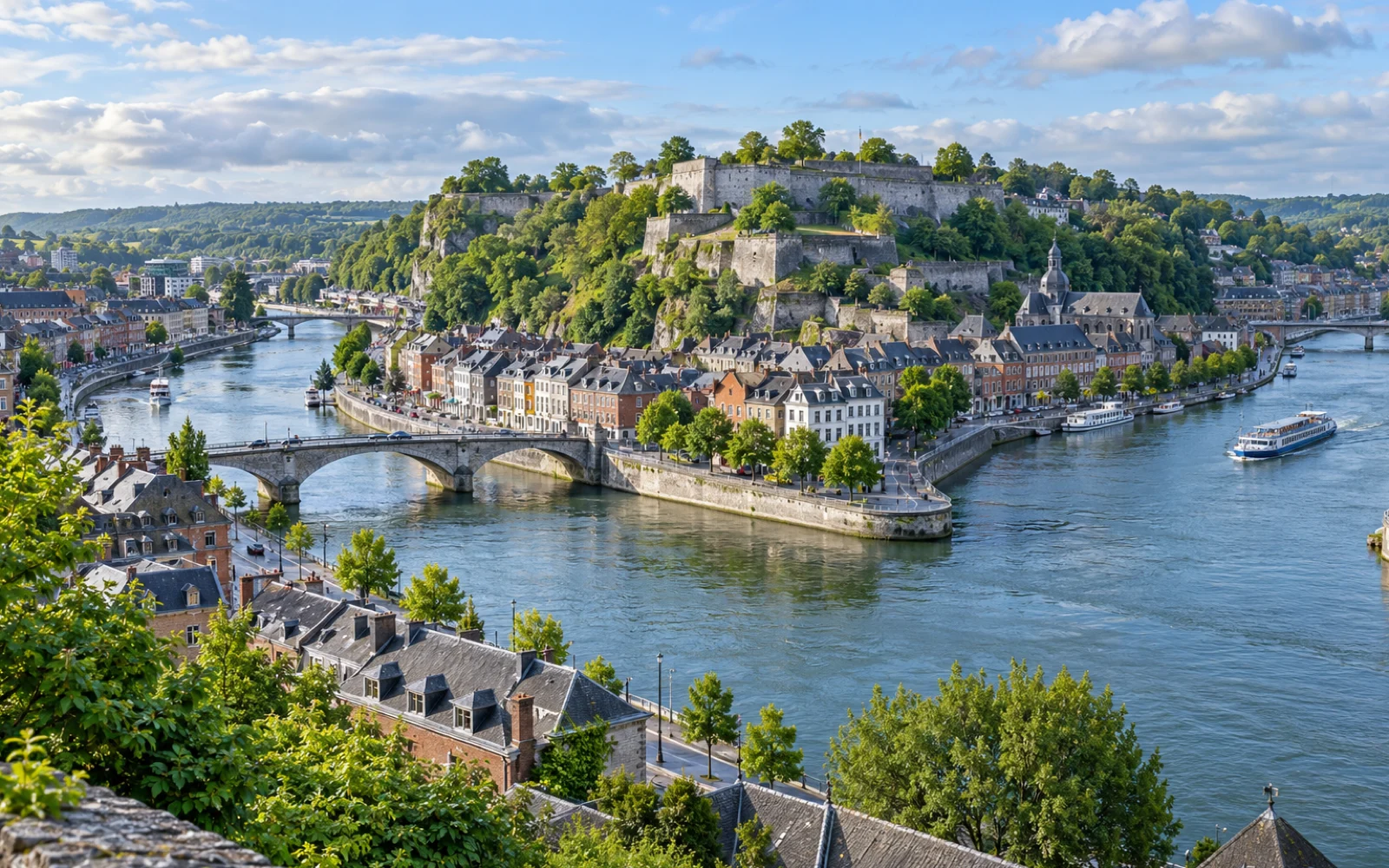
Cover: AI-generated illustration. © ANUSHKA DAHANAYAKE (PVT) LTD.
Namur stands where the Sambre meets the Meuse, and that meeting explains almost everything about it. The citadel above the confluence is first recorded in 937, on a site said to be Roman in origin and rebuilt several times, and its highest point stands at 190 metres. Menno van Coehoorn designed the current form, and after Louis XIV captured the town in 1692 Vauban rebuilt the citadel. William III retook Namur in 1695. Today the citadel is demilitarised and open to the public, and its tunnels and viewpoints let visitors read centuries of warfare in one hill.
The city is also the political heart of Wallonia. Namur was officially declared capital of Wallonia in 1986, and Parliament confirmed that position in 2010; the Parliament and Government of Wallonia sit here. Below the hill, Saint Aubin's Cathedral, built in the eighteenth century, is described as the only academic Late Baroque cathedral in Belgium. Its belfry belongs to the UNESCO site Belfries of Belgium and France. The city's most famous native artist is Félicien Rops (1833-1898), a graphic artist and illustrator of the Symbolist movement, and a museum in Namur is dedicated to him.
Namur's best-known tradition is a sport. Stilt jousting here dates to 1411, and the annual Combat de l'Échasse d'Or is held on the third Sunday in September between two teams, the Mélans and the Avresses. The tradition has been on UNESCO's Intangible Cultural Heritage list since 2021. Because the match falls on a fixed Sunday, a visit in September should be planned around its programme and the accommodation demand it brings.
The setting is calmer than its history. Namur lacks the performance of a heavily touristed city, which is its advantage: two days leave space for the fortress landscape, old streets and river geography to make sense together.
The citadel and the lower city
Walk from the station into the old centre, pausing around the cathedral and pedestrian streets before reaching the confluence. Then follow the official paths toward the citadel or use the cable car when operating. The cable car departs from Place Maurice Servais with its own hours and fare, and it is not guaranteed urban transport. On the hill, choose the visitor centre, guided underground passages or outdoor viewpoints according to time and mobility. Tunnels are cool, enclosed and uneven, so disclose claustrophobia or access needs before booking.
The citadel says its public park is free, while the guided passages, visitor centre and tourist train have separate admission. A cable-car ticket does not automatically include the tunnels, so compare each product individually and reserve a guided passage first. Prioritise the panorama, underground history or a long walk; trying all three before lunch causes fatigue. Use marked routes and avoid cliff edges for photographs.
Spend the second morning at the Musée Félicien Rops, checking opening days since smaller institutions may close on Mondays or at lunch. Walk the old centre and riverside without trying to cover every church, and consider a seasonal cruise for another view, confirming boarding conditions and water levels. Finish at a local cafe instead of returning at once to Brussels.
Planning a day trip or an overnight
If arriving by train for a day trip, choose one paid citadel experience in advance, put the fixed-time activity first and build the rest of the day around the lower city. Allow for the walk between the station, the cable-car base and the riverfront, and leave margin for a cable-car queue or a slower walk downhill. A second museum is best treated as a substitute when rain changes the plan. Check the last useful train before buying a tour slot.
An overnight stay lets the citadel take half a day and the lower city another half, which leaves the second day for one museum and a calm river walk. In the week before travel, verify cable-car operation, citadel tour language and time, Rops Museum hours and the final return train, and decide whether the panorama, the underground history or the long outdoor walk is the priority. Carry water, a layer for exposed viewpoints and shoes suited to slopes and tunnel floors. If the cable car or tunnels close, use the confluence, old centre and museum instead of substituting a rushed trip to Dinant. The old centre, riverfront and citadel approaches are lived public spaces, so keep doorways and paths clear, ask before photographing people and stay quiet in churches and guided tunnels.
Trains, hills, weather and access in one place
Namur station is walkable from the lower centre, but the citadel adds major elevation. Check SNCB/NMBS, TEC and the cable car separately. Drivers should use signed parking and avoid narrow old-centre routes. Namur can support an excursion to Dinant, abbeys and rural valleys, but each needs most of a day, so do not add two to a central two-day plan. Cyclists on the Meuse should verify surfaces, works and bicycle carriage rules on trains.
The lower centre is manageable for many visitors, though cobbles and kerbs remain. The citadel is steep and extensive even when the cable car removes the main climb, and it does not make every fortification path or tunnel accessible. Ask which entrances and routes meet your needs, and reserve Belgian rail assistance in advance. The confluence and riverside remain worthwhile when the hill is unsuitable.
Rain makes slopes, tunnels and stone paths slippery, and heat increases exposure on the hill, so carry water and a layer. Spring and early autumn are comfortable, and winter shortens daylight and may reduce seasonal services. Stay behind barriers at viewpoints, supervise children beside both rivers and do not enter closed fortification areas. Call 112 in an emergency. Try Walloon dishes, local strawberries in season or a regional beer, and check allergen information, as restaurants may close between lunch and dinner. French is the main language, so begin with a greeting.
Continue through the Belgium destination hub, read what makes Belgium special, follow the Meuse downstream to Liège in the Liège guide, or browse all country guides.
Questions and answers
Is Namur worth staying overnight?
Yes. Two days allow the citadel and old centre at a relaxed pace, with time for museums or the riverside after day visitors leave.
How do you reach Namur Citadel?
Visitors can walk uphill or use the cable car when operating. Confirm hours, weather closures and the internal route before depending on it.
Can you explore Namur without a car?
Yes. Trains serve the centre, and central sights are walkable. Buses or the cable car help with elevation; a car is mainly useful for regional trips.
Sources
Brussels · 50.8503° N, 4.3517° E
This story belongs to Namur, Belgium. Small, three-language and full of inventions the world knows without crediting Belgium: oil painting at its finest, the saxophone and lambic beer.