Madeira: Laurisilva Forest, Levadas and the Wine of the Sea
UNESCO laurel forest, irrigation channels cut through mountain ridges and a wine shaped by sea voyages explain Madeira beyond the viewpoints.
Cover: AI-generated illustration. © ANUSHKA DAHANAYAKE (PVT) LTD.
When João Gonçalves Zarco reached the east coast at what became Machico in 1419 and claimed Madeira for Prince Henry the Navigator, laurel forest covered most of the island. Settlers cleared the lowlands for sugar and vines, and the surviving forest, the Laurisilva, was inscribed on the UNESCO World Heritage List in 1999. The protected area covers about 15,000 hectares, around a fifth of the island. It is one of the clearest reasons to treat Madeira as more than a beach destination: a living forest above terraced hillsides that settlers shaped over six centuries.
Levadas: water carried across a mountain
The island's wet north and dry south explain its most distinctive structure. Settlers built levadas, irrigation channels that carry water from the rainy northern mountains to farms in the south, including tunnels up to five kilometres long cut through the central ridge. Today the maintenance paths beside them are the island's walking routes, which vary from broad forest tracks to narrow ledges beside drops. Water channels are infrastructure, not paddling pools, and heavy rain upstream can change conditions even if the trailhead is dry. Pick walks by verified distance, gradient, exposure, tunnels and current status, not by a social-media photograph.
Official trail status matters. Visit Madeira says IFCN-managed classified routes require an entry-slot reservation in 2026, generally with a fee. Routes can close after fire, rockfall or maintenance, so check the exact trail and booking slot.
Madeira wine and the sea voyage
Madeira wine owes its character to the sea. Producers fortified the wine, first with sugar-cane spirit, so it could survive long voyages, and discovered that heat and motion improved it, creating the style known as vinho da roda, wine that had made a round trip. The eighteenth century was its golden age, with the American colonies among the main buyers. Phylloxera struck in the late nineteenth century, and for most of the twentieth the wine's reputation declined until recent revival. Visit a producer in Funchal for a tasting with a plan not to drive afterward, and treat poncha, the strong local drink, with the same care.
Funchal's market, Monte and the coast
Funchal rewards a slow first morning. Mercado dos Lavradores is a working market as well as an attraction, so ask prices before accepting fruit samples and do not obstruct vendors for photographs. Continue along the waterfront and choose one museum, garden or historic interior. Monte is reached by road or cable car when operating; gradients mean the cable car does not make the whole visit step-free. Traditional basket sledges are an optional commercial ride, so confirm the route, price and return before joining a queue.
Madeira's coast is often rocky. Natural and constructed pools at Porto Moniz or Seixal may close in rough seas, so obey staff and avoid wave-washed platforms. Ponta de São Lourenço is exposed to sun and wind with little shade, and Cabo Girão, Câmara de Lobos and Santana each justify a stop, but choose one side of the island per day rather than trying to see every named village.
Guided walking is valuable for visitors unfamiliar with mountain weather or without transport. Verify insurance, licensing, group size and the plan if conditions deteriorate. Keep to the path, let faster walkers pass only at a safe widening and never climb barriers; if a route is closed, choose a garden, museum or open lower trail instead of stepping around the gate.
Mountains only when conditions agree
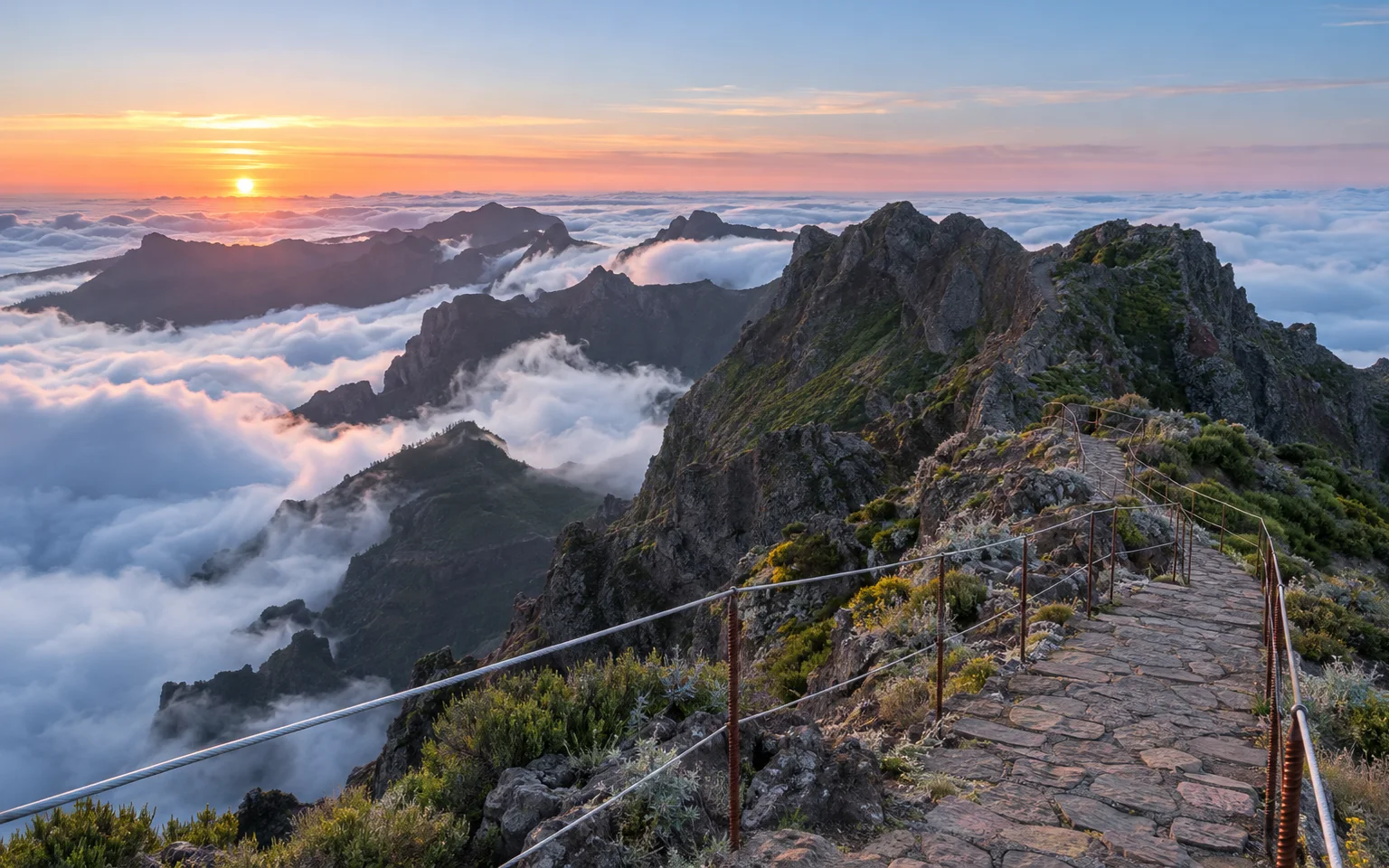
Pico do Arieiro can deliver extraordinary views above cloud, but visibility, wind and temperature change quickly. A sunny Funchal forecast says little about the summit. Check IPMA, webcams, road access and official trail status before departure, and carry a warm layer, waterproof shell, water and footwear with grip.
The crossing from Pico do Arieiro to Pico Ruivo is not an ordinary sightseeing walk. It includes exposed terrain, tunnels and substantial ascent. The official PR1 route page currently distinguishes a short return route to Pedra Rija from a full, one-way crossing, so confirm which variant is open and book the correct slot. Turn back if cloud, wind or fatigue removes your safety margin. Bring a torch for any route with tunnels, since a phone light is a poor substitute.
In villages, park legally, keep residential doors clear and spend locally as well as taking a photograph. Viewpoints have limited spaces, so continue to the next one if a car park is full instead of stopping on a tunnel approach or narrow road. A day plan that combines Funchal with one mountain area, one levada and one stretch of coast is usually more rewarding than a long circuit of the island, and it leaves room for a rain day when the high ground disappears into cloud.
Getting around and practical costs
Central Funchal is easiest for restaurants, buses and organised pickups. Madeira Airport's runway is exposed to wind, so disruption is possible; do not schedule a prepaid mountain activity immediately after arrival. Public buses are useful but make spontaneous circuits difficult; consult SIGA and operator notices, especially for last returns. Organised transfers support trailheads and one-way walks.
Drivers should request an automatic if uncomfortable with hill starts and reserve a small car with enough power. Roads are steep, wet and enclosed by tunnels, so use lower gears on descents and never stop inside or immediately outside a tunnel. Build costs from accommodation, airport transfer, one or two guided or ticketed activities and meals. Try espetada, black scabbardfish, milho frito and bolo do caco, and state allergies clearly.
Access, safety and final checks
Funchal promenades, newer hotels and selected attractions can be accessible, while steep streets, levada edges and old buildings present barriers. Ask for the exact entrance, gradient and accessible toilet. The principal risks are falls, sudden weather, heat exposure, rough ocean and road incidents. Tell someone your route, carry offline mapping and call 112 in an emergency; do not depend on mobile reception in tunnels or ravines.
Forty-eight hours before each outdoor day, check the official trail page, forecast and transport booking, then repeat that morning. A clouded summit can become a memorable garden or coastal day. Explore the Portugal destination hub, read what makes Portugal special, compare another Atlantic archipelago in the Azores guide, pair the island with the Lisbon guide and browse more practical country guides.
Questions and answers
How many days do first-time visitors need in Madeira?
Four days introduce Funchal, one mountain area, a levada and part of the coast. Seven days give enough flexibility for changing trail and weather conditions.
Can you visit Madeira without hiring a car?
Yes, if you base yourself in Funchal and combine buses with reputable transfers or tours. A car adds flexibility, but steep roads, tunnels and limited viewpoint parking demand confident driving.
Must Madeira walks be booked?
In 2026, IFCN-managed classified trails require an entry-slot reservation and generally a fee. Check the official Visit Madeira and IFCN pages for the exact route and current rule.
Is Pico do Arieiro always accessible?
No. Wind, fire damage, maintenance and landslide risk can close or restrict mountain routes. Never bypass a closure, and do not assume an old blog or map reflects current access.
Sources
Lisbon · 38.7223° N, 9.1393° W
This story belongs to Madeira, Portugal. A small country that faced the Atlantic, with the oldest alliance still in force, the first legally marked wine region and a quiet pride at home.