Lisbon First-Time Visitor Guide: A Practical Three-Day Plan
A hill-aware three-day Lisbon plan through Baixa, Alfama and Belém, with practical transport, booking and accessibility decisions.
Lisbon is a capital that has been broken and rebuilt, and it wears both histories openly. Its monuments were paid for by the spice trade that followed Vasco da Gama's voyage to India, its best-known music grew in the taverns and alleys of Alfama and Mouraria, and its centre was redrawn on a grid after the earthquake of 1 November 1755. For Lisboetas the pride sits in these layers, and for visitors they explain why a city of steep hills feels so distinct from any other European capital.
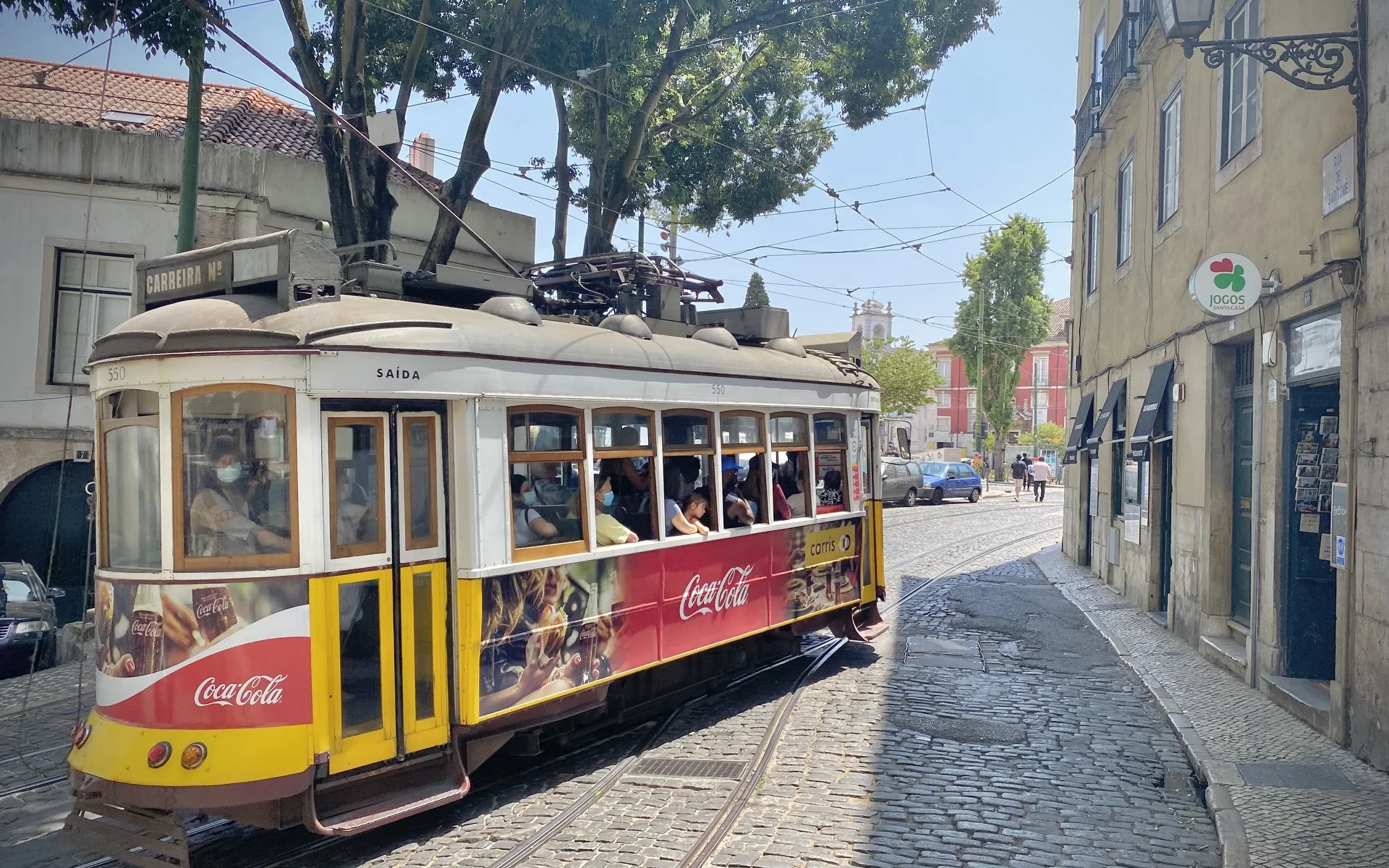
Cover photograph: tram 28 in Alfama, by Sharon Hahn Darlin/Wikimedia Commons, licensed CC BY 2.0.
Decide what to book before arrival
Choose one high-priority timed attraction per day and use its official website, because access arrangements vary during restoration or at busy periods. Reserve a fado performance if a particular house matters, but leave ordinary meals flexible. Check Carris service information for trams and funiculars and the IPMA forecast before committing to exposed viewpoints; rain makes the polished calçada especially slippery.
Belém: stone carved with ropes and sea creatures
The Jerónimos Monastery and the Tower of Belém were inscribed together on the World Heritage List in 1983. The monastery was begun in the first years of the sixteenth century to the plans of Diogo de Boitaca and funded in part by a 5 percent tax on the trade with Africa and the East, the Vintena da Pimenta, and its cloister is the finest statement of the Manueline style, with armillary spheres, ropes, coral and sea creatures cut into limestone. Vasco da Gama and the poet Luís de Camões lie in the church, and Fernando Pessoa's tomb is in the cloister. The tower, a fortified gateway to the Tagus built in the 1510s and 1520s, was raised to guard the river and to mark the age of the voyages.
The earthquake and the grid of the Baixa
On the morning of 1 November 1755, an earthquake, tsunami and fires destroyed the lower town. The Marquis of Pombal had the Baixa rebuilt on straight streets opening onto the riverside Praça do Comércio, with timber-framed walls that are counted among the earliest earthquake-resistant building techniques in Europe. Accounts say that models of the new buildings were tested by troops marching around them to imitate tremors. The estimated death toll runs to tens of thousands, and the reconstruction became the template for the Pombaline style. Alfama, on firmer ground uphill below São Jorge Castle, largely escaped, which is why its tangle of lanes still follows a medieval plan.
Fado: a song of longing
Fado, a voice with the twelve-string Portuguese guitar, grew up in Lisbon's working-class quarters in the nineteenth century, and Amália Rodrigues, whose career began in 1939, carried it across the world. UNESCO added it to the Representative List of the Intangible Cultural Heritage of Humanity on 27 November 2011, at a session in Bali where Lisbon's mayor António Costa played Amália's recording of Estranha Forma de Vida to mark the moment. Her international career took her to dozens of countries. The word saudade, a longing with no exact English equivalent, is its subject, and the Museu do Fado in Alfama traces how a tavern song became a national symbol.
Tiles, tarts and the table
Azulejos, painted ceramic tiles, cover churches, stations and ordinary apartment blocks, and the National Tile Museum follows five centuries of them. Food has its own origin story. After Portugal's convents and monasteries were closed in 1834, the story goes, the monks of Jerónimos began selling custard tarts; the Pastéis de Belém bakery next door says it has made them since 1837 from a closely guarded recipe. In June the city grills sardines for the Santo António festivities.
Alfama, trams and viewpoints
Alfama, the oldest quarter, still follows a medieval plan below São Jorge Castle, and the vintage tram 28 rattles through it and up to Graça. The miradouros, or public viewpoints, such as Santa Luzia and Senhora do Monte, give the terracotta roofs and the Tagus back to anyone who climbs. Funiculars and the Santa Justa lift handle the steepest slopes.
Three days that respect the hills
Distance on a Lisbon map misleads: a calçada, staircase or crowded tram can turn ten minutes into thirty. The days below keep each half-day to one level and use transport for the big jumps.
Day one, Baixa to Alfama. Start at Praça do Comércio and walk through the Pombaline grid toward Rossio, then climb to the Sé, São Jorge Castle and the viewpoints. Tram 28 is ordinary public transport used by residents, so board only when there is room or walk part of the route. Finish at a recognised fado house; arrive on time and stay quiet while the singer performs.
Day two, Belém. Take the tram, bus or train west and begin at Jerónimos, then walk past the Monument to the Discoveries to the tower. The Age of Discoveries also meant conquest, enslavement and colonial extraction, so museum context adds more than the triumphal monuments alone. Choose one museum such as MAAT or the Museu de Marinha, not several, and skip the longest tart queue; the tarts are sold across the city. Sintra deserves a separate day; trains leave from Rossio, and Pena Palace, the Moorish Castle and Quinta da Regaleira cannot be rushed in a half-day.
Day three, lived-in Lisbon. Estrela's basilica and garden lead to Campo de Ourique for lunch among residents, or the Gulbenkian Museum and its gardens give a calmer afternoon. From the north, Porto is a different city again, and the Portugal overview shows how the other regions fit together.
Small practical points that save time
Lisbon Airport is on the metro at Aeroporto station, and a rechargeable card covers metro, buses, trams and funiculars; buy it from official machines. The Lisboa Card pays off only if its included museums match the plan, so add up the entrances first. Metro Lisboa advises travellers with reduced mobility to confirm that both stations on a journey are step-free and that lifts are working; older trams have high steps and the steepest slopes are hard going, so base yourself in Baixa, Avenida da Liberdade or Saldanha if that matters. Summer heat makes exposed hills tiring, so climb early, carry water and shelter in a museum or long lunch at midday. Wet calçada is slippery in every season, and pickpockets work the crowded trams and viewpoints, so keep bags closed. Miradouros are shared with residents, so buy from a nearby kiosk and take litter away. Ask the price of fish sold by weight before ordering, and decline cover-charge bread or olives you do not want. Trains from Cais do Sodré run along the coast to Cascais for a sea-air break from the hills. Closures and restoration can change familiar routes, so confirm monument tickets and funicular status shortly before travel.
Questions and answers
How many days are enough for a first Lisbon visit?
Three full days cover the historic centre, Belém and one or two lived-in neighbourhoods at a reasonable pace. Add a fourth day if Sintra matters rather than compressing it into an already full city itinerary.
Do visitors need a car in Lisbon?
No. Metro, buses, trams, funiculars, trains and walking cover the city and common day trips. A car creates parking and narrow-street problems in central districts.
Is tram 28 the best way to see Lisbon?
It is historic and scenic but often crowded. Ordinary buses, metro and walking are more reliable for getting around; ride early or choose another tram route if the queue would dominate the day.
Is Lisbon accessible for travellers with limited mobility?
Some modern metro stations and vehicles are accessible, but steep gradients, cobbles and older trams remain difficult. Plan routes using lift-equipped stations and contact venues about entrances before visiting.
Sources
Lisbon · 38.7223° N, 9.1393° W
This story belongs to Lisbon, Portugal. A small country that faced the Atlantic, with the oldest alliance still in force, the first legally marked wine region and a quiet pride at home.