Cascais: Royal Summers, Paula Rego and the Atlantic Edge
A fishing port made a royal summer resort in 1870, with a Souto de Moura museum for Paula Rego and a wild Atlantic coast to respect.
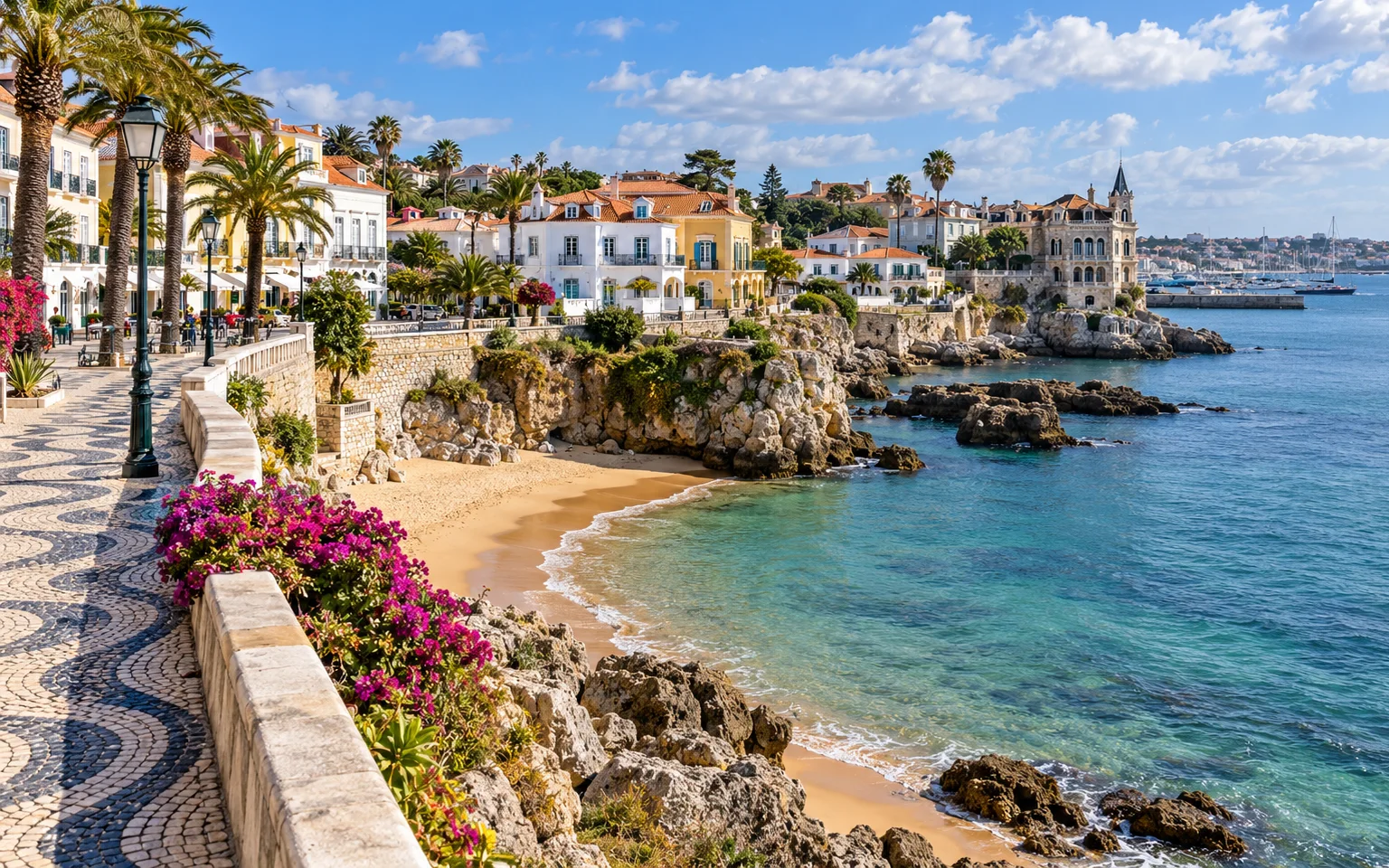
Cover: AI-generated illustration. © ANUSHKA DAHANAYAKE (PVT) LTD.
Cascais was a small village of fishermen and farmers in the second half of the twelfth century, administered from Sintra, and grew into a busy fishing port because of its sheltered bay. A tourism history dates its independence as a town to 1364, under King Pedro I. The decisive change came in 1870, when King Luís I chose Cascais as his holiday resort and converted the governor's quarters in the citadel into a royal palace. In 1878 the citadel received the country's first electric lights. For decades the court returned every summer, nobles built villas, and a fishing port became a seaside resort.
The royal summer that made a resort
That royal habit is visible on the waterfront. The citadel district is the old fortified core, and parts of it remain in official use, so signs and barriers decide what can be entered. The villas that followed the king line the streets above the bay, and the sea road toward Estoril keeps the promenade character of that era. The royal family came every summer until 1908, so the town's beaches, gardens and museums were shaped by nearly four decades of court life. Walk the district as a living town: keep doorways clear, ask before photographing traders and buy thoughtfully in the market area.
Casa das Histórias Paula Rego
The museum that now anchors Cascais's cultural life opened in September 2009 and was designed by Eduardo Souto de Moura, an architect Paula Rego chose herself. Its red concrete walls and two pyramidal towers rising above the treetops draw on Raul Lino's houses in Cascais, the National Palace of Sintra and the Alcobaça monastery. Rego is one of the leading figures of Portuguese painting, and the building holds her work in a setting that is itself part of the town's architectural story. Check opening days before planning around it, and add the Condes de Castro Guimarães museum if the park setting appeals.
The wild edge: Boca do Inferno and Guincho
West of the old centre the character changes. Boca do Inferno is a rock formation that is most dramatic in energetic seas, which are also when edges and spray are dangerous. Stay behind barriers, keep children close and never stand on wave-washed rock. Beyond it, Guincho is broad, scenic and exposed; wind and surf suit experienced water sports under supervision, not casual swimming on every day. Praia da Rainha and Praia da Conceição are small, central coves that fill quickly, and the promenade toward Estoril links several beaches with an easy retreat to the train.
Two days in Cascais
Day one starts in the old centre before day-trip groups arrive. Continue to the bay and marina and choose one museum, then follow the signed coastal path to Boca do Inferno and return before dark unless the route and lighting are clear. Finish with dinner, compare displayed menus and ask whether fish is priced by portion or weight.
Day two is a choice. A beach day suits Rainha, Conceição or the Estoril promenade, while a wider-coast day uses a bus, taxi or tour to explore part of the Sintra-Cascais Natural Park. Pick one route and confirm the return. Cabo da Roca and Sintra are separate logistical commitments, and adding both to Cascais in one day usually produces queues and road time rather than understanding.
Trains, tickets and where to stay
CP's Cascais line runs from Lisbon's Cais do Sodré along the coast to Cascais; the Lisbon guide covers the capital end. Check live service notices and validate your ticket. The station is close to the old centre. Staying centrally suits car-free evenings, though restaurant streets can be noisy, and Estoril is another rail-connected base. Properties toward Guincho need bus, taxi, bicycle or car planning.
Budget for the Lisbon train, one museum or activity, meals and a return from the western coast. Beaches and much of the waterfront are free, while summer weekends raise room prices. Seafood is a natural focus, alongside grilled fish and arroz de marisco; walk one street inland to compare prices and state shellfish allergies clearly.
Tourist streets contain both good businesses and inflated menus, and a place one block back from the main squares often serves the same grilled fish at a calmer pace. Tipping modestly for good service is optional. Keep noise down when leaving bars, because residents live above the central streets. Carry a reusable water bottle, use bins, remove cigarette ends and never leave food that attracts gulls or other wildlife on the beach.
Swimming, cliffs and sun
The Atlantic is cold and changeable. Under the Portuguese maritime authority's beach flag rules, green permits bathing and swimming, yellow permits bathing but prohibits swimming, and red prohibits entering the water. Unstaffed water is not automatically safe, and shore break and rip currents affect even strong swimmers. Do not swim after drinking, and call 112 in an emergency.
Cliffs also erode, so avoid sitting directly below overhangs. Cascais is often cooler and windier than central Lisbon, particularly toward Guincho, so bring a layer and check IPMA. Bicycles suit confident riders, but wind and shared paths are demanding; check brakes and helmet, and do not ride fast on crowded promenades.
Wind decides much of the day on this coast. Morning cloud may clear, while a strong afternoon breeze can change comfort quickly, so pack a light jacket even in summer and keep one indoor option such as a museum for the hours when the beaches are unpleasant. On a clear evening the bay is at its best from the marina wall.
Access and etiquette
The railway and central waterfront work for many travellers, but old-town paving, sand and cliff paths vary. Cascais municipality lists accessible beaches and seasonal assisted bathing; confirm dates, toilets and parking at the exact beach. Ask museums about the usable entrance and lift. Families should carry shade and water, agree a meeting point and choose a staffed beach with toilets over a remote cove. Respect private boats, fishing work and residential entrances, and confirm airspace and privacy rules before launching a drone.
Read what makes Portugal special, explore the Portugal destination hub and more practical country guides. Two days before arrival, verify CP service, museum opening, beach status and the last bus from any outer stop, and keep one indoor option for wet days.
Questions and answers
Is Cascais an easy day trip from Lisbon?
Yes. Direct trains from Cais do Sodré make a focused old-town and waterfront day straightforward. Check engineering notices and avoid adding both Sintra and Guincho to the same short day.
How many days should visitors spend in Cascais?
One day covers the centre and nearby coast; two days allow a beach or museum plus the exposed western shoreline without rushing.
Which Cascais beach is best?
There is no universal best. Central coves are convenient and can be crowded, while Guincho is larger, windier and exposed to stronger surf. Choose by conditions and access needs.
Can Cascais be explored without a car?
Yes. The train reaches the centre, and walking, buses, taxis or a carefully planned bicycle cover most visitor needs. A car is unnecessary for the compact old town.
Sources
Lisbon · 38.7223° N, 9.1393° W
This story belongs to Cascais, Portugal. A small country that faced the Atlantic, with the oldest alliance still in force, the first legally marked wine region and a quiet pride at home.