Braga for First-Time Visitors: A Useful Two-Day Guide
A practical Braga itinerary connecting its living religious heritage, historic centre and Bom Jesus without reducing the city to a staircase photograph.
Cover: AI-generated illustration. © ANUSHKA DAHANAYAKE (PVT) LTD.
Braga is one of Portugal's oldest cities and remains an active religious centre rather than an open-air museum. Church bells, university life, cafés and ordinary commerce share the compact centre, while Bom Jesus do Monte rises in wooded hills outside it. Two days allow both layers without treating worship spaces as scenery.
This route starts in the walkable centre, then dedicates a separate half-day to Bom Jesus. Check official opening hours and transport close to travel, especially around Holy Week, feast days and public holidays.
Arriving and choosing a base
Braga has rail connections through northern Portugal, including services from Porto with journey type and duration varying. Read CP's current timetable and check whether a transfer is required. The railway station lies west of the centre; walking is possible with light luggage, while a local bus or taxi may suit rain or reduced mobility.
Stay inside or near the central avenues for restaurants and level evening walks. Accommodation beside the nightlife area may be noisy. Ask about lift access, parking and late arrival because attractive historic buildings can hide stairs and restricted vehicle streets.
Braga is compact enough that a car adds little to a central stay. Use one only for a broader Minho route, and leave it in legal parking and never circle pedestrian areas.
Day one: cathedral, centre and Roman layers
Begin at Braga Cathedral, traditionally regarded as Portugal's oldest cathedral. Visitor access changes around services, weddings and religious observance. Dress respectfully, silence the phone and never cross a barrier or interrupt prayer for a photograph. A treasury or chapel ticket may use separate hours; confirm at the official desk.
Walk through the surrounding historic streets toward Jardim de Santa Bárbara and the former archbishop's complex. The garden is small and best appreciated without blocking paths or staging long photo sessions. Continue through Praça da República and Avenida Central to understand how the ceremonial and commercial city connect.
Choose one additional interior or museum. The Biscainhos Museum, image museum and archaeological sites tell different stories; opening days may differ. Roman Bracara Augusta survives in dispersed remains, so a focused museum visit often provides more context than chasing every fragment.
Eat in the centre and return after dusk for the lively but manageable public spaces. Keep voices down near residences and religious houses.
Day two: Bom Jesus do Monte
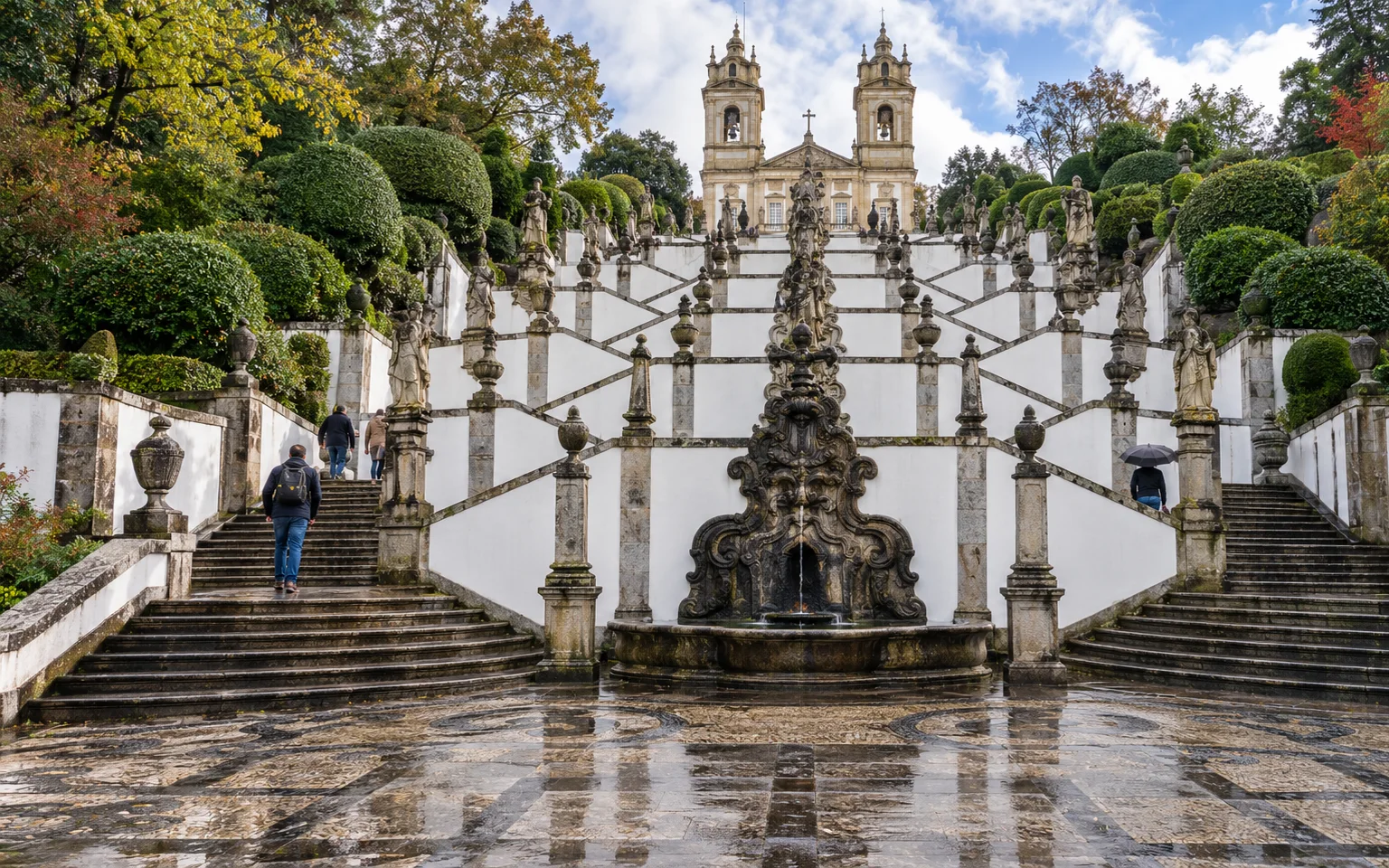
UNESCO-listed Bom Jesus is a sanctuary landscape, not simply its famous zigzag stair. The route develops through woodland, chapels, fountains, terraces and church, with the ascent forming part of a devotional narrative. Visitors should make room for pilgrims and services.
Reach the lower area by current bus, taxi or organised transport. The water-counterweight funicular climbs beside the staircase when operating. Confirm hours and accessibility on the day. Walking every stair is optional; taking the funicular does not diminish the visit.
At the top, explore the church precinct, viewpoints and park at a pace appropriate to weather. Stone can be slippery after rain, and summer heat makes the exposed stairs demanding. Carry water, use railings and avoid sitting on fountains or religious sculpture.
If energy remains, Sameiro Sanctuary lies farther along the hills, but it is not a casual add-on for every visitor. Check transport back, since a continuous pedestrian route is not guaranteed. Alternatively, return to Braga for lunch and a slow neighbourhood afternoon.
A separate Guimarães decision
Guimarães is close enough for a dedicated day by rail or bus, not proof that both cities fit comfortably into a few hours. Its castle, ducal palace and historic centre deserve their own opening checks and walking time. If Braga is a day trip from Porto, adding Guimarães usually means skipping the context that made either place worth visiting.
Travellers with three nights can use Braga as a base for Guimarães or the Minho countryside. Confirm the last return service and avoid relying on a route-planning app that mixes stations or operators without live notices.
Food and local etiquette
Braga specialties include bacalhau à Braga, rojões, caldo verde and sweets associated with convent traditions. Frigideiras are savoury pastries useful for a quick lunch. Ask about portion sizes and whether fish is priced by weight. State allergies clearly, especially around egg-rich sweets, shellfish and shared frying oil.
Lunch menus away from the busiest squares can provide value. A greeting before ordering is appreciated. Tipping modestly for good service is optional. During Holy Week, streets and restaurant demand change; processions are acts of faith, so stand clear, dress considerately and avoid flash photography.
Costs and booking
Braga can be good value compared with larger city centres. Build the budget from accommodation, rail, local transport to Bom Jesus, one or two museum admissions and food. Churches may be free while associated collections charge. Carry a small donation only if you wish; admission and worship are different things.
Reserve rooms early for Semana Santa and major university or religious events. Ordinary museum tickets rarely require months of planning, but opening days should be checked. Keep a weather alternative and avoid prepaying a rigid regional circuit.
Accessibility and family needs
Central avenues are relatively manageable, while old lanes, church thresholds and Bom Jesus steps present barriers. The funicular may reduce the climb but does not guarantee every terrace or interior is step-free. Contact Visit Braga or the exact venue for entrance, lift, toilet and assistance details.
A vehicle drop-off near an upper entrance may suit some travellers, subject to current access. Families should choose the funicular in one direction, allow park time and keep children away from road edges and fountains. Pushchairs work better on central avenues than historic stairways.
Weather and safety
Northern Portugal receives more rain than many visitors expect. Carry a waterproof layer and shoes with grip. Summer can still be hot, particularly on stone stairs. Plan the exposed climb early or late, and never turn it into a competition.
Use ordinary city precautions around bags and phones, especially at stations and crowded festivals. Marked crossings matter because central streets remain active. Call 112 in an emergency. If severe weather closes a park area, follow the restriction and use a museum day.
Final check
Two days before arrival, verify CP services, cathedral access, Bom Jesus transport and funicular operation, weather and any event closures. Save the accommodation address and last return journey offline. Leave a half-day flexible: Braga's value comes from seeing a living city between monuments.
Explore the Portugal destination hub, read what makes Portugal special, compare another historic centre in the Coimbra guide and browse more practical country guides.
Questions and answers
How many days are enough for Braga?
Two days allow the historic centre, cathedral and Bom Jesus at a comfortable pace. One day works with an early arrival and no attempt to combine several regional towns.
How do visitors reach Bom Jesus do Monte?
Use a current city-bus connection, taxi or authorised tour to the lower or upper area. The historic water-powered funicular can avoid many stairs when operating; check its timetable locally.
Can Braga and Guimarães be visited on the same day?
They can, but each becomes a short highlights stop. Stay two nights or dedicate a separate day if you want interiors, meals and Bom Jesus without rushing.
Is Braga only a religious destination?
No. Its churches are central to the story, but Braga also has Roman archaeology, gardens, contemporary university life, food and an active civic centre.
Sources
Lisbon · 38.7223° N, 9.1393° W
This story belongs to Braga, Portugal. A small country that faced the Atlantic, with the oldest alliance still in force, the first legally marked wine region and a quiet pride at home.