Coimbra for First-Time Visitors: A Practical Two-Day Guide
A useful Coimbra itinerary that explains the university's timed visits, the city's steep geography and how to experience student culture respectfully.
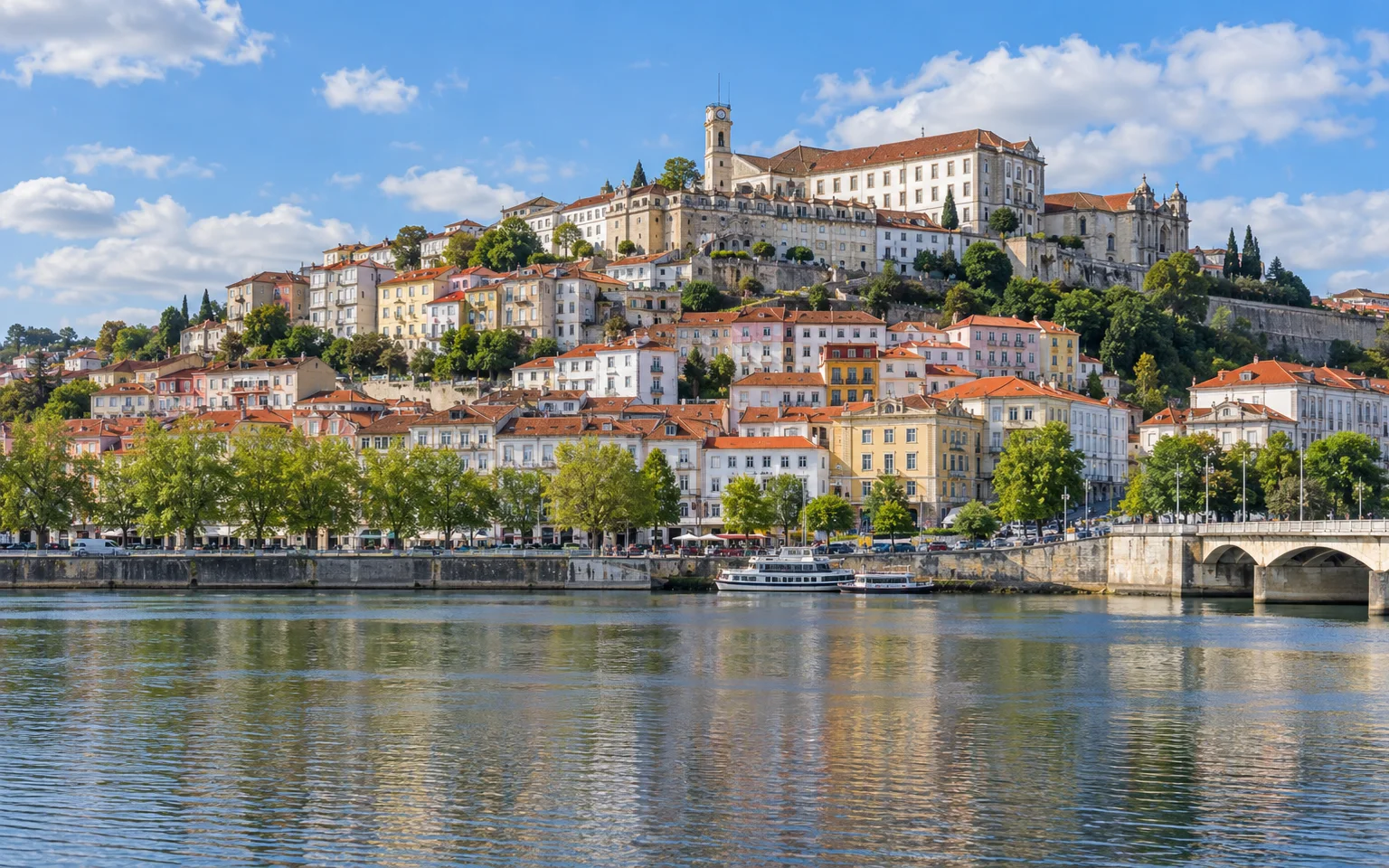
Cover: AI-generated illustration. © ANUSHKA DAHANAYAKE (PVT) LTD.
Coimbra is defined by its hill. The historic university occupies the summit. Medieval streets descend through the old cathedral and commercial centre to the Mondego River. Planning from high to low turns a tiring maze into a coherent visit and leaves time to understand the student traditions that still shape the city.
Two days are ideal. A rushed stop between Lisbon and Porto can work. But only if luggage, station transfer and the university's timed entry are solved before arrival.
Arrival, stations and a sensible base
Long-distance trains commonly use Coimbra-B, outside the walkable centre. Confirm the current connection to Coimbra's central station or use an authorised taxi. Do not assume the station name on a booking means the old-town terminus. Allow extra time when connecting to a fixed university visit.
Baixa is convenient for restaurants, river walks and flatter access, though the university climb remains. Alta provides atmosphere near the campus but involves gradients and can be lively during student events. A hotel near the river may suit travellers with a car, yet parking rules and bridge crossings should be checked.
Ask whether accommodation has a lift, where a vehicle can legally stop and whether street noise is likely. Older buildings often have attractive interiors above narrow stairs.
Day one: university first, then descend
Reserve the University of Coimbra visitor circuit directly and read which spaces your ticket includes. The Joanina Library entry is tied to the date and time printed on the ticket; the university says other spaces on a self-guided ticket can generally be visited over two days. Its rules also exclude children under six from the library. Arrive early enough to find the correct entrance without sprinting. Follow staff instructions on bags and photography; the collection is not a backdrop.
The Joanina Library, built between 1717 and 1728 under King João V, is the baroque centrepiece. The Royal Palace, ceremonial halls, chapel and courtyard explain why UNESCO inscribed the university, Alta and Sofia in 2013: the university traces its foundation to King Dinis in 1290, and its buildings record more than seven centuries of Portuguese learning. Look beyond a single ornate room: the site connects royal power, education and Portuguese-speaking academic networks, including difficult colonial histories worthy of thoughtful attention.
After the visit, descend toward Sé Velha, Coimbra's Romanesque old cathedral. Services take priority over sightseeing. Continue through the Arco de Almedina into Baixa, using signed streets and skipping the steepest shortcut. Smooth stone becomes slippery in rain.
Finish beside the Mondego. The riverside offers a level recovery walk and a clear view back to the university hill. Keep cycle paths open and avoid relying on a river activity if water or weather conditions are uncertain.
Day two: lived-in Coimbra
Begin with Santa Cruz Monastery on Praça 8 de Maio, checking worship and visitor hours. The surrounding Sofia Street, laid out in the sixteenth century as a street of colleges, is part of Coimbra's educational heritage and helps connect the university to the wider city. Choose one museum or historic interior instead of collecting every admission.
Cross toward Santa Clara if time and mobility allow. The Monastery of Santa Clara-a-Velha tells a story shaped by river flooding; Santa Clara-a-Nova sits higher. Portugal dos Pequenitos may interest families. But verify age suitability, hours and cost before adding it.
Return through a neighbourhood café or the municipal market area. Ask before photographing traders, buy something if sampling and keep entrances clear. A free afternoon provides room for the Machado de Castro National Museum, botanical garden or a slower river walk according to weather.
Student culture without turning it into theatre
Black academic capes, faculty ribbons and ceremonial songs belong to an active university community. Do not pull on clothing, interrupt rituals or pose students without consent. Academic events can change crowd levels and opening access. Queima das Fitas in May and Latada in autumn bring celebrations and late noise. Travel for them deliberately or choose quieter dates.
Coimbra fado differs from Lisbon traditions and is closely associated with students, male voices and the Portuguese guitar. Choose an established performance that explains its context. Silence during songs is respectful. Confirm the format and whether food or drinks are included before booking.
Food and local rhythm
Regional choices include chanfana, slow-cooked goat. Leitão from nearby Bairrada. Pastries such as pastéis de Santa Clara. And wines from central Portugal. Ask about portion size because traditional dishes may be intended for sharing. State allergies directly, particularly around nuts, egg-rich convent sweets and shared kitchens.
Lunch is often the best-value full meal. Save two options near the day's final stop and check their own hours, since businesses may close between service periods or on particular weekdays. A greeting in Portuguese is appreciated, and a modest tip for good service is optional.
Costs and reservations
Build the budget from accommodation, station transfers, the university circuit, one optional museum, meals and contingency. Much of the old town, river and campus atmosphere can be experienced free. Student periods and major events can raise room demand even outside summer.
Reserve the university and accommodation first. Leave ordinary meals flexible. Buying a combination ticket is useful only when its included venues fit the route and opening day. Recheck live prices instead of depending on a dated article.
Accessibility, heat and safety
Coimbra's central challenge is gradient. Historic lanes combine slopes, cobbles, steps and narrow pavements. Contact the University and individual museums about the exact step-free entrance, lift, seating and accessible toilet. A taxi to the upper campus followed by a mostly downhill route can reduce effort. However, downhill cobbles still require care.
Summer heat makes the climb demanding. Start early, use shade and carry water. Winter rain makes polished stone slick. Keep bags closed in crowded stations and student events. But Coimbra is generally navigated with ordinary urban precautions. Use marked crossings and call 112 in an emergency.
Families should reduce the monument count and plan toilets and food. The university remains a place of study. So keep noise controlled around working spaces.
Final planning check
Two days before arrival, verify the exact rail station, local transfer, university entry, attraction closures and forecast. Store tickets offline and identify a luggage facility if Coimbra is a stop between cities. Leave at least one hour unassigned for a delayed train, a longer library visit or a café discovered on the way down.
If combining Coimbra with another city, protect the onward journey rather than booking the final possible train. The university visit can run longer than expected, and reaching Coimbra-B adds a separate transfer. Keep the carriage and seat details available offline, board the correct service and allow passengers to leave before handling luggage through the door.
For urgent help, Portugal's emergency number is 112. Save the accommodation address in Portuguese, carry essential medicine and keep travel insurance details accessible. Pharmacies display a green cross. But opening hours vary and an overnight rota may apply. These small preparations are more useful than an overpacked schedule and make it easier to slow down when the hill, heat or rain demands a change.
Read what makes Portugal special, continue through the Portugal destination hub and compare more practical country guides.
Questions and answers
How many days are enough for Coimbra?
Two days allow a properly timed university visit, the old town, river and one additional museum or monastery. One day works if you reserve the university and accept a steep, focused route.
Can Coimbra be visited as a day trip by train?
Yes, but confirm whether the train uses Coimbra-B and allow for the transfer into the centre. Reserve a university time that leaves a safe arrival margin.
Does the Joanina Library require advance booking?
Its visitor circuit uses controlled entry and availability can sell out. Check the university's official ticket options and selected time before travel.
Is Coimbra accessible?
Some museums and newer river areas have step-free provision, but the historic hill has steep streets, cobbles and old interiors. Ask each venue about its usable entrance and route.
Sources
Lisbon · 38.7223° N, 9.1393° W
This story belongs to Coimbra, Portugal. A small country that faced the Atlantic, with the oldest alliance still in force, the first legally marked wine region and a quiet pride at home.