Jaffna for First-Time Visitors: Nallur, the Fort and the Tamil North
Jaffna's Tamil kingdom, Nallur Kandaswamy Kovil, its layered fort and the library that is a symbol of Tamil memory, followed by respectful practical advice for visitors.
Jaffna was the capital of a Tamil kingdom for four centuries. The Jaffna Kingdom is traditionally dated from 1215 to 1619, with its capital at Nallur and the Nallur Kandaswamy temple at the heart of it; Tamil was the official language, Shaivism the state religion, and revenue came from pearls, elephant exports and land taxes. The Portuguese conquered the kingdom in 1619 after King Cankili II was defeated, and he was captured and executed in Goa. Everything a visitor sees in the north rests on that long history.
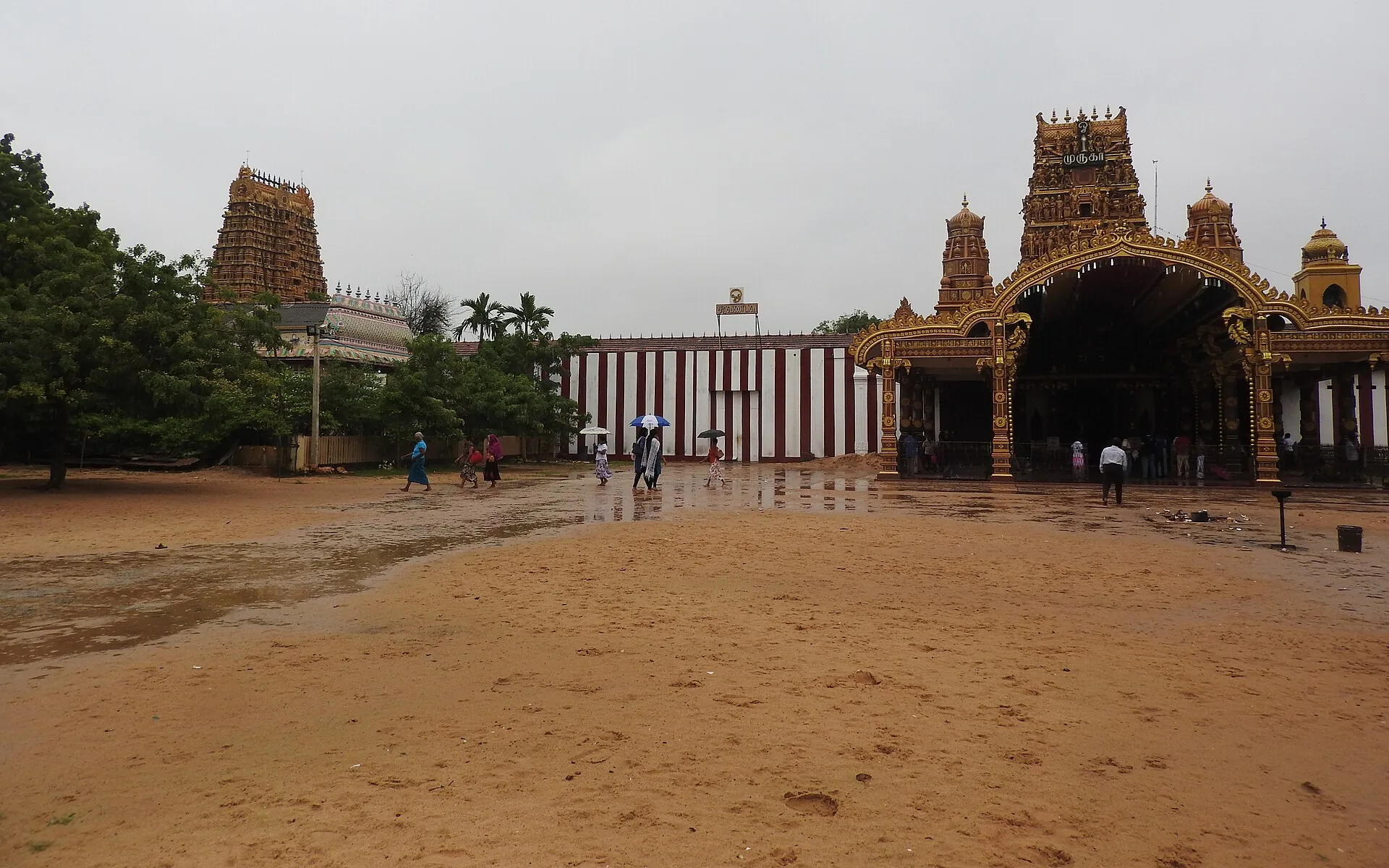
Cover photograph: the rain-wet entrance grounds of Nallur Kandaswamy Kovil, photographed in October 2019 by Yercaud-elango / Wikimedia Commons, CC BY-SA 4.0. Cropped and converted to WebP.
Nallur Kandaswamy Kovil
The temple is dedicated to Murugan, shown by the sacred spear, the vel. The Portuguese commander Filipe de Oliveira destroyed an earlier temple in 1624, and the present building is dated to 1734, in the Dutch period, when it was built by a Dutch-office shroff named Ragunatha Maapaana Mudaliyar. Its five-story east gopuram is Dravidian in style, and the Kubera Raja gopuram, unveiled in 2015, is described as the largest gopuram on the island. The annual festival lasts 25 days, begins with the raising of the flag and reaches its climax with the chariot procession. Even outside the festival, it is a working temple.
The fort that changed hands
The Portuguese built Jaffna Fort in 1618 under Phillippe de Oliveira, calling it the Fortress of Our Lady of Miracles. The Dutch captured it in 1658 under Rijcklof van Goens and renovated it by 1680, and the British took it in 1795 and kept a garrison there until 1948. Between 1985 and 1995 the LTTE held it, the army retook it in 1995 after a 50-day siege, and it is being renovated with Dutch funding while remaining garrisoned, so visitor access is limited. It records Portuguese, Dutch, British and war history in one place, which deserves more than a sunset stop.
The library and Tamil memory
Jaffna Public Library opened in 1933 and held more than 97,000 books and manuscripts when it was burned in 1981, on the night of 31 May or in the early hours of 1 June according to different accounts. It was rebuilt over the following decades and reopened in the early 2000s, though the old books and manuscripts were not replaced. It is run by the Jaffna Municipal Council today. Treat it as a working institution and a symbol of cultural memory: keep voices low and do not stage photographs that obstruct readers or staff.
The palmyra and the table
The palmyra palm is the regional symbol, giving toddy, jaggery, baskets and roofing. Northern kitchens use crab, cuttlefish, mutton and odiyal flour, and the heat of Jaffna-style preparations can be intense, so order gradually. Kool is a seafood broth with odiyal flour and not available everywhere; vegetarian cooking such as dosa, idiyappam, vadai and vegetable curries is just as revealing. Crab curry is famous but supply and price vary, so clarify the price before ordering high-value crab.
Getting there and choosing days
Sri Lanka Railways' reservation service lists Colombo Fort-Jaffna among its reservable routes, and its Northern Line page lists Jaffna station. Check the official schedule search and not a blog. The reservation FAQ says booking opens 30 days before travel, NIC or passport details are required and tickets are non-transferable. Road travel from Colombo also takes much of a day. Stay centrally for the market, fort and restaurants, or toward Nallur for temple access and quiet.
With one day, keep to the city: Nallur in the cooler morning, then the library area, fort and a meal. With two or three, add one island or peninsula route, and keep the third day for the market, a confirmed-open museum or a weather buffer.
Temple manners and the islands
Visit Nallur early. The worship information changes during festivals, and its published rules require footwear off, modest dress and silence, and prohibit large bags. Men remove shirts or tops before the inner sanctum or designated areas; women should cover shoulders. Photography and video are prohibited throughout the premises. Stand aside during processions and do not interrupt worship for a portrait.
Choose one island: Nainativu and Nagadeepa bring Hindu and Buddhist pilgrimage sites into one journey, so dress for sacred places and wear the provided life jacket correctly. Delft is farther. Sri Lanka Tourism's Delft guide places the ferry departure at Kurikattuwan on Pungudutivu and warns that the timetable changes with weather and boat availability. Confirm the outbound and last return sailing locally, do not feed or chase the horses, remove coral or enter private land, and do not plan a tight onward train connection around the ferry.
Buses, bikes and budgets
Buses are affordable and connect towns across the peninsula, though route information is easier to confirm at the stand than online. Tuk-tuks suit short distances, and a known local driver gives flexibility for a full excursion; confirm whether parking, ferry fares and meals are included. The land is flat, but sun, traffic and dogs make cycling demanding, so wear a helmet and avoid midday. Hotels are limited, so book ahead for the festival and for the year-end holidays, and carry cash in small notes, since cards are less widely accepted than in Colombo.
Heat, weather and safety numbers
The north is hot, sunny and windy: carry water, use sun protection and visit exposed sites early or late. The northeast monsoon can bring heavy rain and rougher seas, which matters for ferries; check the Department of Meteorology but let local operators decide on sailings. Save 119 for police, 1990 for the Suwa Seriya ambulance service and 1912 for Sri Lanka Tourism help, as listed in the regulator's short-code register, the 1990 service page and the SLTDA hotline page.
Listening more than photographing
Tamil is the main language of the north. Greetings and Tamil place names help. Do not question strangers about the civil war or photograph memorials, cemeteries, homes or checkpoints casually. Support locally owned guesthouses, restaurants and craft producers, ask before entering workshops, refuse wildlife products and coral, and carry waste back from islands where disposal is limited.
Continue through our Sri Lanka destination hub, understand the island's longer story with What makes Sri Lanka special, or plan another heritage stop with our Sigiriya visitor guide.
Questions and answers
How many days should you spend in Jaffna?
Three days allow one city day, one peninsula or island excursion and time for food and museums. With only two days, keep the second day close to the peninsula rather than spending most of it in transit.
Can you reach Jaffna by train?
Yes, Sri Lanka Railways serves the Northern Line and its reservation system lists Colombo Fort–Jaffna services. Check the official timetable and current operating notices because schedules can change.
What should visitors wear at Nallur Kandaswamy Kovil?
Follow the temple's dress guidance: remove footwear; women should cover shoulders and wear modest clothing; men must remove shirts or tops before the inner sanctum or designated worship areas. Photography and video are prohibited on the temple premises.
Sources
Colombo · 6.9271° N, 79.8612° E
This story belongs to Jaffna, Sri Lanka. An island of ancient capitals, irrigation tanks, hill-country tea and colonial harbours, where continuity runs unbroken across two thousand years.