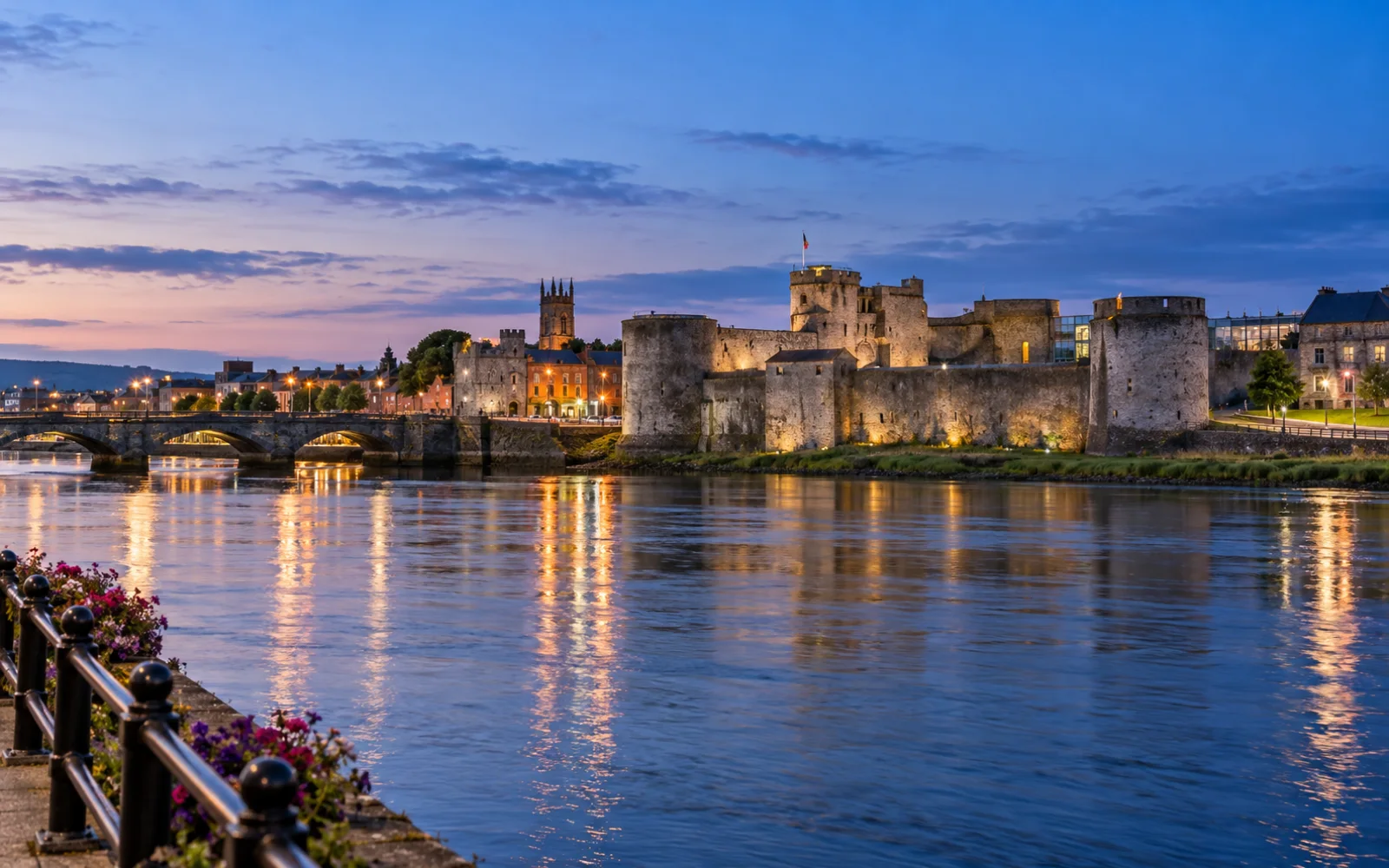
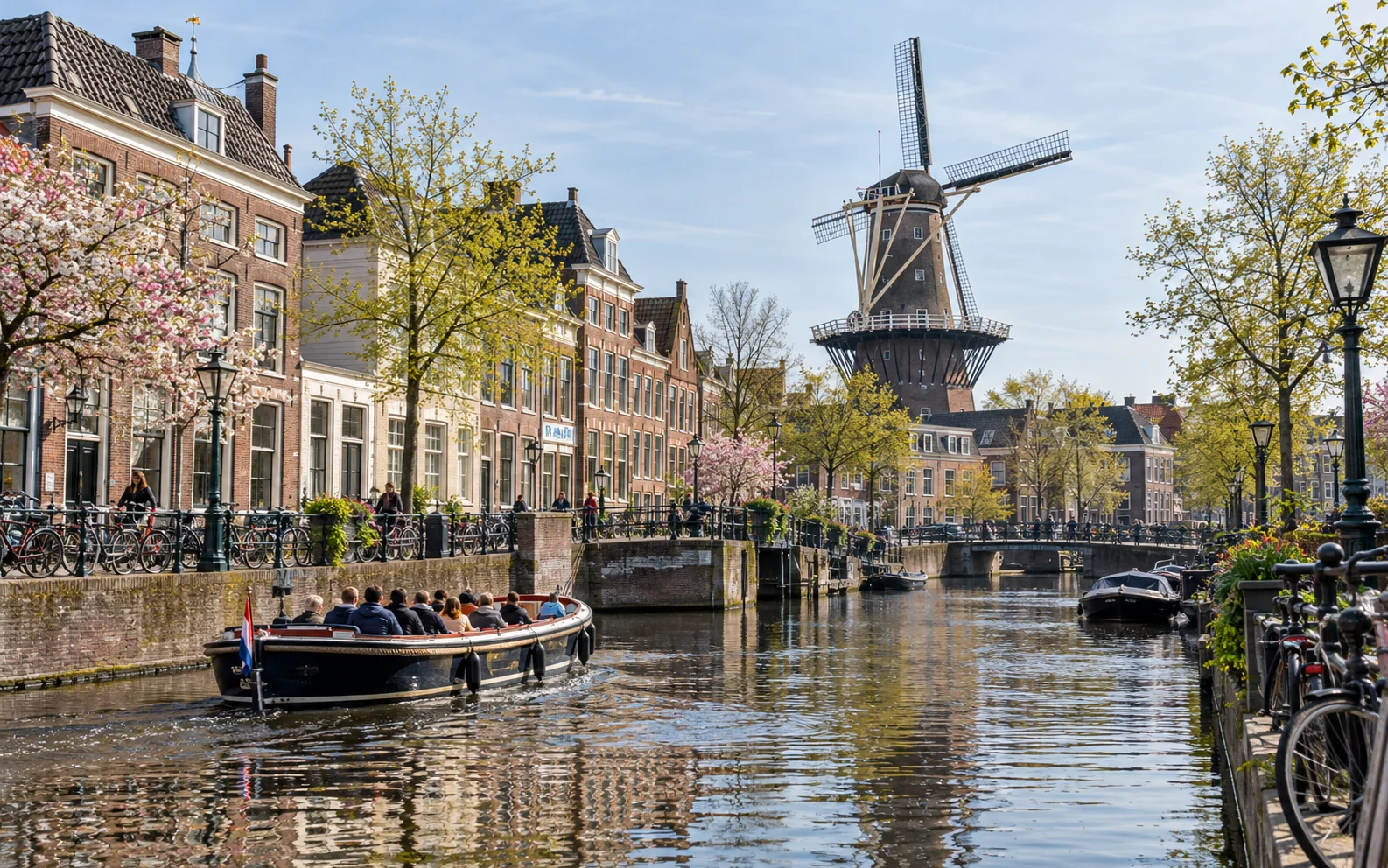
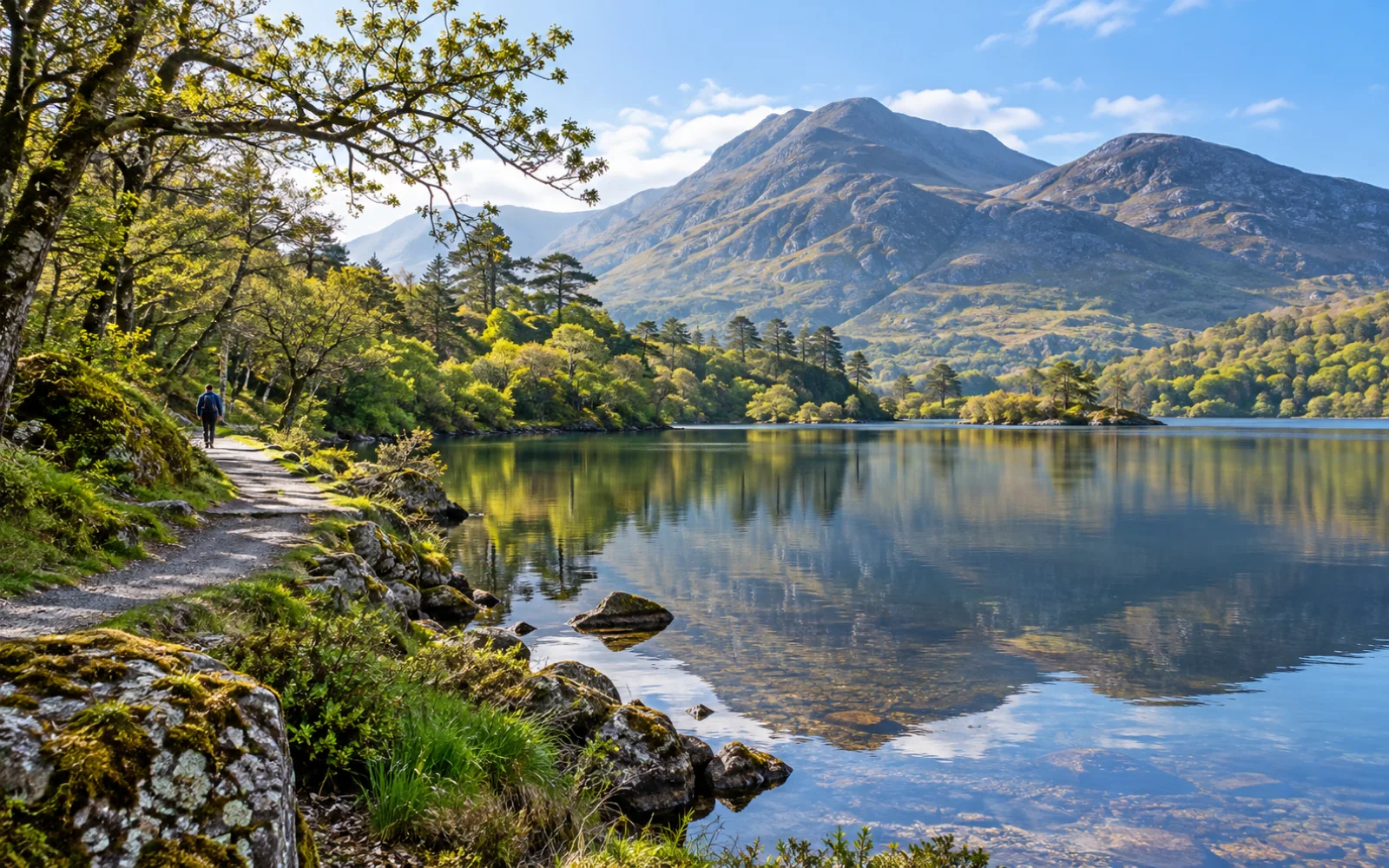
Maastricht: A Roman Bridge Town, a Medieval Bridge and the Treaty Named After It
A Roman bridge settlement, a medieval Meuse crossing, quarry tunnels under Sint Pietersberg and a church turned bookshop make Maastricht a layered two-day city.

Cover: AI-generated illustration. © ANUSHKA DAHANAYAKE (PVT) LTD.
Maastricht's name means "crossing of the Meuse", and the city's story is the story of a bridge. Romans built a wooden crossing here in the first century AD, and the settlement that grew beside it, Traiectum ad Mosam, passed its name down to the modern city. Two thousand years later the river still shapes how you arrive, where you walk and why the old centre feels different from the canal cities of the west.
Roman crossing, saint's tomb and medieval bridge
Roman Maastricht grew at the point where a road crossed the Meuse, and the Roman settlement is the root of the city's name. Tradition holds that Saint Servatius died here in 384 while on a mission to bring the relics of his predecessors from Tongeren. His successors raised a chapel over his grave, and the foundations of a sixth-century church built by Bishop Monulph to house the tomb lie beneath the present Basilica of Saint Servatius on the Vrijthof. That continuity of pilgrimage explains why a city of this size holds so many churches around one square.
The Sint Servaasbrug carries the story forward. The old bridge collapsed in 1275 during a procession, and many people drowned. A replacement was built between 1280 and 1298, with church indulgences helping to fund it. Rebuilt in part after the Second World War, it is commonly described as the oldest bridge in the Netherlands, and it remains the best way to enter the old centre from Wyck.
Quarry tunnels and a fortress hill
South of the centre, Sint Pietersberg is hollowed by quarries rather than natural caves. Centuries of marl extraction, with origins in the thirteenth century, left a network of tunnels in a limestone full of marine fossils. During the Second World War the tunnels also protected art, and Rembrandt's Night Watch was stored there from 1942 to 1945. Fort Sint Pieter, built in 1701 to 1702, stands on the northern end of the hill. Maastricht Underground runs guided tours of these workings, and the tunnel setting is part of the local heritage instead of a theme-park addition.
Treaty, church bookshop and the border city
The Gouvernement, Limburg's provincial house on the Meuse, is where ministers of the twelve European Community states signed the Treaty on European Union on 7 February 1992. The name Maastricht has been attached to the European project ever since, and the city sits close to Belgium and Germany with a trilingual, border-region feel.
One of the city's most photographed interiors is Boekhandel Dominicanen, a Gothic Dominican church first consecrated in 1294 that became a bookshop in 2006. It was re-launched as an independent shop in 2014 and has been named among the world's most beautiful bookshops. It remains a working business, so browse respectfully and avoid blocking customers for photographs. Elsewhere, vlaai, the fruit tart of the Limburg region, is the local food to try; ask a bakery about the day's flavours and eat a slice fresh.
Two days that follow the river and the hill
Day one, from Wyck to Vrijthof. The railway station stands in Wyck, east of the Meuse. Walk along Stationsstraat, cross the Sint Servaasbrug and begin around the Vrijthof before terraces fill. The Basilica of Saint Servatius and St John's Church share the square; opening can change with worship, concerts and private events, and some treasury or tower elements need separate admission. Choose one church interior instead of counting them, then walk the streets between Onze Lieve Vrouweplein and the river. After lunch, cross back to Wyck and Céramique for the Bonnefanten museum, whose riverside building holds old masters and contemporary art. Finish at the bridge at dusk, where cyclists, pedestrians and residents share the crossing.
Day two, underground or art. Choose the exact Maastricht Underground tour, language, meeting point and duration before paying, because these are fixed departures that begin away from the Markt. The tunnels stay cool, surfaces are uneven and some routes involve darkness or steps, so wear closed shoes and a layer. Allow travel time from the centre, since arriving at the wrong entrance can mean missing the tour. Ask the operator about the specific route if mobility or respiratory needs apply. Afterwards, walk on the hill only if energy permits, or return to the Jeker Quarter for lunch. Art-led visitors can spend the day at Bonnefanten, Céramique and the Sphinx Quarter.
Getting there and around
Trains connect Maastricht with the Dutch network, and cross-border services link the region with Aachen and Liège; consult NS or the relevant international operator for the exact journey, since disruption rules differ by operator. Buses reach outer districts, while driving into the mostly low-traffic centre is rarely efficient, so navigate to a chosen garage or park-and-ride instead of to a central street address. The compact centre is best covered on foot.
Costs, access and weather
Walking the centre and river is free; underground tours and museums are the main discretionary costs. Book the underground tour first, then accommodation and a special dinner, since room rates rise during TEFAF, concerts, university events and holiday weekends. Check each museum for admission and whether it accepts a Museumkaart, and do not assume a city pass covers cave tours. Dinner bookings are sensible on Fridays, Saturdays and event weekends.
Old paving, bridge gradients, church thresholds and the hill create barriers, and underground routes should never be assumed step-free. Visit Maastricht's accessibility page is the place to start, with a bus or taxi available toward Sint Pietersberg for anyone skipping the summit walk. Watch belongings on terraces and trains, lock bicycles, and stay away from unprotected river edges. Cycle lanes are easy to miss, so look both ways. Dutch, Limburgish, English, French and German are all heard; begin politely.
Spring and early autumn suit walking, summer brings events and crowds, and winter has lights and food. Rain arrives quickly and the river amplifies wind. In bad weather, use a church, Bonnefanten, the Sphinx Quarter and a pre-booked tunnel tour; in heat, do the hill early and the cool underground later. The route into town from Liège is covered in the Liège first-time visitor guide.
Continue on the Netherlands destination hub, read what makes the Netherlands special, or cross the border in spirit with what makes Belgium special.
Questions and answers
How many days are enough for Maastricht?
Two days allow a comfortable historic-centre route, time in Wyck and one pre-booked underground or museum experience. Add a third day for Valkenburg, Liège or a South Limburg walk.
Can Maastricht be visited without a car?
Yes. The station is a short walk from Wyck and the centre, while local buses reach outer districts. A car is often less convenient because much of the historic centre has restricted traffic.
Are the Maastricht caves natural caves?
The well-known underground networks at Sint Pietersberg are largely former limestone quarries. Access is by guided tour, with specific meeting points and physical conditions that should be checked before booking.
Sources
Amsterdam · 52.3676° N, 4.9041° E
This story belongs to Maastricht, Netherlands. A country that exists in its present shape because people kept the water out, then chose to live beside it on their own terms.