Venice Responsible Visitor Guide: Glass, Basilica, Lagoon
Gold mosaics, glassmakers moved to Murano in 1291, a Biennale since 1895 and a city that works on water: Venice's story, then the practical checks for a visit.
Venice is a city where daily life, freight, schools and emergency services all move through narrow lanes and water routes. Its palaces, mosaics and craft traditions come from centuries as a maritime republic, and the best visits give that working city time and space.
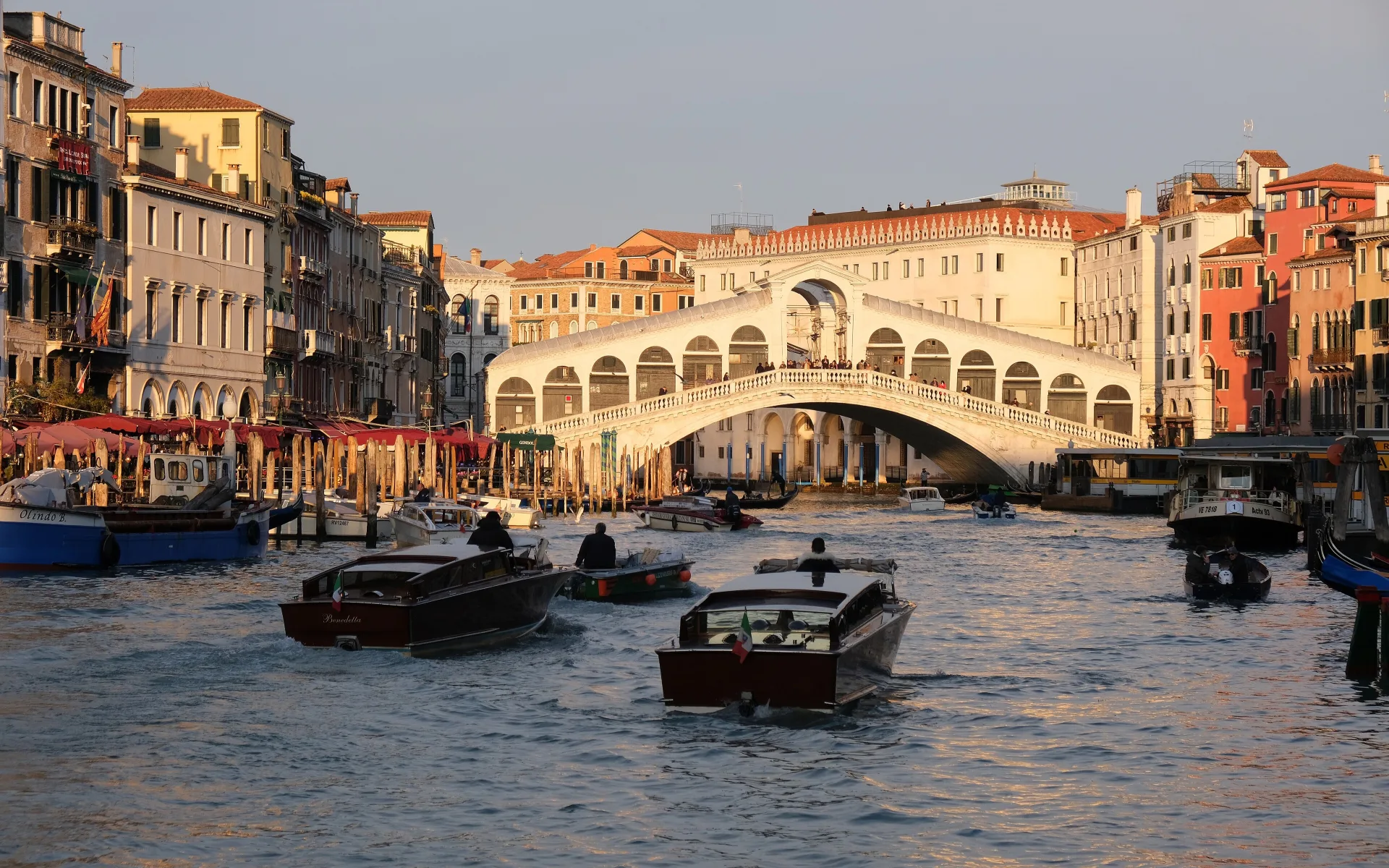
Cover photograph: Rialto Bridge and working boats on the Grand Canal, photographed in December 2024 by kallerna / Wikimedia Commons, CC BY-SA 4.0. Cropped and converted to WebP.
Relics, gold and a maritime republic
By tradition, two Venetian merchants brought the relics of St Mark from Alexandria in 828, and the basilica that holds them is still glittering with gold mosaics beside the Doge's Palace, the seat of the republic's government. Accounts of how the relics were smuggled out are legendary, and the present basilica replaced the first. The Rialto Bridge, in stone since 1591 and designed by Antonio da Ponte, replaced earlier wooden bridges at the market. Check the entry arrangements for St Mark's Basilica, the campanile and the Doge's Palace separately: they have different tickets, security and dress expectations. Read the Doge's Palace for its government, justice and prison history, not only its decorated rooms.
A city that works on water
Boats carry commuters, groceries and ambulances, and the traghetto gondolas still ferry locals across the Grand Canal. The MOSE barrier system, 78 gates seated on the seabed at the lagoon's three inlets, was raised for the first time on 3 October 2020, years behind schedule. Acqua alta remains a fact of life in autumn and winter, though. Check the municipality's live tide centre on the day, whose centimetre values refer to Venice's official tide datum, and read the city's high-water guidance instead of improvising through flooded areas.
Murano glass and the lagoon trades
A law of 8 November 1291 ordered most of Venice's glassmaking onto Murano, officially because the republic feared fire among its mostly wooden buildings, and some sources add that it also kept the trade's secrets under control. Murano still makes glass, so buy from workshops that explain where and how their pieces were made; a sales demonstration is not the same as an independent museum visit. Burano is a residential island with a longer lagoon journey, and Torcello has an archaeological and religious focus. The Lido or Giudecca suit travellers who want space.
Biennale, cinema and the arts
The Venice Biennale was founded in 1895, and the film festival was added in 1932; the festival's organisers describe it as the oldest in the world. The Biennale's own history records the early editions. Titian, Tintoretto and Veronese fill the Accademia and the city's churches. Entering several art museums in one afternoon reduces each to air-conditioned transit, so pick the Gallerie dell'Accademia or the Peggy Guggenheim Collection according to interest.
Cicchetti and the bacaro
Venetians eat at the bacaro, a small wine bar serving cicchetti, small bites on bread or on a cocktail stick, standing with a glass of wine or a spritz. Sarde in saor, creamed salt cod and black risotto made with cuttlefish ink define the cooking. Rialto Market is a working market: arrive in trading hours, keep counters clear and ask before photographing vendors.
Choosing the season
Spring and early autumn give the most comfortable walking, summer is hot and crowded in the narrow streets, and Carnival fills the city with masks before Lent at a premium. Autumn and winter bring the chance of acqua alta, so pack waterproof footwear and keep an indoor museum in reserve. Staying overnight spreads pressure onto the quiet early and late hours, which is when Venice looks most like a place where people live.
Days that respect the lanes
With one day, see Piazza San Marco early, choose one major interior and continue into Castello or Cannaregio; skip the islands. With two days, use the first for San Marco and Castello, and the second for Cannaregio, including the Ghetto with historical context, and Dorsoduro. With three days, add one principal island and check the final return before leaving, since wind, fog and acqua alta change boarding. Keep voices down in residential lanes, never sit on private steps, leave bridges clear for residents and prams, and do not picnic on monument steps.
Stay in the historic city for early and late hours outside the day-trip rush: Cannaregio is practical for the station, Castello is quieter, Dorsoduro suits art. Mestre is cheaper but needs a daily mainland journey. Ask the hotel how many bridges and steps lie between the stop and reception.
Access Fee, vaporetti and getting around
Venice's Access Fee is date-specific. At this guide's 5 November 2026 review, the municipal Access Fee page said the 2026 trial no longer applied from 27 July and that 2027 arrangements would be announced by 31 December 2026. Recheck the same page before travel, ignore old screenshots, and never pay anyone on the street who claims to check access. The fee does not replace museum admission, ACTV transport or accommodation tax.
Compare current ACTV options on the public-transport page. Validate your ticket at the machine before boarding. Read the line and destination at each stop, because platforms differ by direction. Water taxis are private, so confirm the licensed operator, total fare and landing point. Navigation apps can send walkers into private passages, so follow signed routes.
Bridges, tides and emergencies
Bridges are the central accessibility barrier, so the usable route depends on the arrival point, vaporetto stop, hotel entrance and attraction. Consult the city's Accessible Venice guide and ask providers about gangways, lift dimensions and boarding help. Travellers with limited stamina should use fewer districts per day.
In summer, carry water and move crowded routes to the early morning; in winter, wind makes vaporetto platforms cold. Keep belongings closed in crowds. For a genuine emergency, call 112, the free European emergency number. Do not swim in canals, feed birds, attach locks to bridges, fly unauthorised drones or remove material from buildings and shores. Before departure recheck the rail, airport boat or bus connection and allow time for luggage over bridges.
Continue with the Italy destination hub, read what makes Italy special, compare nearby Verona or our Rome guide, or explore other practical country guides.
Questions and answers
How many days should visitors spend in Venice?
Two days cover San Marco plus quieter Cannaregio or Dorsoduro without rushing. A third day makes one lagoon island practical. With only one day, stay in the historic centre and skip the islands.
Does the Venice Access Fee apply every day?
No. The scheme applies only on dates and times announced by the municipality, with exemptions and registration rules that can change. Check the official portal for the exact travel date.
Can Venice be visited with limited mobility?
Yes with route planning, but bridges and some vaporetto stops create barriers. Use the municipality's accessible-route information and verify the hotel entrance and transport stop in advance.
Sources
Rome · 41.9028° N, 12.4964° E
This story belongs to Venice, Italy. A country told city by city, where a craftsman solved a problem the rest of Europe copied and the city never forgot whose solution it was.