Toruń: Brick Gothic City, Copernicus and Gingerbread
A brick Gothic Hanseatic town founded in the 1230s, the birthplace of Copernicus and a gingerbread tradition recorded in the 1380s.
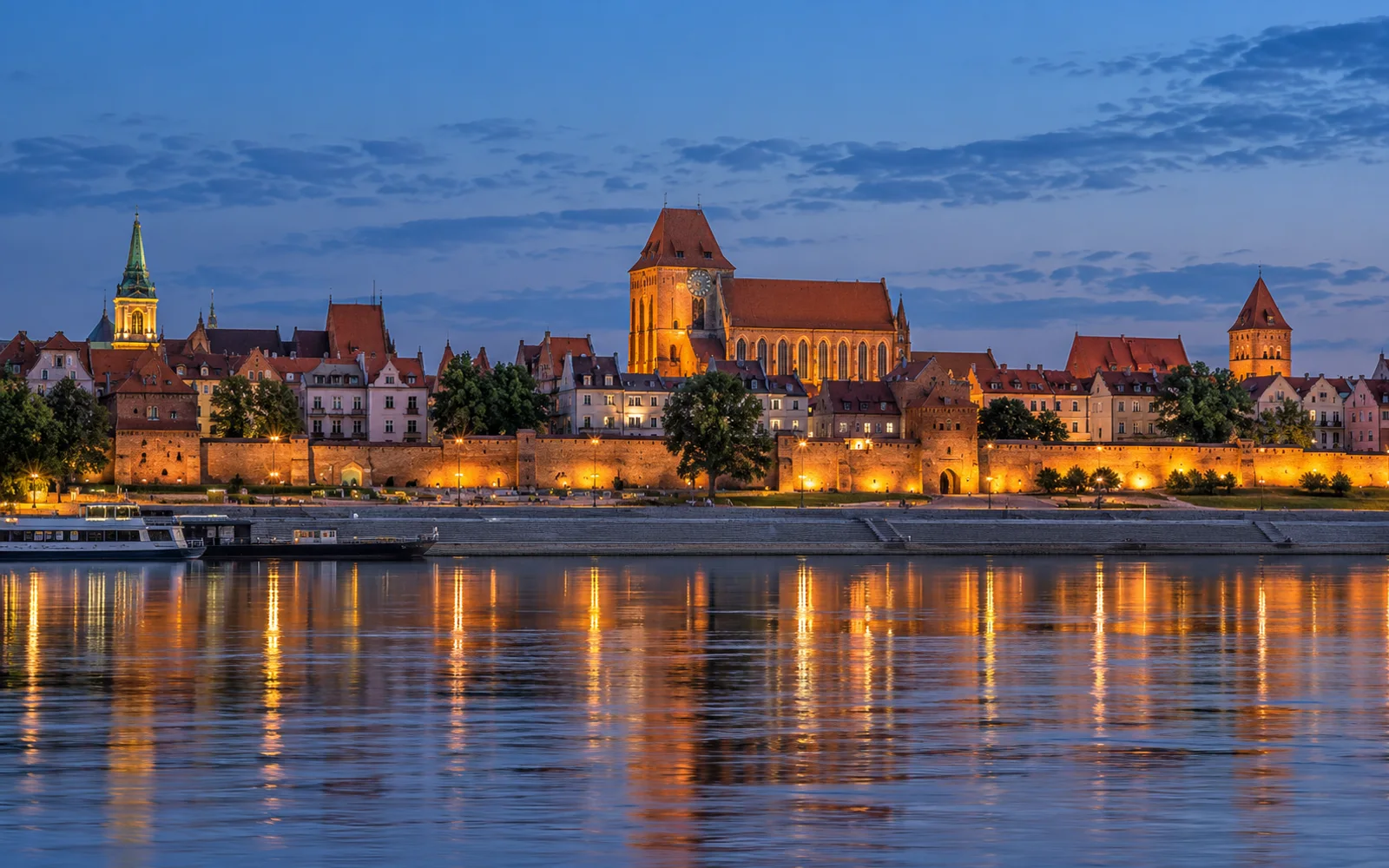
Cover: AI-generated illustration. © ANUSHKA DAHANAYAKE (PVT) LTD.
Toruń began as a Teutonic Knights stronghold on the Vistula in the early 1230s, with sources giving 1231 for the first fortress and 28 December 1233 for the town's foundation charter. Within a few generations it was a leading trading town of the Order's lands and a member of the Hanseatic League. On 6 December 1997 the Medieval Town of Toruń was added to the UNESCO World Heritage List at the committee's session in Naples. The listing reflects something unusual: a brick Gothic merchant city that came through the wars of the following centuries largely intact, and is still lived in today.
A brick city made by trade
The Old Town is read best through its materials. Red brick built the town walls, the great churches, the cathedral and the Old Town Hall, whose museum and tower give the clearest view of the medieval street plan. The Teutonic castle was a different matter: in 1454 the townspeople rose against the Order and destroyed it, an act that opened the Thirteen Years' War. The ruins, which can be walked with signage, are the best place to see how a trading community and a military order shared, and eventually broke, a city.
Copernicus, born in the Old Town
Nicolaus Copernicus was born in Toruń in 1473, shortly after the Order had ceded the surrounding region to Poland. The house identified as his birthplace is now a museum, and the University of Toruń carries his name. Not every object tied to the astronomer is original, and some civic legend has attached itself to the biography, so choose interpretation that separates evidence from tradition. The planetarium suits families and the dark show times are fixed, so book ahead.
Gingerbread with a medieval pedigree
Toruń's pierniki were made in the Middle Ages, when the Vistula trade brought honey, spices and pepper to the town. Sources date the earliest references to the craft to the 1380s, with a baker named Niclos Czan recorded in 1386, and the best known shape is the katarzynka, a gingerbread associated with Toruń. Two museums approach the subject differently: the Living Museum of Gingerbread offers a hands-on workshop, and the Museum of Toruń Gingerbread, opened in 2015, occupies a former factory. Not every decorated piece is meant to be eaten, since some are hard display pieces, so compare ingredients and the producer rather than buying the biggest box. Ask about honey, nuts and cross-contamination.
One weekend in Toruń
Day one belongs to the walls and the river. Begin at the Old Town Hall museum and market square, walk to the cathedral and the surviving gates, then see the castle ruins and follow the Vistula boulevards. The classic skyline view is from the opposite bank or bridge, so use designated crossings. At dusk lighting reveals the walls without midday crowds, and remember that courtyards behind attractive doors are often private.
Day two can combine one serious Copernicus experience with a gingerbread session, then a walk through Bydgoskie Przedmieście, a residential district whose architecture suits a slow afternoon. Reserve a morning for towers in hot or icy weather, and avoid stacking two timed sessions back to back with children.
Between the two days, leave time for a plain meal away from the market-square terraces, which charge for the location. Pierogi, soups and regional Polish dishes are easy to find a street or two back, and the walk past the lower gates is free.
Stations, trams and tickets
Toruń has more than one rail station. Toruń Główny sits across the river from the Old Town, while Miasto is closer to the centre on some services, so read the full station name and check connections. The historic core is walkable, though cobbles and thresholds slow wheelchairs and luggage. Check MZK Toruń's maps, schedules and ticket options before boarding, and compare the Toruń bus and tram ticket options with the rides you need. A car offers little in the centre.
Cards are widely accepted, though small cash helps at kiosks; decline dynamic currency conversion. Book summer weekends and festival dates early, and avoid unofficial ticket resellers. Toruń is good value when two interiors are mixed with free lanes, walls and river walks.
Care, weather and access
Brick Gothic surfaces are vulnerable, so do not scratch bricks, lean bicycles on monuments or climb walls for a higher angle. Churches remain places of worship, so dress respectfully and stop touring during services. Cobbles, cellars, towers and historic doorways create barriers; ask each museum about its step-free route. Spring and autumn suit walking, summers bring heat and events, and winter can be beautiful but icy with short daylight. Use lower river paths only when surfaces are safe, and keep children away from the Vistula edge. Standard city precautions apply, and emergency number 112 works nationwide.
Reading the walls without damaging them
A guided architecture walk should explain building function, restoration and the medieval town plan instead of simply counting towers. Binoculars reveal facade details without trespass, and night illumination is best enjoyed from the river bank using legal pedestrian routes. River cruises are seasonal and depend on water levels, so verify boarding, accessibility and the return point before paying, and follow the crew's life-jacket instructions even on calm water. Conservation or event notices can close major facades temporarily; respect scaffolding and do not step around barriers for a clearer photograph.
Carry water because shade is limited on the squares and boulevards. Pharmacies can advise on minor needs, and travel insurance should cover trip disruption. Keep the written name Toruń handy when buying tickets, since the accent distinguishes the spelling even when search tools accept a plain form, and download confirmations and the accommodation address before leaving Wi-Fi.
Where to go next
Continue through the Poland destination hub, read what makes Poland special, connect by rail with the Warsaw guide or the Poznań guide, or browse country guides. Before departure, confirm whether the train uses Główny, Miasto or another station and allow transfer time. If pairing Toruń with Bydgoszcz, research them as two distinct cities, and stay a night so early and late hours reveal the centre without day groups.
Questions and answers
How many days are enough for Toruń?
Two days allow the medieval center, one Copernicus site, a gingerbread experience and a Vistula walk without reducing the city to a day-trip stop.
Is Toruń easy to visit without a car?
Yes. The UNESCO center is compact, and trams and buses connect rail stations and outer districts. Check which station your train serves.
Is every Toruń gingerbread workshop suitable for children?
No. Programs vary in language, duration, accessibility and whether participants bake or only shape dough. Check the official description before booking.
Sources
Warsaw · 52.2297° N, 21.0122° E
This story belongs to Toruń, Poland. A country often overrun by its neighbours that kept changing how the world thinks, and rebuilt its cities from fragments.