What Makes Nashville Special: Music City, the Opry and Hot Chicken
The longest-running radio show in the world, a church that became the mother church of country music, live music on every block of Broadway and a chicken that bites back. A guide to what makes Nashville special.
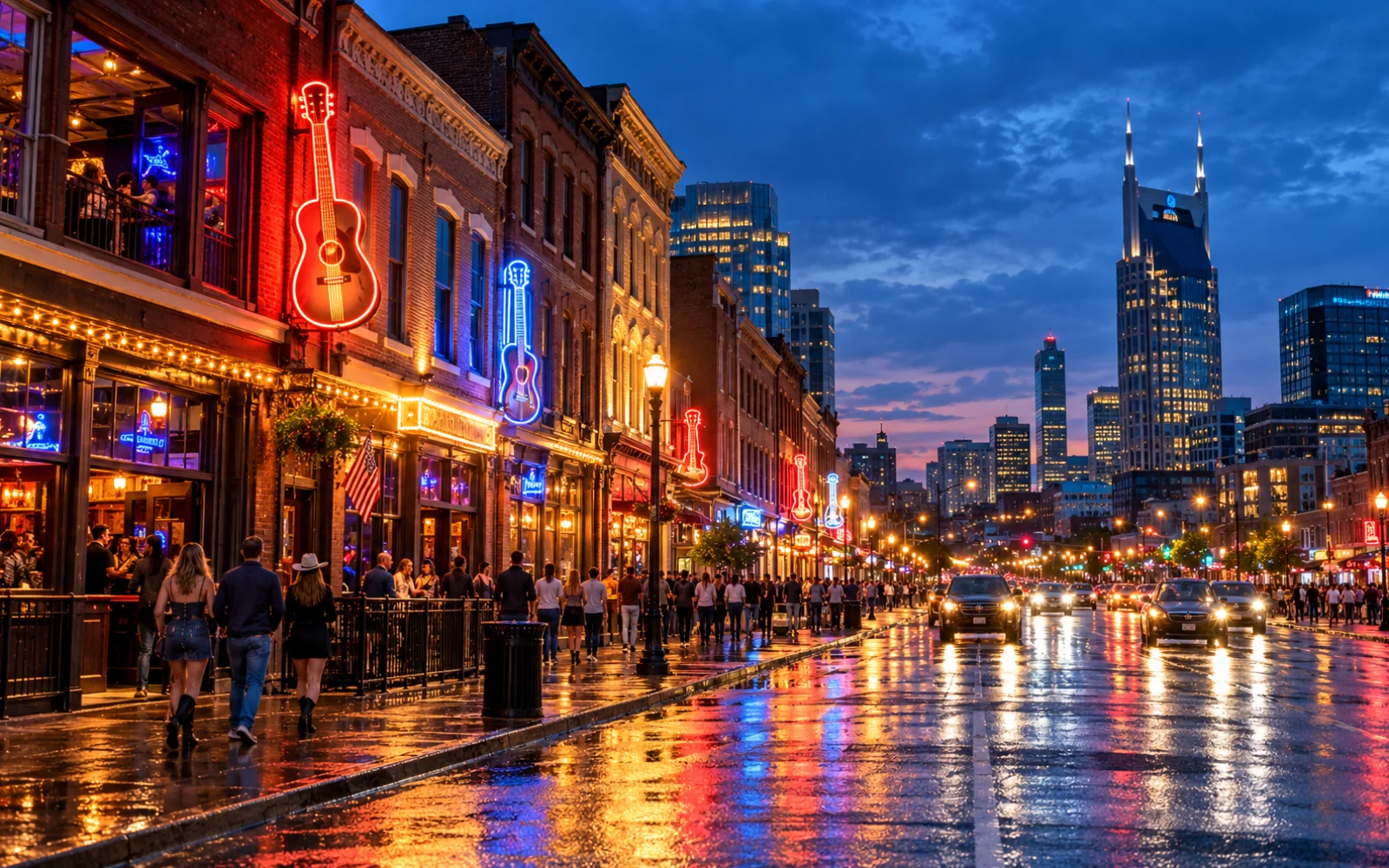
Cover: AI-generated illustration. © ANUSHKA DAHANAYAKE (PVT) LTD.
On the evening of 28 November 1925, WSM radio's George D. Hay put a 77-year-old fiddler named Uncle Jimmy Thompson in front of a microphone and called the programme the WSM Barn Dance. By December 1927 Hay had renamed it the Grand Ole Opry, and it has been on the air ever since. Nashville's identity grew around that broadcast, but the city's story is wider than one show: it was singing spirituals to Europe in the 1870s, desegregating lunch counters in 1960 and printing concert posters by hand since 1879.
A tabernacle that became the mother church
The Ryman Auditorium opened in 1892 as the Union Gospel Tabernacle, built by the riverboat owner Thomas Ryman after he was converted at a revival meeting. After his death in 1904 it took his name, and in 1943 the Opry moved in. For the next three decades the Ryman's wooden pews and stained glass framed the Opry's biggest stars, and the building earned the title "the mother church of country music." The Opry's final regular show there was on 15 March 1974 before it moved to the new Opry House; the Ryman was saved from demolition and now hosts concerts, daytime tours and the Opry's winter return.
Spirituals that paid for a university
Fisk University opened in Nashville in 1866, the year after the Civil War ended, and within five years it was close to bankrupt. On 6 October 1871 its treasurer, George L. White, took nine students on tour to raise money, naming them the Jubilee Singers after the biblical year of release. They sang spirituals, songs born in slavery, to audiences who had never heard them performed on a concert stage. In 1873 they toured Europe, and the money they brought back built Jubilee Hall, Fisk's first permanent building, dedicated on 1 January 1876 and now a National Historic Landmark. The ensemble still performs. Nashville's later "Athens of the South" nickname came from its many colleges and universities, and Fisk's story sits at the centre of it.
The Nashville sit-ins
In February 1960 students from Fisk and the city's other Black colleges began sitting at segregated downtown lunch counters. Diane Nash, then 22, led them, and on the steps of City Hall she asked Mayor Ben West whether he believed the counters should be desegregated; he said yes. On 10 May 1960 six downtown stores served Black customers at their counters for the first time, making Nashville one of the first major Southern cities to begin desegregating public facilities. The National Museum of African American Music, opened in January 2021 at Fifth and Broadway, traces the gospel, blues, jazz, R&B and hip-hop traditions that this history fed.
Studio B and the Nashville Sound
RCA's Studio B on Music Row was completed in 1957 and became one of the places where the polished "Nashville Sound" was made; Elvis Presley and Dolly Parton both recorded there. The Country Music Hall of Fame and Museum runs tours of the studio, and the museum's galleries take the story from early string bands to today. Music Row's publishers and studios are still where many hit songs are written, which is why so much of the city's live music is performed by the people who wrote it.
Hatch Show Print: the city's graphic voice
On 12 April 1879 the brothers Charles and Herbert Hatch opened a print shop in Nashville. Hatch Show Print went on to carve wood blocks and set metal type for posters advertising touring shows and, later, the country acts playing the Ryman and the Opry. Its bold lettering and stacked layouts became the look of Nashville itself. The shop, owned by the Country Music Hall of Fame since 1992, still prints by hand on letterpress machines, and its designers still work from the shop's historic blocks and type. It is a reminder that place pride has long been carried on paper.
Music City, on the air and on Broadway
The nickname "Music City, U.S.A." is usually credited to the WSM announcer David Cobb, who is said to have used it on air around 1950. Today it is most audible on Lower Broadway, where many venues have live music from late morning to late at night. Visit Music City says many have no regular cover, but rules and showtimes vary by venue, and musicians depend on tips. The Bluebird Cafe's songwriter rounds, where writers sit in a circle and play the songs they sold to famous singers, show the other side of the industry.
A Parthenon in a park
For the Tennessee Centennial Exposition of 1897, Nashville built a full-size replica of the Athenian Parthenon in plaster, wood and brick. It was meant to be temporary, but the city loved it, and between 1921 and 1931 it was rebuilt in concrete. Inside, Nashville sculptor Alan LeQuire's 42-foot Athena was unveiled on 20 May 1990 and gilded in 2002. The building in Centennial Park now holds the city's art museum.
Hot chicken, born in a family kitchen
Nashville hot chicken traces back to Thornton Prince, a Black Nashvillian whose fiery fried chicken became the BBQ Chicken Shack in the 1940s. The family story, told as legend, says a girlfriend made it extra hot as payback and he liked it. His great-niece André Prince Jeffries took over in 1980 and kept Prince's Hot Chicken going while the rest of the country caught on. Meat-and-three cafeterias, biscuits and barbecue round out the city's tables, and East Nashville and Germantown have a newer generation of restaurants.
Building a Nashville evening
Anchor each night with one confirmed ticket: the Opry, a Ryman concert or a songwriter round. The Grand Ole Opry House is well outside downtown, while the Ryman is a block from Broadway, so check the address before booking transport. The Bluebird's reservations open at different times for weekday and weekend shows, and some sessions are first come, first served; check its calendar, cover and minimum spend before planning around it. Begin with the artist or venue's official seller to avoid resale markups. Broadway is easiest in late morning and afternoon, when bands are playing and pavements are calmer.
Getting around a spread-out city
WeGo route 18 serves the airport, with an express trip of about 20 minutes and local trips of roughly 35 to 45 minutes. Downtown, the Gulch and Germantown are walkable; Music Row, East Nashville, 12 South and the Opry House usually need a rideshare. Wide roads and missing pavements can make short-looking walks uncomfortable. April to May and September to October are the pleasant months; summer is hot and humid with sudden thunderstorms, and CMA Fest fills downtown in June. Winter is grey but quieter, and the Opry's Ryman season makes it worth considering.
Keeping the trip in proportion
Free music does not make Nashville a cheap weekend: room taxes, parking, surge pricing and tips add up, so price the full total before you book. Hot chicken is ordered by heat level, and the top grades overwhelm many people who like spicy food; start lower. On weekend nights keep drinks attended, agree a meeting point and never drive after drinking. Check age rules at each venue, as they can change by hour.
Nashville among America's music cities
Nashville's pride runs from a tabernacle and a student choir to a letterpress shop and a family chicken recipe. Our United States page places it among the country's other cities, what makes Texas special follows country music's western branch, the Austin live music weekend guide offers a different kind of music city, and New Orleans beyond Bourbon Street goes back to the birthplace of jazz.
Questions and answers
What is the Grand Ole Opry?
A live country music radio show first broadcast on WSM in November 1925, widely described as the longest-running radio show of its kind. It plays at the Opry House most of the year and returns to its old home, the Ryman Auditorium, for a winter season.
Do you need a car in Nashville?
Downtown, Broadway and the Gulch are walkable, but the city is spread out and public transport is limited. Most visitors use rideshares for Music Row, East Nashville and the Opry House.
Can visitors hear live music in Nashville without entering a bar?
Yes. All-ages daytime venues, museum programmes, parks, record shops and ticketed songwriter shows provide alternatives. Confirm age rules and schedules directly with each venue.
Sources
New York City · 40.7128° N, 74.0060° W
This story belongs to Nashville, United States. A country of home towns and large ideas, from Independence Hall and the first national park to jazz, skyscrapers and volcanic islands.